

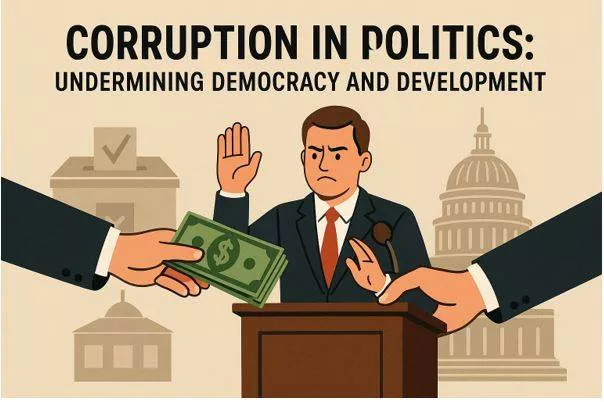
Exploring the causes consequences and global battle against political misconduct
Corruption in politics is a global issue that undermines the foundations of democracy, erodes public trust, and hampers development. While it is not a new phenomenon, its impact in the modern world is deeply troubling. Corruption in political systems affects both developed and developing countries, though its manifestations and consequences vary. From vote-buying and favoritism to large-scale embezzlement and misuse of power, political corruption poses a significant threat to good governance, economic progress, and social justice.Definition and Forms of Political Corruption
Political corruption refers to the misuse of public power, office, or resources by elected officials or government agents for personal gain, often at the expense of the citizens they are meant to serve. It takes many forms, such as bribery, nepotism, cronyism, embezzlement, electoral fraud, and influence peddling.
Bribery involves offering money or favors to influence the actions of politicians or public servants. Nepotism and cronyism refer to the appointment of relatives or close associates to positions of power regardless of their qualifications. Embezzlement is the theft of public funds by those in power. Electoral fraud includes tampering with votes, manipulating voter rolls, and using unfair practices to influence election outcomes. Influence peddling involves using one’s political influence to gain favors or advantages, often for private interests.
Causes of Corruption in Politics
Several factors contribute to corruption in politics. One of the major causes is the lack of transparency and accountability in government institutions. When decision-making processes are hidden from public scrutiny, officials are more likely to engage in corrupt behavior without fear of consequence.
Weak law enforcement is another significant cause. In many countries, anti-corruption laws exist, but they are either not implemented effectively or are selectively enforced. Politicians with power often influence investigations or suppress reports that may damage their reputation.
The influence of money in politics is another major contributor. Political campaigns often require massive funding, and candidates may rely on donations from corporations or wealthy individuals who later expect favors in return. This leads to policies that benefit a few at the expense of the majority.
Cultural and societal factors also play a role. In some countries, corruption is seen as a norm or a necessary evil to get things done. When citizens accept or participate in corrupt practices, it becomes deeply ingrained in the political system.
Impact of Political Corruption
The consequences of political corruption are far-reaching. At the most basic level, it leads to poor governance. Public resources are diverted away from essential services such as education, healthcare, and infrastructure. As a result, the quality of life deteriorates, especially for the poor and marginalized.
Corruption also discourages investment and economic growth. Investors are reluctant to do business in environments where bribery is expected or where the rule of law is weak. This hinders job creation and limits opportunities for development.
In democratic societies, corruption erodes public trust in institutions. When citizens believe that their leaders are more interested in personal gain than public service, they lose faith in the electoral process and democratic values. This can lead to political instability, civil unrest, and the rise of authoritarianism.
Moreover, corruption perpetuates inequality. Wealth and power become concentrated in the hands of a few, while the majority are left without access to basic rights and services. This deepens social divisions and breeds resentment among different segments of society.
Examples of Political Corruption
Numerous examples from around the world illustrate the devastating effects of political corruption. In Brazil, the “Operation Car Wash” investigation uncovered a vast network of corruption involving top politicians and business leaders. Billions of dollars were siphoned from the state oil company Petrobras, leading to the prosecution and imprisonment of many high-ranking officials.
In India, the 2G spectrum scam and the Commonwealth Games scandal highlighted how government officials and private companies colluded to misappropriate public funds. Similarly, in South Africa, the Gupta family’s alleged influence over former President Jacob Zuma raised serious concerns about “state capture.”
Even in developed countries, political corruption remains a problem. In the United States, lobbying and campaign financing practices often blur the line between legal influence and corruption. The “Citizens United” ruling by the Supreme Court, which allowed unlimited corporate spending in elections, has been criticized for enabling wealthy interests to dominate political discourse.
Efforts to Combat Political Corruption
While political corruption is deeply rooted, many efforts are being made to combat it. Strengthening institutions is key. Independent and well-funded anti-corruption agencies can investigate and prosecute corrupt officials without political interference. Transparent public procurement processes and digital governance tools also reduce opportunities for corruption.
Laws and regulations must be enforced strictly and fairly. Whistleblower protection laws encourage individuals to report corrupt activities without fear of retaliation. Asset disclosure requirements for public officials increase transparency and help detect illicit enrichment.
Public awareness and civic engagement are equally important. An informed and active citizenry can hold leaders accountable through the media, civil society organizations, and grassroots movements. Free and independent media play a crucial role in exposing corruption and mobilizing public opinion.
International cooperation is also vital. Corruption often crosses borders, involving offshore accounts and global financial networks. Organizations like Transparency International, the United Nations, and the World Bank support anti-corruption efforts through research, advocacy, and technical assistance.
Conclusion
Corruption in politics is a formidable challenge, but it is not insurmountable. It requires sustained efforts from governments, institutions, civil society, and citizens alike. Building a culture of integrity, transparency, and accountability is essential to restore public trust and ensure that political systems serve the people rather than a select few.
Ultimately, the fight against political corruption is a fight for justice, equality, and good governance. Only by confronting this issue head-on can societies hope to achieve sustainable development, strengthen democratic values, and build a future where power is used for the public good rather than personal enrichment.






Stay updated with The Hindu Editorial Vocab24 app, your definitive source for breaking news and comprehensive coverage from India and around the globe. Whether it's political developments, business updates, sports highlights, the latest technology trends, or current events, The Hindu brings live, accurate, and reliable news directly to your device.
Don’t fall for sensationalized or fake news shared online. Read and share accurate updates with friends and family through The Hindu Editorial Vocab24 app. Download it today!
News Coverage in The Hindu Editorial Vocab24 App
Breaking News: Receive instant notifications on breaking news stories as they unfold. Stay informed about major events and developments in India and around the world with live blogs, news in shorts videos, and concise articles.
Politics: Get the latest updates on Indian politics, including elections, policy changes, government decisions, and political events that shape the nation.
Business and Economy: Stay ahead in the economic landscape with detailed business news and market analysis. Learn about stock market trends, financial reports, corporate news, and economic developments to make informed investment decisions.
Current Events: Follow stories on social issues, policy changes, global events, and daily current affairs, tailored for UPSC and other competitive exam preparations.
Technology: Keep up with the latest gadgets, innovations, and tech trends. Read expert reviews and analyses in short, concise updates on cutting-edge technology from India and beyond.
Sports: Never miss a moment of your favorite sports. Get live scores, match reports, and expert analysis on cricket, football, tennis, and more.
International News: Stay informed about global events and geopolitical developments, including the Russia-Ukraine war, Israel-Palestine conflict, and other key international stories.
Local News: Stay connected to your community with the latest updates on city events, issues, and local news. Coverage includes hyperlocal updates from cities like Bangalore, Chennai, Delhi, Hyderabad, Mumbai, Kolkata, and more.
Trending Topics: Discover what's trending today with the most talked-about stories and hot topics across India and the world.
Experience journalism that values integrity, accuracy, and reliability. Download The Hindu Editorial Vocab24 app today and stay connected with the world.
Subscribe to our newsletter!







