

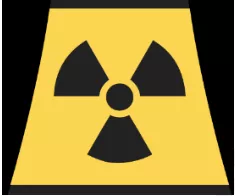
Expensive hazardous and inequitable
By all accounts, nuclear power has had a bad year. In March, Westinghouse, the largest historic builder of nuclear power plants in the world, declared bankruptcy, creating a major financial crisis for its parent company, Toshiba. The French nuclear supplier, Areva, went bankrupt a few months earlier and is now in the midst of a restructuring that will cost French taxpayers about €10 billion. Its reactor business is being taken over by a clutch (a small group of people or things.) of companies, including the public sector Électricité de France, which is itself in poor financial health. In May, the U.S. Energy Information Administration announced that it expects the share of nuclear electricity in the U.S. to decline from about 20% in 2016 to 11% by 2050. The newly elected Presidents of Korea and France have both promised to cut the share of nuclear energy in their countries. And the Swiss just voted to phase out (चरणबद्ध तरीके से हटाना) nuclear power. Both Areva and Westinghouse had entered into agreements with the Indian government to develop nuclear plants. Areva had promised to build the world’s largest nuclear complex at Jaitapur (Maharashtra), while last June, Prime Minister Narendra Modi and U.S. President Barack Obama announced, with great fanfare, that Westinghouse would build six reactors at Kovvada (Andhra Pradesh). The collapse of these companies vindicates (सच या ठीक ठहराना) critics of these deals, who consistently pointed out that India’s agreements with Areva and Westinghouse were fiscally irresponsible. If these projects had gone ahead, Indian taxpayers would have been left holding the bag — billions of dollars of debt, and incomplete projects. This narrow escape calls not only for a hard look at the credibility of those members of the nuclear establishment who advocated these deals for a decade, but for a comprehensive re-evaluation of the role of nuclear power in the country’s energy mix. Therefore, the government’s recent decision to approve the construction of ten 700 MW Pressurised Heavy Water Reactors (PHWRs) deserves to be scrutinised carefully. Strictly speaking, there is little that is new in this decision. A list of all the sites where the PHWRs are to be constructed had already been provided to Parliament by the United Progressive Alliance government in 2012. But delays with the first 700 MW PHWRs already under construction, the changed international scenario for nuclear energy, and the ongoing reductions in the cost of renewable energy all imply that these earlier plans are best abandoned. It doesn’t come cheap First, although the 700 MW PHWRs are cheaper than imported reactors, their electricity is likely to be costly. These reactors are commercially untested, since the largest PHWRs constructed so far in India are the 540 MW twin units at Tarapur. There are two 700 MW PHWRs under construction at Rawatbhata (Rajasthan) and Kakrapar (Gujarat), but these have been delayed by over two years, and the government has not revealed the resultant cost increases. Nevertheless, assuming a capital cost of Rs. 10 crore per megawatt, suggested by the government’s press release on its decision, and using the pattern of expenditure seen at Rawatbhata and Kakrapar, a rough estimate suggests that the cost of electricity during the first year of operations at these reactors is likely to be around Rs. 6 per unit at current prices. The Central Electricity Regulatory Commission’s published tariffs show that almost all currently operating Indian coal, natural gas and hydroelectric power plants produce cheaper electricity. Even prices for solar power have dropped below those of nuclear power. For example, the winning bid at the auction for the Bhadla Phase-IV Solar Park in Rajasthan held last month was Rs. 2.44 per unit, which is fixed for 25 years. This is not an isolated example, but part of a trend of falling prices in the renewable sector. In fact, the government’s tariff model makes nuclear power appear more competitive than it really is. The capital invested in any plant yields no returns while the plant is being constructed. At the end of construction, the government fixes a tariff by calculating a rate of return on the nominal amount of capital invested, disregarding the value this amount could have accumulated during this idle time. As a result, the effective rate of return on equity invested in nuclear energy is significantly lower than the rate of return provided by other sources of electricity that have shorter gestation (the development of something over a period of time.) periods. Nuclear power would be even less economically attractive if a methodology that consistently incorporates (सम्मिलित करना/समाविष्ट करना) the time value of capital were to be used to establish tariffs. While announcing its decision, the government claimed that these plants would “generate more than 33,400 jobs in direct and indirect employment”. But this number ceases to be impressive when viewed in the context of the planned capital expenditure of Rs. 70,000 crore. The relevant factor in assessing the employment opportunities provided by a project is not just the total number of jobs produced but the ratio of the jobs produced to the capital invested. A widely cited study by three analysts from the University of California, Berkeley, found that nuclear power created only 0.14 job-years per gigawatt-hour of electricity produced. In contrast, solar photovoltaic sources were more than six times as labour intensive, creating about 0.87 job-years per gigawatt-hour of electricity. Since solar energy is cheaper, this comparison is even more unfavourable to nuclear power when viewed in terms of jobs created per rupee spent. Bad fit for climate change The government also argued that these reactors would bolster “global efforts to combat climate change”. While climate change is indeed a grave problem, it is not the only environmental problem confronting us. Nuclear power poses its own set of threats to the environment and public health, and is therefore an inappropriate tool to mitigate (गम्भीरता कम करना) climate change. All nuclear reactors produce radioactive waste materials because each fission event involving nuclei of uranium or plutonium gives rise to radioactive elements called fission products. Some of these remain radioactive for hundreds of thousands of years. Despite decades of research, nuclear waste remains an unavoidable long-term problem for the environment. Nuclear reactors are also capable of catastrophic accidents, as witnessed in Fukushima and Chernobyl. A single nuclear disaster can contaminate large tracts (क्षेत्र) of land with radioactive materials, rendering these areas uninhabitable for decades. More than 30 years after the accident at Chernobyl, about 650,000 acres are still excluded from inhabitation. The people’s concerns Local communities are keenly aware of the hazardous nature of nuclear power. Since the 1980s, every new site chosen for a nuclear plant has been greeted with a protest movement. Sometimes, these movements have succeeded in forcing the cancellation of plans, including at two sites in Kerala and one site in West Bengal. More recently, the plan to establish a plant near Patiala seems to have been dropped. Other communities have been less lucky. In some proposed sites, such as Fatehabad (Haryana), the government has succeeded in using financial incentives to counter opposition to nuclear construction, in essence exploiting the economic vulnerability of the local population. But protests continue at other sites, such as Chutka (Madhya Pradesh). The sad irony in Chutka is that some of the affected people were previously displaced by the Bargi dam, and are now being asked to move a second time. Their plight typifies (प्रतीक होना) the social dynamics associated with nuclear power. The risks and costs are borne overwhelmingly by poor rural communities, who consume only a tiny fraction of the electricity that is generated. The government claims that its recent decision displays “India’s commitment to sustainable development”. But does the path to sustainable development run through a source of electricity that is expensive, hazardous (खतरनाक/संकटजनक) and antithetical (विपरीत) to equity?Clutch (noun)
(A small group of people or things.) समूह/संगठन
Synonyms: Group, Collection, Set, Cluster, Conglomeration
Example: The recent economic conference was attended by the heads of a clutch of companies.
Phase out (Phrasal verb)
To discontinue or withdraw gradually./ to discontinue the practice, production, or use of by phases चरणबद्ध तरीके से हटाना
Synonyms: Eliminate, Discontinue, Close, Terminate, Abandon
Example: Over the following three years, the use of the drug will be phased out, said the newly elected Chief Minister.
Vindicate (verb)
Show or prove to be right, reasonable, or justified. सच या ठीक ठहराना
Synonyms: Justify, Substantiate, Establish, Demonstrate, Ratify, Authenticate, Verify, Confirm, Corroborate
Example: When my daughter misbehaves at school, I expect her to vindicate her behavior.
Gestation (noun)
(The development of something over a period of time.) परिवर्धन/परिवृद्धि/विकास
Synonyms: Development, Formation, Evolution, Growth, Expansion, Progress
Example: Continued steady gestation in the real estate market is largely contingent on low interest rates.
Mitigate (verb)
Reducing the severity, seriousness, or painfulness of something. गम्भीरता कम करना
Synonyms: Alleviate, Reduce, Diminish, Lessen, Lighten, Attenuate
Example: The doctor gives the prescription to mitigate the pain.
Typify (verb)
Be characteristic or a representative example of. प्रतीक होना
Synonyms: Epitomize, Exemplify, Represent, Be Characteristic of, Be Symbolic of, Represent, Be Emblematic of
Example: Lionel Messi typifies what a professional footballer should be.
Incorporate (verb)
Take in or contain (something) as part of a whole; include. सम्मिलित करना/समाविष्ट करना
Synonyms: Include, Subsume, Assimilate, Integrate, Take In, Engulf
Example: While tutoring a foreign student, I try to incorporate as many slang words as possible so she fully understands how Americans speak.
Tract (noun)
An area of land, typically a large one. क्षेत्र
Synonyms: Area, Region, Expanse, Span, swathe, Zone, Plot, Field
Example: A two-mile-wide tract of homes was affected by the tornado, with most of the zone being demolished.
Antithetical (adjective)
Directly opposed or contrasted; mutually incompatible. विपरीत
Synonyms: Contradictory, Contrary, Contrasted, Converse, Counter, Opposed
Example: The bill has not passed parliament because the opposition party is antithetical to the ruling party’s proposal.
Hazardous (adjective)
Risky; dangerous खतरनाक/संकटजनक
Synonyms: Dangerous, Risky, Unsafe, Perilous, Precarious, Insecure
Example: Certain pesticides should be banned since they are hazardous to the environment.








Stay updated with The Hindu Editorial Vocab24 app, your definitive source for breaking news and comprehensive coverage from India and around the globe. Whether it's political developments, business updates, sports highlights, the latest technology trends, or current events, The Hindu brings live, accurate, and reliable news directly to your device.
Don’t fall for sensationalized or fake news shared online. Read and share accurate updates with friends and family through The Hindu Editorial Vocab24 app. Download it today!
News Coverage in The Hindu Editorial Vocab24 App
Breaking News: Receive instant notifications on breaking news stories as they unfold. Stay informed about major events and developments in India and around the world with live blogs, news in shorts videos, and concise articles.
Politics: Get the latest updates on Indian politics, including elections, policy changes, government decisions, and political events that shape the nation.
Business and Economy: Stay ahead in the economic landscape with detailed business news and market analysis. Learn about stock market trends, financial reports, corporate news, and economic developments to make informed investment decisions.
Current Events: Follow stories on social issues, policy changes, global events, and daily current affairs, tailored for UPSC and other competitive exam preparations.
Technology: Keep up with the latest gadgets, innovations, and tech trends. Read expert reviews and analyses in short, concise updates on cutting-edge technology from India and beyond.
Sports: Never miss a moment of your favorite sports. Get live scores, match reports, and expert analysis on cricket, football, tennis, and more.
International News: Stay informed about global events and geopolitical developments, including the Russia-Ukraine war, Israel-Palestine conflict, and other key international stories.
Local News: Stay connected to your community with the latest updates on city events, issues, and local news. Coverage includes hyperlocal updates from cities like Bangalore, Chennai, Delhi, Hyderabad, Mumbai, Kolkata, and more.
Trending Topics: Discover what's trending today with the most talked-about stories and hot topics across India and the world.
Experience journalism that values integrity, accuracy, and reliability. Download The Hindu Editorial Vocab24 app today and stay connected with the world.
Subscribe to our newsletter!







