

Everyone’s now invited
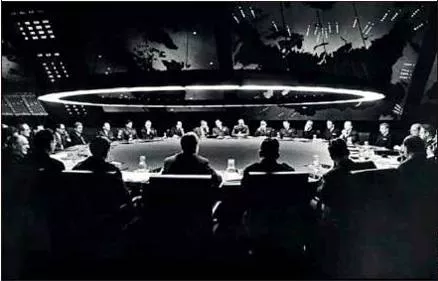
India has firmed up a gradual, but significant, shift in its foreign policy in the first few months of Prime Minister Narendra Modi’s second term. It has moved decisively from a P2 (US and China) mind-set to a P5+2 approach to position itself as a power that makes it its business to do business with all, rather than keeping distance or taking sides.In the first four months of returning to power, Modi has met US President Donald Trump, Chinese President Xi Jinping and Russian President Vladimir Putin three times; his Japanese counterpart Shinzo Abe twice; and once each with French President Emmanuel Macron, German Chancellor Angela Merkel and British PM Boris Johnson. Merkel is also slated to visit India early next month.
These meetings are over and above the many interactions Modi has had with these seven leaders in group settings at the G20 meet in Osaka, Japan, the Shanghai Cooperation Organisation (SCO) summit at Bishkek, Kyrgyzstan, the G7 at Biarritz, France, and the Eastern Economic Forum (EEF) at Vladivostok, Russia.
If P5+2 is one end of India’s newfound multi-alignment approach, then ‘neighbourhood-plus’ is the other end. The ‘plus’ in this extends beyond South Asia — from West Asia to Central and East Asia. As of now, however, it contains a significant ‘minus’: Pakistan.
China is one country that falls in both P5+2 and ‘neighbourhood-plus’ categories. Which is why Modi’s Mamallapuram summit with Xi was very significant for India. It sends out an important signal that India and China have established a concrete regular connect at the highest level. Let’s not forget that until Xi took charge, China had always identified its premier as the Indian PM’s counterpart.
This messaging helps balance conversations with other major powers, especially with those looking to leverage India-China divergences to their benefit. It’s also a recognition by New Delhi that neither Washington nor Moscow has the clout with Beijing to tilt, or favourably influence, a conversation in India’s favour.
This is a shift from the UPA years when the objective really was how to leverage India’s strategic value with China on the back of strong India-US relations. The high point of that approach was 2005-06, when Indian cemented the India-US nuclear deal and signed the principles of a boundary settlement with China.
Gin and Yang
But Xi’s elevation proved to be a turning point, as China actively sought to assert and act independently of the US. As a result, former US President Barack Obama did not enjoy the kind of leverage his predecessor could have exercised on the Chinese leadership.
The US backlash happened with the election of Donald Trump to the White House. The Chinese quest for seeking parity has now turned into a grand showdown with the US. Regardless of which way conversations go, the fact is, Trump has turned China into a domestic political issue in the US, one on which even the Democrats cannot take a soft line.
In a turbulent environment such as this, where power is more diffused at the high table and, yet, each country is so deeply networked with each other, it’s important to build stakes in each of the big power relationships regardless of the contradictions. India’s ability to engage with China despite problems, illustrates this best. The effort from both sides has been to take a longerterm view of the relationship at the informal summit, so that differences don’t turn into disputes.
Xi is believed to have appreciated that Modi had given considerable thought at choosing the location, as Chinese leaders like the seaside. This is pertinent because the Chinese leadership is known to head for sea resorts like Beidaihe near Beijing, for their annual summer gathering. It was a tradition Mao Zedong started, and at these meets, some historic long-term decisions like the Great Leap Forward were made.
It’s true that India chose the venue not just from the long-term perspective as Xi seemed to allude, but also from what this would signal to the neighbourhood, especially to Pakistan. The disputes on the northern boundaries bind Beijing with Islamabad. Which is why to recall an oceanic connect from the South was New Delhi’s way to create a narrative independent of Pakistan.
In many ways, Indian efforts with China are quite similar to what it did with the West through the past two decades — constantly reaffirm the reasons why India and Pakistan cannot be equated. Terrorism made that clear for the West, especially after Nato set up base in Afghanistan post-9/11. China, however, continues to view Pakistan through the lens of conventional geopolitics. While that’s Chinese policy, what’s important from an Indian standpoint is to get Beijing to look at New Delhi through a different lens.
Time to Connect
The fact that Xi proposed the idea of developing a manufacturing partnership as a measure to reduce the humungous trade deficit between both countries is an indication that China is, perhaps, beginning to see merit in establishing an India-specific conversation devoid of other contentious issues.
While these are still early days to take a call on the success or failure of a policy, what’s clear is that India has made a significant shift in favour of multi-alignment, as opposed to an equidistant, non-aligned posture — the underlying logic being that Indian stakes are way too high for it to not find a way to be in business with everyone, howsoever difficult the odds may be.








Stay updated with The Hindu Editorial Vocab24 app, your definitive source for breaking news and comprehensive coverage from India and around the globe. Whether it's political developments, business updates, sports highlights, the latest technology trends, or current events, The Hindu brings live, accurate, and reliable news directly to your device.
Don’t fall for sensationalized or fake news shared online. Read and share accurate updates with friends and family through The Hindu Editorial Vocab24 app. Download it today!
News Coverage in The Hindu Editorial Vocab24 App
Breaking News: Receive instant notifications on breaking news stories as they unfold. Stay informed about major events and developments in India and around the world with live blogs, news in shorts videos, and concise articles.
Politics: Get the latest updates on Indian politics, including elections, policy changes, government decisions, and political events that shape the nation.
Business and Economy: Stay ahead in the economic landscape with detailed business news and market analysis. Learn about stock market trends, financial reports, corporate news, and economic developments to make informed investment decisions.
Current Events: Follow stories on social issues, policy changes, global events, and daily current affairs, tailored for UPSC and other competitive exam preparations.
Technology: Keep up with the latest gadgets, innovations, and tech trends. Read expert reviews and analyses in short, concise updates on cutting-edge technology from India and beyond.
Sports: Never miss a moment of your favorite sports. Get live scores, match reports, and expert analysis on cricket, football, tennis, and more.
International News: Stay informed about global events and geopolitical developments, including the Russia-Ukraine war, Israel-Palestine conflict, and other key international stories.
Local News: Stay connected to your community with the latest updates on city events, issues, and local news. Coverage includes hyperlocal updates from cities like Bangalore, Chennai, Delhi, Hyderabad, Mumbai, Kolkata, and more.
Trending Topics: Discover what's trending today with the most talked-about stories and hot topics across India and the world.
Experience journalism that values integrity, accuracy, and reliability. Download The Hindu Editorial Vocab24 app today and stay connected with the world.
Subscribe to our newsletter!







