

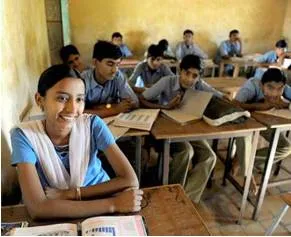
Education the nation and the states
The National Education Policy 2020 underestimates the problem of reconciling the three systems of education in India.Towards the end of a recent webinar on the National Education Policy 2020, a retired civil servant asked a question. Referring to Centre-State relations and roles in education, he asked whether the new policy gives the Centre a predatory role. The use of the word ‘predatory’ felt a bit sharp in the context of education, but the intention obviously was to ascertain whether the new policy observes federal courtesy. Even the 1986 policy didn’t fully acknowledge the variety prevailing in provincial practices and the legacies those practices are rooted in. The trend has been to assume that a national system will evolve and iron out provincial variations. That is a strange assumption. For education to fulfil its social role, it must respond to the specific milieu in which the young are growing up. India has sufficient experience attempts made from the national level to influence systemic realities on the ground. There is a considerable history of strong recommendations made by national commissions and of provincial recalcitrance. States have their own social worlds to deal with, and they often prefer to carry on with the ways they became familiar with in colonial days. A prime example is the continuation of intermediate or junior colleges in several States more than half a century after the Kothari Commission gave its much acclaimed report.
Evolution in the provinces
Historically, the system of education evolved in the provinces. One hundred years ago, the Central Advisory Board of Education was created to co-ordinate regional responses to common issues. The ‘advisory’ character of this administrative mechanism meant that the Board served mainly as a discussion forum. The Constitution, in its original draft, treated the States as the appropriate sphere for dealing with education. But unlike some other federal countries, India chose to have a Ministry of Education at the Centre. Its role was not merely decorative or confined to coordination among differing State perspectives and practices; rather, the Centre was expected to articulate aims and standards, or to pave the road to nation-building and development. Soon after independence, a more substantial sphere of the Centre’s activities in education emerged in the shape of advanced institutions in professional fields and schools specifically meant for the children of civil servants transferable across India. Such institutions received higher investment than the States could afford. The same can be said for national-level resource institutions which guided policy and encouraged new practices.
Thus, concurrency was already a reality before the 1976 amendment formally included it in the Constitution. What it might mean after the Emergency was an open question. A decade later, when the national policy was drafted under a youthful leader, it emphasised national concerns and perspective without specifically referring to provincial practices that indicated strong divergence. Engagement with the States remained a function of the Planning Commission. In the meantime, a burgeoning private sector had begun to push both public policy and popular perceptions of education. The force of this push can be measured from the difference between the 1986 policy and its own action programme published six years later. Throughout the 1990s, those in charge of education remained hesitant to explain publicly how exactly liberalisation would apply to this traditionally public responsibility. The rapidly expanding and globalising urban middle class had already begun to secede from the public system, posing the awkward question of why education cannot be sold if there are willing buyers. Systemic chaos grew, leaving the policy behind.
Three systems
India now has three systems. To call them sectors would be an understatement. There is a Central system, running an exam board that has an all-India reach through affiliation with English-medium private schools catering to regional elites. Two school chains run by the Centre are part of this system. The Central system also includes advanced professional institutes and universities that have access to greater per capita funding than what their counterparts run by the States can afford. These latter ones belong to the second system which also features provincial secondary boards affiliating schools teaching in State languages. The third system is based on purely private investment. Internationally accredited school boards and globally connected private universities are part of this third system. These institutions represent a new level of freedom from state norms.
At the school level too, the new policy proposes a post-RTE structural shift, ignoring the fact that the RTE itself has not yet been fully implemented. It is useful to recall that the RTE was drafted with prolonged involvement with the States, not mere consultation. The consensus for such a law was no less difficult to create than the formulation of its content. A vital role was played by the highest judiciary in pushing the polity towards recognising children’s right to be at school rather than at work. This was a historic social turn towards greater parity between sharply unequal strata. It might not have been accomplished if the Centre had not played an assertive role. Further progress of this role called for continued financial support for the implementation of RTE and policy guidance for the proper use of this support so that regional disparities diminish.



Top court quashes FIRs against Gen Z protesters
Sep 04, 2026






Stay updated with The Hindu Editorial Vocab24 app, your definitive source for breaking news and comprehensive coverage from India and around the globe. Whether it's political developments, business updates, sports highlights, the latest technology trends, or current events, The Hindu brings live, accurate, and reliable news directly to your device.
Don’t fall for sensationalized or fake news shared online. Read and share accurate updates with friends and family through The Hindu Editorial Vocab24 app. Download it today!
News Coverage in The Hindu Editorial Vocab24 App
Breaking News: Receive instant notifications on breaking news stories as they unfold. Stay informed about major events and developments in India and around the world with live blogs, news in shorts videos, and concise articles.
Politics: Get the latest updates on Indian politics, including elections, policy changes, government decisions, and political events that shape the nation.
Business and Economy: Stay ahead in the economic landscape with detailed business news and market analysis. Learn about stock market trends, financial reports, corporate news, and economic developments to make informed investment decisions.
Current Events: Follow stories on social issues, policy changes, global events, and daily current affairs, tailored for UPSC and other competitive exam preparations.
Technology: Keep up with the latest gadgets, innovations, and tech trends. Read expert reviews and analyses in short, concise updates on cutting-edge technology from India and beyond.
Sports: Never miss a moment of your favorite sports. Get live scores, match reports, and expert analysis on cricket, football, tennis, and more.
International News: Stay informed about global events and geopolitical developments, including the Russia-Ukraine war, Israel-Palestine conflict, and other key international stories.
Local News: Stay connected to your community with the latest updates on city events, issues, and local news. Coverage includes hyperlocal updates from cities like Bangalore, Chennai, Delhi, Hyderabad, Mumbai, Kolkata, and more.
Trending Topics: Discover what's trending today with the most talked-about stories and hot topics across India and the world.
Experience journalism that values integrity, accuracy, and reliability. Download The Hindu Editorial Vocab24 app today and stay connected with the world.
Subscribe to our newsletter!







