

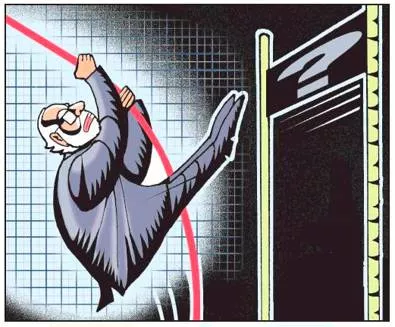
Economy to bjp are you listening
State results may be the first warning for BJP that nationalism+welfarism won’t deliver anymore.There are so many ways to slice and dice Indian election results that those brave and/ or foolish enough to try and quickly interpret verdicts run a high chance of missing any number of insights. With that caveat out of the way, here’s my day-of-the-result take on what is the most significant message Haryanvis and Maharashtrians have sent to BJP.
That message is: The ongoing economic slowdown is finally starting to show up as a non-trivial electoral determinant.
There are good arguments against my thesis.
BJP’s Haryana performance can be explained by a re-consolidation of Jat votes against the party. Indeed, BJP’s 2019 assembly poll vote share has gone up in Haryana compared to 2014 (36.2% vs 33.2%). That the party still couldn’t get a simple majority is surely because Jats decided to try and vote out the non-Jat incumbent chief minister Manohar Lal Khattar.
In Maharashtra, BJP’s strike rate has actually improved, since it contested fewer seats this time (164 in 2019, 260 in 2014) – in 2014 state polls, BJP and Shiv Sena fought separately. And even while contesting far fewer seats in 2019, BJP’s vote share has dropped moderately to 25.3%, compared to 27.8% in 2014 state polls. BJP’s pre-poll ally Shiv Sena’s vote share has also dropped moderately to 17% from 19.4% in 2014. This is difficult to read as a big swing in Maharashtra against the ruling combine. And after all, BJP and Sena, whatever their internal wrangling now, are comfortably placed to retain power. And in Haryana, BJP is still the single largest party.
State and national verdicts have started going different ways repeatedly, and so to read a national message from state polls is a fallacy. MP, Rajasthan and Chhattisgarh voted BJP out in 2018 and Gujarat gave BJP a fright in 2017 state polls but all states voted overwhelmingly for the party in 2019 national polls. Odisha gave BJP a handsome proportion of Lok Sabha seats but resoundingly elected BJD in the state assembly, when polls were held simultaneously earlier this year. Karnataka didn’t give BJP a clear mandate in state polls – the subsequent fall of the Congress-JD(S) government was a different story – but BJP swept in Lok Sabha. Given all this, won’t it be injudicious to read Haryana and Maharashtra results as anything more than mostly a sum of local factors? For example, BJP managed restive Marathas in Maharashtra better than it did restive Jats in Haryana. Or, the fact that seven of Khattar’s ministers lost in Haryana indicates that local factors played a big role.
All of this does seem to question my thesis about these results being the first warning sign from the economy to BJP. So, here are my counterarguments.
First, elections were held in Haryana and Maharashtra with Congress in near-disarray, BJP’s poll machinery in top gear and its two big stars and strategists, Narendra Modi and Amit Shah, front and centre in campaigning. Imagine if Congress hadn’t blundered over Haryana’s local party leadership and in Maharashtra, it had campaigned vigorously. It is not a stretch to think BJP may have suffered more in both states.
Second, BJP barely mentioned economy and related issues in its campaigning. Its themes were ‘nationalism’ and welfarism. This combination won general election for the party earlier this year, when the economy was already in the slowdown mode. This formula was buttressed post-general election. First, by extending the PM-Kisan scheme to more income groups. Second, via the Jammu and Kashmir decision on Articles 370 and 35A. Third, by aggressive rhetoric on illegal migrants and the National Register for Citizens. And fourth, via the Bharat Ratna for Veer Savarkar pitch. This seemed a potent combination to many, including all pollsters bar Axis. But something else was at play against this – that surely is at least one explanation for BJP’s less-than-rousing performance in both states.
It’s not at all illogical to suggest that the ‘something else’ was the sharpening of the economic slowdown post-general election. Maharashtra is India’s largest state economy and Haryana, although a small state, is the 13th largest state economy, and fifth in terms of per capita income. Both have good industrial bases and large rural populations. The sharpening slowdown has, all data sets suggest, hit both urban and rural population. Rural demand distress is in fact now acute. In both Haryana and Maharashtra, BJP’s electoral performance in many rural areas shows a distinct dip. It will be heroic to argue that the slowing economy is not playing a role at all.
Indeed, an interesting hypothesis to explore will be whether local factors against BJP assumed sharper overtones because the economic slowdown is so pronounced. That is, had the economy been doing better, may be the Jat vote in Haryana and local issues that pulled BJP/ Sena down in some Maharashtra regions would have had less impact.
Finally, GDP growth was likely around 5% or may be slightly less – FY20 second quarter data is yet to come out – as campaigning for these state elections got underway. It’s not unreasonable to assume that in a country that needs 8% average annual growth on a sustained basis to aim for mass prosperity, 5% growth will start impacting poll results at some point of time.
So, there’s likely a message from the economy to BJP from Haryana and Maharashtra. The party should listen.











Stay updated with The Hindu Editorial Vocab24 app, your definitive source for breaking news and comprehensive coverage from India and around the globe. Whether it's political developments, business updates, sports highlights, the latest technology trends, or current events, The Hindu brings live, accurate, and reliable news directly to your device.
Don’t fall for sensationalized or fake news shared online. Read and share accurate updates with friends and family through The Hindu Editorial Vocab24 app. Download it today!
News Coverage in The Hindu Editorial Vocab24 App
Breaking News: Receive instant notifications on breaking news stories as they unfold. Stay informed about major events and developments in India and around the world with live blogs, news in shorts videos, and concise articles.
Politics: Get the latest updates on Indian politics, including elections, policy changes, government decisions, and political events that shape the nation.
Business and Economy: Stay ahead in the economic landscape with detailed business news and market analysis. Learn about stock market trends, financial reports, corporate news, and economic developments to make informed investment decisions.
Current Events: Follow stories on social issues, policy changes, global events, and daily current affairs, tailored for UPSC and other competitive exam preparations.
Technology: Keep up with the latest gadgets, innovations, and tech trends. Read expert reviews and analyses in short, concise updates on cutting-edge technology from India and beyond.
Sports: Never miss a moment of your favorite sports. Get live scores, match reports, and expert analysis on cricket, football, tennis, and more.
International News: Stay informed about global events and geopolitical developments, including the Russia-Ukraine war, Israel-Palestine conflict, and other key international stories.
Local News: Stay connected to your community with the latest updates on city events, issues, and local news. Coverage includes hyperlocal updates from cities like Bangalore, Chennai, Delhi, Hyderabad, Mumbai, Kolkata, and more.
Trending Topics: Discover what's trending today with the most talked-about stories and hot topics across India and the world.
Experience journalism that values integrity, accuracy, and reliability. Download The Hindu Editorial Vocab24 app today and stay connected with the world.
Subscribe to our newsletter!







