

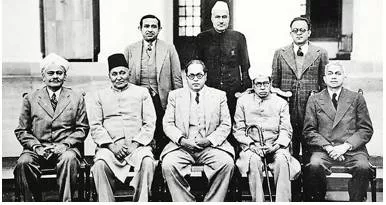
Drafting a new constitution is impossible
That the Centre is suppressing the powers of the States is not reason enough for a new statute.Recently, the Chief Minister of Telangana said India needs a new Constitution, as, according to him, governments at the Centre over the years have been suppressing the powers of the States. Being a citizen and a constitutional head of state, he was not wrong in exercising his fundamental right to express his views freely. Nor was what he said wrong: Central governments have indeed been suppressing the powers of the States in various ways. The Supreme Court, in judgments such as S.R. Bommai v. Union of India (1994) and Govt. Of NCT of Delhi v. Union of India (2018), has castigated governments at the Centre for this.
But the question is, can the people of India give themselves a new Constitution? Noted jurist Fali S. Nariman, in a lecture titled ‘The Silences in Our Constitutional Law’, delivered in 2005, rightly said, “We will never be able to piece together a new Constitution in the present day and age even if we tried: because innovative ideas — however brilliant, howsoever beautifully expressed in consultation papers and reports of commissions — cannot give us a better Constitution. In Constitution-making there are other forces that cannot and must never be ignored — the spirit of persuasion, of accommodation and of tolerance — all three are at a very low ebb today”. We can add a few more forces which cannot be ignored today, such as casteism, nepotism and corruption.
Nation first
This article highlights a few events that took place while India’s Constitution was drafted to argue how these events may never take place in the present scenario. The first is the appointment of B.R. Ambedkar as chairman of the Drafting Committee. Granville Austin, in his book The Indian Constitution: Cornerstone of a Nation, wrote that Ambedkar was originally elected to the Assembly as a member from Bengal, but lost his seat during Partition. He was subsequently elected from the Bombay Presidency at the behest of the Congress high command. This shows that the biggest party then had an accommodative spirit, which seems lacking today. Ambedkar was fighting to ensure rights for the depressed classes and, in his own words, he came to the Assembly to “safeguard the interests of the Scheduled Castes”. But he was trusted for his passion and talent and elected chairman of the Drafting Committee by the Constituent Assembly, which was dominated by the Congress. The result is the Constitution we see today, which safeguards the rights of majority and minority communities. Today, when caste and nepotism play a pivotal role in electing even a ward member, consensus over a new Constitution would be impossible.
It took two years, 11 months and 18 days to draft the present Constitution. During this period, the members read the constitutions of other nations, consulted constitutional experts, drafted the Constitution, debated it, redrafted it and approved it. During Constituent Assembly debates, if five minutes were wasted one day, the House would assemble five minutes earlier the next day and sit until night to complete pending work. This showed value for time, and value for work done for the nation. Now, all we see is ruckus and noise in Parliament, with little debate or discussion taking place on Bills. During Constituent Assembly debates, dissenters and hard-core critics were tolerated and their suggestions, if found apt, were accommodated. If their suggestions were not found apt, there would be a healthy debate. Now, Bills are passed without allowing Opposition members to express their views completely, let alone accommodating their suggestions.
Third, the members of the Constituent Assembly emerged from the clutches of colonial rule. They knew the sufferings that they and the nation had undergone under foreign rule and were determined to frame a Constitution, and spelled out fundamental rights, which allow every individual a right to live their life with liberty and dignity and challenge the state’s arbitrary decisions before an independent judiciary. Today’s leaders seem to lack that spirit. Members of the Constituent Assembly chose the nation first; today’s leaders tend to choose their party first.
Fourth, the Constitution states that India is a “Sovereign Socialist Secular Democratic Republic”. It protects the rights of every section of society. On the other hand, today’s leaders give priority to particular ideologies and castes. Given this, drafting a new Constitution will be a chaotic exercise and will shut the voices of some sections, especially the vulnerable.
Fifth, and most importantly, an unelected body was trusted by the Constitution framers to declare the law. The purpose behind choosing an unelected body was that, by its nature of being not answerable to anyone except the Constitution, the judiciary can adjudicate disputes in an independent, free, fair and impartial manner. Today, leaders may choose to become judges as well as rulers. For instance, through the Constitution (Thirty-Second Amendment) Act, 1973, a proviso to clause 5 of Article 371D was inserted which gave power to the Andhra Pradesh government to modify or annul any order passed by the Administrative Tribunal, constituted to deal with service matters in which the government is a party. This Tribunal replaced the High Court. When the government is party to the litigation and when the Tribunal is exercising the powers of the High Court, how can the government be given power to override the decisions of the Tribunal? Fortunately, the Supreme Court declared this proviso as unconstitutional in P. Sambamurthy v. State of A.P. (1986). There are other such examples.
A strong Centre
Before independence, India comprised over 550 princely States, suffered from the problems created by Partition and faced a looming economic crisis. Thus, the Constituent Assembly’s members tilted towards a strong Centre with a blend of cooperative federalism. It is true that the governments at the Centre abuse their powers to cripple Opposition-ruled States, but that does not call for creating a new Constitution. It calls for seeking mandate from the people to elect regional parties in general elections so that States can have dominance in the Union, besides approaching the Supreme Court under Article 131 whenever the need arises to resolve conflicts between the Centre and State.
The Chief Minister should remember that if he could become the Chief Minister of Telangana, it is only because of the present Constitution, as despite the Assembly of united Andhra Pradesh rejecting the resolution in 2013 to bifurcate Andhra Pradesh, it was Parliament, which by exercising powers conferred under Article 3 of the Constitution, carved out the two States.
Recently, the Chief Minister of Telangana said India needs a new Constitution, as, according to him, governments at the Centre over the years have been suppressing the powers of the States.
It took two years, 11 months, and 18 days to draft the present Constitution.
Before independence, India comprised over 550 princely States, suffered from the problems created by Partition and faced a looming economic crisis.



Top court quashes FIRs against Gen Z protesters
Sep 04, 2026






Stay updated with The Hindu Editorial Vocab24 app, your definitive source for breaking news and comprehensive coverage from India and around the globe. Whether it's political developments, business updates, sports highlights, the latest technology trends, or current events, The Hindu brings live, accurate, and reliable news directly to your device.
Don’t fall for sensationalized or fake news shared online. Read and share accurate updates with friends and family through The Hindu Editorial Vocab24 app. Download it today!
News Coverage in The Hindu Editorial Vocab24 App
Breaking News: Receive instant notifications on breaking news stories as they unfold. Stay informed about major events and developments in India and around the world with live blogs, news in shorts videos, and concise articles.
Politics: Get the latest updates on Indian politics, including elections, policy changes, government decisions, and political events that shape the nation.
Business and Economy: Stay ahead in the economic landscape with detailed business news and market analysis. Learn about stock market trends, financial reports, corporate news, and economic developments to make informed investment decisions.
Current Events: Follow stories on social issues, policy changes, global events, and daily current affairs, tailored for UPSC and other competitive exam preparations.
Technology: Keep up with the latest gadgets, innovations, and tech trends. Read expert reviews and analyses in short, concise updates on cutting-edge technology from India and beyond.
Sports: Never miss a moment of your favorite sports. Get live scores, match reports, and expert analysis on cricket, football, tennis, and more.
International News: Stay informed about global events and geopolitical developments, including the Russia-Ukraine war, Israel-Palestine conflict, and other key international stories.
Local News: Stay connected to your community with the latest updates on city events, issues, and local news. Coverage includes hyperlocal updates from cities like Bangalore, Chennai, Delhi, Hyderabad, Mumbai, Kolkata, and more.
Trending Topics: Discover what's trending today with the most talked-about stories and hot topics across India and the world.
Experience journalism that values integrity, accuracy, and reliability. Download The Hindu Editorial Vocab24 app today and stay connected with the world.
Subscribe to our newsletter!







