

Does gandhi have a caste
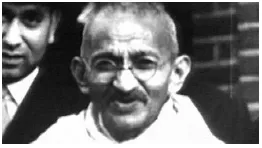
In March 1922, Gandhi was arrested on charges of sedition. When he was produced in court, the magistrate, after the law then prevalent, asked the prisoner to identify himself by caste or profession. Gandhi answered that he was “a farmer and weaver”. The magistrate was startled (चौंक पड़ना) ; so, he asked the question again, to get the same answer. We have recently been reminded that Gandhi was born in a bania household. But, back in 1922, few, if any, banias were farmers or weavers; few, if any, are even today. Yet Gandhi’s self-description was accurate; for in the Sabarmati Ashram, Gandhi did not trade, but he did spin daily and experiment with crops and livestock rearing. That statement to an Ahmedabad court was a striking example of Gandhi’s lifelong commitment to making his caste origins irrelevant to his personal and public life. This commitment was manifested early. In September 1888, Mohandas Gandhi, then just short of his 20th birthday, decided to sail to England to study law. This horrified his orthodox (परम्परानिष्ठ/धर्मनिष्ठ) Modh Bania community, whose head warned Mohandas that he would be excommunicated if he travelled overseas. But the boy defied him and went anyway. In the days before his departure, recalled Gandhi in his autobiography, he was “hemmed in by all sides. I could not go out without being pointed and stared at by someone or other. At one time, while I was walking near the Town Hall, I was surrounded and hooted by them, and my poor brother had to look at the scene in silence”. Banias were, and often still are, obsessed with social taboos (प्रतिबंध/निषेध) . Yet, while in London, Gandhi made so bold as to share a home and break bread with a Christian named Josiah Oldfield. Later, in South Africa, he and his wife Kasturba shared a home and kitchen with Henry and Millie Polak, he a Jew, she a Christian, both white. Johannesburg was then the most racist city in the most racist country in the world. By their remarkable act, the Gandhis and the Polaks defied both the casteism of Indians and the racism of Europeans. In the satyagrahas he led in South Africa, Gandhi’s closest associates were a Parsi named Rustomji, a Muslim named Kacchalia, and a Tamil named Naidoo. Watching him at work, transcending (से बढ़कर होना) all social boundaries, was his Jewish friend and housemate Henry Polak. In a vivid (जीवंत/प्रबल) (but sadly unpublished) account of the passive resistance movement in South Africa, Polak wrote of its leader that, while “a Vaishnava Bania by birth, he is by nature a Brahmin, the teacher of his fellow-men, not by the preaching (उपदेश करना/प्रवचन करना) of virtue, but by its practice; by impulse a Kshatriya, in his chivalrous (उदार/शिष्ट) defence of those who had placed their trust in him and look to him for protection; by choice a Sudra, servant of the humblest and most despised (तिरस्कृत) of his fellow-men. It is said of [the seer] Ramkrishna that he once swept out the foul hut of a pariah (अछूत/परित्यक्त) with his own hair, to prove his freedom from arrogance towards and contempt for the untouchable outcast. The twice-born Prime Minister’s son [Gandhi] has been seen with his own hands to purify the sanitary convenience of his own house and of the gaols in which he has been interned.” Having spoken of Gandhi’s ability to be of all castes and of no caste at all, Polak then stressed his ecumenism (सार्वभौमिकता) of faith: “Religion implies, for him, a mighty and all-embracing tolerance. Hindu by birth, he regards all men — Mahomedans, Christians, Zoroastrians, Jews, Buddhists, Confucians — as spiritual brothers. He makes no differences amongst them, recognising that all faiths lead to salvation, that all are ways of viewing God, and that, in their relation to each other, men are fellow-human beings first, and followers of creeds afterwards. Hence it is that men of all faiths and even of none, are his devoted friends, admirers, and helpers, and that, diverse in belief as is the community of which he has been the foremost figure, he is recognised as one who, in the last resort, may be looked to, to render impartial justice between man and man.” In South Africa, Gandhi was alerted to the horrors of untouchability by his Tamil friends. On returning to India in 1915, he established a “Satyagraha Ashram” in Ahmedabad. Early on, the Ashram took in a family from the Dhed caste of “untouchables”, consisting of Dudhabhai, his wife Danibehn, and their baby daughter Lakshmi. When they arrived, there was much grumbling (असन्तोष दिखलाना) , not least from Gandhi’s own family members. Kasturba herself was not happy with this decision to defy the orthodox. The Dhed family was prevented from drawing water from the common well, until Gandhi said, in that case, he would not avail himself of the well either. Through the three decades of his work in India, Gandhi steadily and persistently attacked the practice of untouchability. To be sure, he moved in stages. While, in his own ashram, all members ate and mingled together regardless of caste, he did not at first advocate inter-dining or inter-mingling to society at large. However, as he grew more popular, and more sure of his public influence, he urged every Hindu not just to abolish untouchability from their minds and hearts, but to disregard matters of caste in where they lived, whom they ate with or befriended, and whom they married. (This evolution in his thinking is documented in a classic early essay by the Gandhi scholar Denis Dalton; it is also the subject of a forthcoming book by Nishikant Kolge, significantly entitled Gandhi Against Caste. Gandhi had four biological sons, all, like him, technically banias by birth. But of his two adopted daughters, one was born in an untouchable home (the aforementioned Lakshmi), while the other was an Englishwoman (Madeleine Slade, known as Mirabehn). In India, as in South Africa, Gandhi comprehensively disregarded caste and religious distinctions in his personal and political life. His closest friend was a Christian priest, C.F. Andrews; and he lived, and died, for harmony between India’s two largest religious communities, Hindus and Muslims. Like most Indian political parties, the BJP cannot and does not transcend caste or religion in its own practice. Dividing Dalits into Jatavs and non-Jatavs, dividing OBCs into Yadavs and non-Yadavs, dividing Indians into Hindus and Muslims, is how it seeks to win elections and remain in power. The reduction by the BJP president of Gandhi to his caste origins is therefore entirely understandable. It is another matter that Amit Shah’s comment displays the wide, indeed unbridgeable, gulf (बड़ा अन्तर) between his moral universe and that of the man we call the Father of the Nation.Startle (verb)
Cause to feel sudden shock or alarm. चौंक पड़ना
Synonyms: Surprise, Alarm, Give Someone A Shock, Amaze, Astonish, Astound.
Example: Videos which shock and startle people often go viral on the Internet.
Orthodox (adjective)
Following or conforming to the traditional or generally accepted rules or beliefs of a religion, philosophy, or practice. परम्परानिष्ठ/धर्मनिष्ठ
Synonyms: Conservative, Traditional, Conformist, Conventional
Example: The tenured economic professors who had taught their orthodox ideas for years did not appreciate questions from the newly hired professor.
Taboo (noun)
A social or religious custom prohibiting or restricting a particular practice or forbidding association with a particular person, place, or thing. प्रतिबंध/निषेध
Synonyms: Prohibition, Proscription, Veto, Ban, Restriction, Non-Acceptance
Example: In the old days, even the idea of a homosexual relationship was viewed as a taboo arrangement.
Vivid (adjective)
Lively and vigorous. जीवंत/प्रबल
Synonyms: Dynamic, Flamboyant, Lively, Animated, Spirited, Vibrant
Example: The artist was known for his vivid paintings that were distinguished by their colorful hues.
Preach (verb)
Publicly proclaim or teach (a religious message or belief). उपदेश करना/प्रवचन करना
Synonyms: Give A Sermon, Sermonize, Teach, Advocate
Example: Practice what you preach—don't smoke if you tell your children not to smoke.
Chivalrous (adjective)
(Of a man or his behavior) courteous and gallant उदार/शिष्ट
Synonyms: Gallant, Gentlemanly, Honorable, Respectful, Courteous
Example: When the chivalrous man politely asked me to dance, I immediately accepted his invitation.
Despise (verb)
Feel contempt or a deep repugnance for. तिरस्कार करना
Synonyms: Detest, Hate, Loathe, Abhor, Abominate, Execrate, Regard With Contempt
Example: Because Sarah is disabled, she tends to despise non-disabled people who use handicapped parking spaces.
Pariah (noun)
An outcast./ a member of a low caste अछूत/परित्यक्त
Synonyms: Outcast, Persona Non Grata, Leper, Reject, Untouchable
Example: When the dacoit was released from prison, he was treated like a pariah in his community.
Grumble (verb)
Complain about something in a bad-tempered way. असन्तोष दिखलाना
Synonyms: Complain, Moan, Groan, Whine, Mutter, Grouse
Example: There's been a lot of grumbling among the employees as many of them did not get a hike.
Gulf (noun)
A large difference or division between two people or groups, or between viewpoints, concepts, or situations. बड़ा अन्तर
Synonyms: Divergence, Polarity, Division, Separation, Difference
Example: The gulf in the prices of Phones is due to quality of software and hardware.






Stay updated with The Hindu Editorial Vocab24 app, your definitive source for breaking news and comprehensive coverage from India and around the globe. Whether it's political developments, business updates, sports highlights, the latest technology trends, or current events, The Hindu brings live, accurate, and reliable news directly to your device.
Don’t fall for sensationalized or fake news shared online. Read and share accurate updates with friends and family through The Hindu Editorial Vocab24 app. Download it today!
News Coverage in The Hindu Editorial Vocab24 App
Breaking News: Receive instant notifications on breaking news stories as they unfold. Stay informed about major events and developments in India and around the world with live blogs, news in shorts videos, and concise articles.
Politics: Get the latest updates on Indian politics, including elections, policy changes, government decisions, and political events that shape the nation.
Business and Economy: Stay ahead in the economic landscape with detailed business news and market analysis. Learn about stock market trends, financial reports, corporate news, and economic developments to make informed investment decisions.
Current Events: Follow stories on social issues, policy changes, global events, and daily current affairs, tailored for UPSC and other competitive exam preparations.
Technology: Keep up with the latest gadgets, innovations, and tech trends. Read expert reviews and analyses in short, concise updates on cutting-edge technology from India and beyond.
Sports: Never miss a moment of your favorite sports. Get live scores, match reports, and expert analysis on cricket, football, tennis, and more.
International News: Stay informed about global events and geopolitical developments, including the Russia-Ukraine war, Israel-Palestine conflict, and other key international stories.
Local News: Stay connected to your community with the latest updates on city events, issues, and local news. Coverage includes hyperlocal updates from cities like Bangalore, Chennai, Delhi, Hyderabad, Mumbai, Kolkata, and more.
Trending Topics: Discover what's trending today with the most talked-about stories and hot topics across India and the world.
Experience journalism that values integrity, accuracy, and reliability. Download The Hindu Editorial Vocab24 app today and stay connected with the world.
Subscribe to our newsletter!







