

Diplomatic initiatives
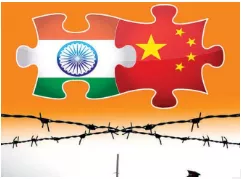
The clamorous exchanges between India and China of recent days did much to sour the atmosphere and exaggerate (बढ़ा चढ़ाकर कहना) bilateral differences but did not do much to provide necessary information about what is at issue, let alone indicate how best to find a way through the problem. In the superheated atmosphere, a sense of near crisis was created in what is a sensitive part of the border, with reports of deliberate violation of the status quo trickling out (धीरे धीरे होना) , leading to strong official statements from either side. China has been uncommonly forceful in blaming India and pushing its demand for withdrawal by India as a prelude to any move towards amicable (मैत्रीपूर्ण) settlement, while India has stuck to its guns and refused to bow before Chinese demands. With both parties in non-compromising mood, it looked very much as if they were in an impasse from which extraction would be tough, with the added complication of having to deal with a stirred public opinion ready to castigate anything that looked like a climb down (withdraw from a position taken up in argument or negotiation) . In these circumstances, it was a bold step by the External Affairs Minister to call for diplomatic action to resolve the present difficulties, rather than adding to the tough talk that over the last few weeks has reverberated (गुंजायमान होना) loudly in the Himalayas. Only a few of the torrent of comments on the subject took a calmer view and pointed out that diplomatic exchanges were needed if incidents were to be avoided, but the general tenor (sense) of the media commentary has been strong and uncompromising. It is inly (in a manner suggesting great depth of knowledge or understanding) now, after the high level intervention of the External Affairs Minister herself, and her calling for diplomatic action to resolve the present difficulty, that it has begun to look as if the differences may be brought under control. It is already noticeable, after the Minister’s intervention, that the harsh exchanges between the two sides have given way to more reasonable statements that can open the way to better results. This is far from being the first time there has been a faceoff along the border; there have been plenty of comparable incidents in the past, but the two countries have succeeded in keeping matters under control and preventing dangerous escalation of their differences. They have instituted a process of regular consultations on border matters that has permitted them to deal with problematic issues before they become dangerous; nevertheless, it is an armed frontier and caution is enjoined on the two countries lest relatively small differences escalate into bigger confrontations that nobody wants. Moreover, in Doklam there is a third party to be taken into account, Bhutan, which in fact had first sounded the alarm when it found China pushing into unresolved border areas that it had been discussing with China for years without final settlement. And as the sensitivity of the mountain border has been made plain through discussions over more than half-a-century there is every reason to exercise great care when it comes to any action on the ground that can alter the status quo ~ like the Chinese road near the trijunction that started the recent sequence of events. To hark back to (go back to something earlier) some of the previous tricky situations along the border, a few decades ago there was an India-China confrontation in the Sumdorung Chu area, where there was an unexpected buildup of military forces and sharp rhetorical exchanges that threatened at one stage to be leading to military events. It took high-level exchanges, and much discussion between civil and military personnel from the two countries, to be able to find a satisfactory way out of what had become a threatening situation. A successful visit to China by India’s PM, Rajiv Gandhi, had a salutary (producing good effects) effect in improving the overall tenor of the relationship and paved the way for resolution of specific problems like that of Sumdorung Chu. In essence, what the two sides were ultimately able to agree was mutual withdrawal of their military posts from the most advanced positions in a manner that in effect reaffirmed the previous status quo. And in order to remove the risk of inadvertent violation with its attendant danger of escalation, it was agreed that military posts in the area would be located away from ‘eyeball-to-eyeball’ range of each other, that is to say, beyond the range of the small arms weapons with which the soldiers were equipped. That arrangement has worked satisfactorily in restoring calm to what had once been a tense and threatening section of the border, and could perhaps provide a useful precedent when it comes to the current issues in the trijunction area. Another notable initiative, in an entirely different section of the border, and again at the instance of MEA, is to reopen cross LOC trade at Uri where it had been re-started some years ago to considerable satisfaction in J-K, where it brought benefit to many traders and signified a useful thaw (an increase in friendliness or cordiality) in Indo-Pak relations. In the event, revived cross-LOC trade flourished greatly, to the extent that in some respects it was able to edge out the regular trade across the international border, but more recently this trade has been in the doldrums (not very active) owing to misuse of the facilities by unscrupulous elements. A particularly unacceptable effort by some persons from the other side of the LOC is to use that route for smuggling drugs like heroin into India, and this has compelled the Indian authorities to intervene; media reports suggest that India’s NIA has disfavoured the cross-LOC trade for the security risks it can pose. In these circumstances, it is a bold move by MEA to indicate support for cross-LOC trade restoration, which will gratify traders in J-K as something that will bring them considerable benefit. These recent developments show a more outspoken MEA, which is to be welcomed, for that Ministry needs to be in command if foreign policy is to have consistency and continuity. In this context, it should be noted that the official head of MEA has said that relations with China remain the Ministry’s chief priority. At the same time, it was pointed out that in many respects relations between the two countries are doing well, especially in economic matters. These exchanges are valued by India, and as it prepares for more than one regional and interregional Summit meeting in the next few months where the leaders will meet, it is salutary that MEA has been able to begin to set the scene for constructive dialogue. Border problems cannot be wished away and need to be addressed with necessary seriousness. But we should not lose sight of broader bilateral issues and opportunities.Inly (adverb)
In a manner suggesting great depth of knowledge or understanding) सत्यता से/पूर्ण रूप से
Synonyms: Deeply, Inwardly, Thoroughly
Example: Inly hurt by castigating remarks of her boss, she resigned from the job.
Tenor (noun)
(The general meaning, sense, or content of something.) अभिप्राय
Synonyms: Meaning, Sense, Purpose, Stuff, Substance, Gist
Example: The first paragraph of any report should provide readers with the tenor of the paper.
Climb down (noun/phrase)
(Withdraw from a position taken up in argument or negotiation) वापसी/पीछे हटना
Synonyms: Back down, Capitulate, Yield, Give in/up, Cave in, Retreat, Backtrack, Back-pedal
Example: The Company had to climb down over its claim that it was offering a free service for lifetime to all its customers.
Reverberate (verb)
Be repeated several times as an echo. Figuratively - to cause effects afterwards गुंजायमान होना
Synonyms: Resound, Echo, Repeat, Resonate, Pulsate
Example: The drunk driver had no idea his foolish decision would reverberate and destroy the lives of five families.
Amicable (adjective)
Characterized by friendliness and absence of discord. मैत्रीपूर्ण
Synonyms: Cordial, Civil, Courteous, Amiable, Concordant
Example: Most customer service agents are amicable people who are good at settling disagreements.
Hark back (phrasal verb)
(Go back to something earlier) वापस जाना/ याद दिलाना
Synonyms: Look Back, Remind, Bethink, Recall, Remember
Example: Seeing a horse and buggy in the park harks back to the time when horses drew the wagons.
Salutary (adjective)
(Producing good effects) हितकारी/लाभप्रद
Synonyms: Beneficial, Good, Advantageous, Profitable, Salubrious
Example: In addition to effectively teaching the curriculum, our professor often educates us with salutary lessons that personally enrich our lives.
Thaw (noun)
(To become friendlier or more relaxed /an increase in friendliness or cordiality) मैत्रीपूर्ण होना /नम्र होना
Synonyms: Harmony, Rapprochement, Reconciliation, Cordiality
Example: After a long war, the treaty was signed between the countries to establish thaw.
In the doldrums (idiom)
(A state of inactivity or stagnation /not very active) डाँवाडोल स्थिति में
Synonyms: Crestfallen, Depressed, Despondent, Disheartened, Glum
Example: When the economy is in the doldrums, every business feels the effects.
Trickle out (phrasal verb)
To come, go, or pass bit by bit धीरे धीरे होना
Synonyms: Slowly come out, Intermittently Happen, Dribble out, Leak
Example: The dissatisfied members of the audience trickled out of the theater three and four at a time.






Stay updated with The Hindu Editorial Vocab24 app, your definitive source for breaking news and comprehensive coverage from India and around the globe. Whether it's political developments, business updates, sports highlights, the latest technology trends, or current events, The Hindu brings live, accurate, and reliable news directly to your device.
Don’t fall for sensationalized or fake news shared online. Read and share accurate updates with friends and family through The Hindu Editorial Vocab24 app. Download it today!
News Coverage in The Hindu Editorial Vocab24 App
Breaking News: Receive instant notifications on breaking news stories as they unfold. Stay informed about major events and developments in India and around the world with live blogs, news in shorts videos, and concise articles.
Politics: Get the latest updates on Indian politics, including elections, policy changes, government decisions, and political events that shape the nation.
Business and Economy: Stay ahead in the economic landscape with detailed business news and market analysis. Learn about stock market trends, financial reports, corporate news, and economic developments to make informed investment decisions.
Current Events: Follow stories on social issues, policy changes, global events, and daily current affairs, tailored for UPSC and other competitive exam preparations.
Technology: Keep up with the latest gadgets, innovations, and tech trends. Read expert reviews and analyses in short, concise updates on cutting-edge technology from India and beyond.
Sports: Never miss a moment of your favorite sports. Get live scores, match reports, and expert analysis on cricket, football, tennis, and more.
International News: Stay informed about global events and geopolitical developments, including the Russia-Ukraine war, Israel-Palestine conflict, and other key international stories.
Local News: Stay connected to your community with the latest updates on city events, issues, and local news. Coverage includes hyperlocal updates from cities like Bangalore, Chennai, Delhi, Hyderabad, Mumbai, Kolkata, and more.
Trending Topics: Discover what's trending today with the most talked-about stories and hot topics across India and the world.
Experience journalism that values integrity, accuracy, and reliability. Download The Hindu Editorial Vocab24 app today and stay connected with the world.
Subscribe to our newsletter!







