

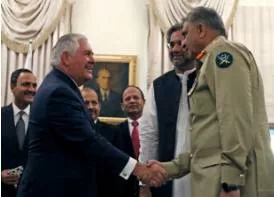
Despite trump’s punitive military aid cut pakistan and u s are still intertwined
Despite Trump’s punitive military aid cut, Pakistan and U.S. are still intertwined (To be or become very closely involved with each other)After President Trump bluntly accused Pakistan of “lies and deceit” on New Year’s Day, then suspended all security aid to the longtime U.S. military ally, Pakistan was widely described as acting like a jilted (to cast off or reject (someone) capriciously or unfeelingly) lover — secretly stricken but publicly defiant and pretending not to care.
Now, a flurry of quieter military and diplomatic contacts over the past two weeks has partly patched things up, but only to a point. At a deeper level, analysts here say, both partners now acknowledge that their relationship is beset by irreconcilable (incapable of being brought into harmony or adjustment; incompatible) differences but that neither can afford a divorce. For decades, the two have maintained a formal but uneasy strategic alliance, first against Soviet designs on Afghanistan and recently against Islamist terrorism. But the breach precipitated by Trump has exposed the underlying reality: that Islamabad and Washington view the region’s threats through opposing lenses. One sees India as a menacing (something that threatens to cause evil, harm, injury, etc.; a threat) next-door behemoth (something enormous, especially a large and powerful organization); the other views it as an emerging democratic partner and strategic ally. One sees Afghanistan as a permanent backyard nuisance and a useful platform for countering Indian influence; the other views it as a dependent war zone and potential Western redoubt against dangerous Islamist groups in the region.
“Pakistan and the United States have finally come to the undeniable conclusion that the other partner is playing footsie with its enemy,” said Moeed Yusuf, a South Asia expert at the U.S. Institute for Peace in Washington, who is on an extended visit to Pakistan. “They have given up on strategic convergence (to come together and unite in a common interest or focus), but they want to keep the channels open so they can cooperate on tactical matters and ensure the relationship does not totally rupture.” Since the initial shock of Trump’s accusatory (accusing or blaming someone) tweet and punitive (intended to punish someone or something) action — which suspended more than $300 million in security aid and could potentially affect billions more — the signals from both capitals have been revealing. Pakistan, under unprecedented U.S. pressure to rein in Islamist groups that operate in Afghanistan and India, has continued to flatly deny it supports them. It also insists it has done all it can to curb militancy and regularly denounces terrorist attacks such the deadly assault on a luxury Kabul hotel on Sunday. Yet it has also recently released two militant leaders with histories of fomenting religious violence, one of whom the United States has demanded that it rearrest. Some hawkish Pakistani commentators, expressing outrage at Trump’s “betrayal,” have suggested that Pakistan retaliate by cutting off overland supply routes to the U.S. military in Afghanistan — or even by severing relations with Washington, now that China has become Pakistan’s most important international economic partner and appears poised to join it in a strategic alliance. But others, including senior military officials, have urged restraint.
“There is no panic in Islamabad — rather, a carefully calibrated, mature and unemotional response to the raving and ranting (to talk in a noisy, excited, or declamatory manner) of a mercurial leader of a declining superpower,” said Mushahid Hussain, a Pakistani senator. While China is building a solid, steady partnership with Pakistan, he said, America’s “bellicosity” and expanding relationship with India and its Hindu nationalist leader “could spark a new Cold War.” American officials, seeking to lower the decibel level without abandoning the administration’s demands, have initiated calls and visits to their counterparts in Islamabad. Within days of the aid cut, Gen. Joseph L. Votel, commander of the U.S. Central Command, told Pakistan’s army chief that the bilateral “turbulence” was “a temporary phase.”
Defense Secretary Jim Mattis, who had repeatedly pressed Pakistani leaders to take tougher action against anti-Afghan insurgents or face U.S. sanctions, told reporters in Washington after the aid suspension that the two military communities would “continue talking with one another, as we always have” and said he was not concerned about China replacing the United States as Pakistan’s strategic partner.
Current and former U.S. diplomats also advised keeping the door open, if only for pragmatic reasons. Richard Olson, an ex-ambassador to Pakistan, wrote in an essay that U.S. sanctions would not work because of Pakistan’s size, military strength and national pride, adding that if Islamabad cuts supply routes to Afghanistan, the U.S. military there could become a “beached whale.” Last week, the top U.S. diplomat for South Asia, Alice Wells, visited Pakistan in what was portrayed here as a “fence-mending” trip, albeit one short on substance.
The message from both sides, in essence, was an agreement not to slam the door shut, even as reminders of major unresolved issues and divergent priorities continue to crop up. Most significant has been Pakistan’s willingness to continue appeasing some Islamist militants, and possibly sheltering others, even as the Trump administration suspended military aid as a direct result of those practices.
This past week, the Intercontinental Hotel complex in Kabul came under a night-long siege by five attackers, causing the deaths of 20 people, including several Americans. The attack was claimed by Taliban insurgents, and Pakistani officials swiftly denounced it and expressed sympathy for the victims.
But senior Afghan officials, including the chief executive and the head of national intelligence, blamed the assault on the Haqqani Taliban faction and claimed it had the backing of Pakistan — the precise charge that led to the U.S. aid cut.
There is also the case of Hafiz Saeed, the rabble-rousing anti-Indian militant leader accused by Indian and U.S. officials of masterminding a deadly terrorist siege in Mumbai in 2008. Pakistani courts released him from house arrest two months ago, and the government has since ignored repeated U.S. demands that Saeed — who has a $10 million U.S. bounty on his head — be rearrested and tried.
Finally, authorities recently freed Sufi Mohammed, an imprisoned extremist cleric who led a violent takeover of Pakistan’s scenic Swat Valley in 2008, resulting in public beheadings, school bombings and other atrocities. His unexpected release and stage-managed comments criticizing his militant past came as Pakistani officials continued to insist they were doing everything possible to eradicate Islamist violence. But not everyone was buying it.
“The return of the Sufi shows in clear terms to the millions of victims of militancy that the state, for all its achievements against the militants, still makes way for the likes of him,” Syed Talat Hussain, a prominent journalist, wrote in the News International newspaper this week. “When old symbols of organized terror are feted by the state, the silent message that beams across is lethal.”
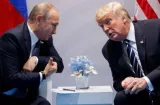
We are not ‘globalists ’ we’re americans
Mar 21, 2018
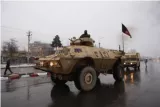
The united states should get out of afghanistan now
Feb 28, 2018






Stay updated with The Hindu Editorial Vocab24 app, your definitive source for breaking news and comprehensive coverage from India and around the globe. Whether it's political developments, business updates, sports highlights, the latest technology trends, or current events, The Hindu brings live, accurate, and reliable news directly to your device.
Don’t fall for sensationalized or fake news shared online. Read and share accurate updates with friends and family through The Hindu Editorial Vocab24 app. Download it today!
News Coverage in The Hindu Editorial Vocab24 App
Breaking News: Receive instant notifications on breaking news stories as they unfold. Stay informed about major events and developments in India and around the world with live blogs, news in shorts videos, and concise articles.
Politics: Get the latest updates on Indian politics, including elections, policy changes, government decisions, and political events that shape the nation.
Business and Economy: Stay ahead in the economic landscape with detailed business news and market analysis. Learn about stock market trends, financial reports, corporate news, and economic developments to make informed investment decisions.
Current Events: Follow stories on social issues, policy changes, global events, and daily current affairs, tailored for UPSC and other competitive exam preparations.
Technology: Keep up with the latest gadgets, innovations, and tech trends. Read expert reviews and analyses in short, concise updates on cutting-edge technology from India and beyond.
Sports: Never miss a moment of your favorite sports. Get live scores, match reports, and expert analysis on cricket, football, tennis, and more.
International News: Stay informed about global events and geopolitical developments, including the Russia-Ukraine war, Israel-Palestine conflict, and other key international stories.
Local News: Stay connected to your community with the latest updates on city events, issues, and local news. Coverage includes hyperlocal updates from cities like Bangalore, Chennai, Delhi, Hyderabad, Mumbai, Kolkata, and more.
Trending Topics: Discover what's trending today with the most talked-about stories and hot topics across India and the world.
Experience journalism that values integrity, accuracy, and reliability. Download The Hindu Editorial Vocab24 app today and stay connected with the world.
Subscribe to our newsletter!







