

Cutting through the white noise
Despite the cancellation of Foreign Minister talks, movement in India-Pakistan ties is possible.After a sudden and brief moment of clear signal, the ‘India-Pakistan channel’ has gone back to static, with the cancellation of talks between the two Foreign Ministers in New York this week. The Foreign Ministers will, no doubt, spar (To practice fighting with someone.) at the UN General Assembly, with a host of diplomats backing them up by exercising their right of reply to the comments made by either side. And ruling party and government spokespersons will bring up the rear in Delhi and Islamabad.
The road travelled
Amidst all this, however, there is space to reconsider developments of the last few months, and recast, if desired, a new way of imagining the relationship. To begin with, the cancellation last week of the meeting between External Affairs Minister Sushma Swaraj and Pakistan Foreign Minister Shah Mehmood Qureshi has not fundamentally changed much on the ground. The two leaders would have gone into the talks with an eye over their shoulders (Keeping watch for danger or threats to oneself.) anyway, to gauge the domestic political impact of each gesture, smile and word during the meeting. For Ms. Swaraj, elections are around the corner in Madhya Pradesh, from where she’s a Lok Sabha MP, with the general election not far way either. For Mr. Qureshi, fresh from the Pakistan Tehreek-i-Insaf’s electoral win, there would have been much scrutiny (The careful and detailed examination of something in order to get information about it) at this big India-Pakistan encounter, and he’d likely have been very cautious.
Second, the announcement of the talks may have been the destination, but the distance the two governments traversed in the past few weeks was equally important. Ever since Pakistan Prime Minister Imran Khan won the elections, New Delhi had followed a measured but consistent path of engagement with the new government, at the highest levels. Prime Minister Narendra Modi was among the first leaders to call Mr. Khan to congratulate him after the results were declared. The day before he was sworn in as Prime Minister, Mr. Khan was part of the decision to send a ministerial delegation to former Prime Minister Atal Bihari Vajpayee’s funeral in Delhi, and the team reportedly held cordial talks with Ms. Swaraj, the first engagement at that level in some years. The government also gave clearance to former cricketer Navjot Sidhu, who is currently a minister in the Congress government in Punjab, to attend Mr. Khan’s swearing-in. (It must be noted here that amidst all the ‘white noise’ over Mr. Sidhu’s embrace of Pakistani Army Chief General Qamar Javed Bajwa, there was no statement made by the Prime Minister or the Ministry of External Affairs, although members of the Cabinet from Punjab raised it with Ms. Swaraj.) Mr. Modi sent Mr. Khan a letter the same day, expressing India’s commitment to pursuing “meaningful and constructive engagement”. In his reply a month later, Mr. Khan went a step further, making a concrete proposal for a meeting between the two Foreign Ministers at the UN, which was accepted by the government a few days later, before it was abruptly cancelled.
Pakistan may have rightly rejected the reasons proffered for the cancellation as “unconvincing”, but the cold logic of talks remains: a meeting is only possible when both sides want it, and New Delhi has decided that this is not the time. Even so, the verbal fisticuffs that followed the cancellation do not take away from the careful diplomacy that preceded it, and could be deployed again, if opportunity knocks.
Grim backdrop
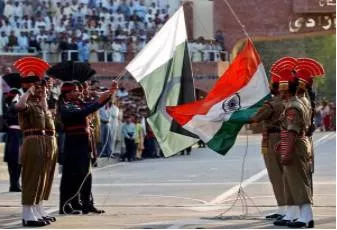
There is also the situation at the International Border (IB) and Line of Control (LoC) to be considered, before such talks can be feasible. Defence Minister Nirmala Sitharaman’s shocking disclosure last week that “heads of Pakistani soldiers are being cut off, but not being displayed” by the Indian Army, followed by the discovery of a Border Security Force jawan’s brutally mutilated (To injure, disfigure, or make imperfect by removing or irreparably damaging parts) body on the Pakistani side of the IB, shows the normalisation of barbarity on both sides. Army Chief General Bipin Rawat may have tempered equally incendiary remarks on the need for a “second surgical strike”, if he had considered the results of the first one in September 2016 in terms of the data: 2017 saw even more fatal violence on the LoC than 2016, and 2018 is well on its way to becoming the worst in five years when it comes to ceasefire violations and killings of soldiers on both sides, despite a lull between June and September. The Pakistan military spokesperson’s response to General Rawat, invoking Pakistan’s status as a “nuclear-armed” power, also does nothing to make anyone in the subcontinent feel safer. It is heartening that despite all the hot words in public, the two sides are thinking rationally about improving communication at the border, with the operationalisation of a new hotline last week in Delhi between the BSF and Pakistan Rangers. With both civil and military ties in gridlock, the question over the choice of interlocutors remains important too. In the past decade, India and Pakistan have found the public channels of engagement — meetings between the Prime Ministers (Ufa, Lahore, etc) and the External Affairs Ministers (Islamabad, Kathmandu) — to be counter-productive to the cause of better relations. Not only does every high-level handshake or hug excite domestic opprobrium in India, it is inevitably followed by a terror attack, or incident at the border that indicates that those in Pakistan’s deep state that control terror groups are willing to derail talks at any cost. By cancelling engagement, India effectively acquiesces to those wishes.
The one channel on the Modi government’s watch that has proven resilient is that of National Security Adviser (NSA) Ajit Doval with his former Pakistani counterpart, Nasser Khan Janjua. From November 2015 to June 2018, when he resigned due to elections, General Janjua and Mr. Doval carried on a consistent engagement, spoke over the telephone regularly to smooth over crises, and discreetly met more than half a dozen times in various places around the world. None of these meetings attracted the harsh criticism that follows the Prime Ministers’ or Foreign Ministers’ meetings.
Clearly, the NSAs’ conversation is firewalled from the regular outrage that lights up television studios. It would therefore be a pity if Mr. Khan decides to do away with the post altogether, by remerging the NSA division with the Pakistan Foreign Ministry.
Low-hanging fruit
If the two countries can again decide on interlocutors, the points for discussion are many, beginning with the proposal initiated by Pakistan ahead of the UN talks, of a visa-free Kartarpur corridor for Sikh pilgrims to travel to Gurdwara Darbar Sahib for the 550th birth anniversary of Guru Nanak in November 2019. Mr. Khan has spoken about trade ties being a good opener for substantive talks, and any move to consider granting India the long pending most favoured nation status would reap very rich rewards. Another long-pending discussion on visas for journalists on both sides has been raised again by Pakistan’s new Information Minister, and it is essential to build an understanding of developments on both sides of the border. When it comes to protecting the 2003 ceasefire, it is possible for this channel to consider reinforcing the fencing at the IB and LoC with a second fence on both sides, or a demilitarised zone of the sort that has withstood the Korean conflict. On the “core issues” of terrorism and Jammu and Kashmir, it is unclear if any serious talks are possible at this juncture, but both sides know exactly what they need to do to, should they wish to listen to each other’s concerns, and not just fall quiet amid the static that currently envelops the relationship.



Top court quashes FIRs against Gen Z protesters
Sep 04, 2026






Stay updated with The Hindu Editorial Vocab24 app, your definitive source for breaking news and comprehensive coverage from India and around the globe. Whether it's political developments, business updates, sports highlights, the latest technology trends, or current events, The Hindu brings live, accurate, and reliable news directly to your device.
Don’t fall for sensationalized or fake news shared online. Read and share accurate updates with friends and family through The Hindu Editorial Vocab24 app. Download it today!
News Coverage in The Hindu Editorial Vocab24 App
Breaking News: Receive instant notifications on breaking news stories as they unfold. Stay informed about major events and developments in India and around the world with live blogs, news in shorts videos, and concise articles.
Politics: Get the latest updates on Indian politics, including elections, policy changes, government decisions, and political events that shape the nation.
Business and Economy: Stay ahead in the economic landscape with detailed business news and market analysis. Learn about stock market trends, financial reports, corporate news, and economic developments to make informed investment decisions.
Current Events: Follow stories on social issues, policy changes, global events, and daily current affairs, tailored for UPSC and other competitive exam preparations.
Technology: Keep up with the latest gadgets, innovations, and tech trends. Read expert reviews and analyses in short, concise updates on cutting-edge technology from India and beyond.
Sports: Never miss a moment of your favorite sports. Get live scores, match reports, and expert analysis on cricket, football, tennis, and more.
International News: Stay informed about global events and geopolitical developments, including the Russia-Ukraine war, Israel-Palestine conflict, and other key international stories.
Local News: Stay connected to your community with the latest updates on city events, issues, and local news. Coverage includes hyperlocal updates from cities like Bangalore, Chennai, Delhi, Hyderabad, Mumbai, Kolkata, and more.
Trending Topics: Discover what's trending today with the most talked-about stories and hot topics across India and the world.
Experience journalism that values integrity, accuracy, and reliability. Download The Hindu Editorial Vocab24 app today and stay connected with the world.
Subscribe to our newsletter!







