

Cry fascism modi critics fall back on oldest trick in politics
The politicised Indian student from a Canadian university who gratuitously heckled a BJP functionary on a flight may well become a hero in circles that view the Narendra Modi dispensation as ‘fascist’. She was quite clearly responsible for disturbing the peace and violating civil aviation rules, although many will argue that a firm reprimand rather than prosecution would have been sufficient punishment for an act of juvenile self-publicity.To me, the real issue is neither the reaction of the authorities nor the fact that the student’s action has been lauded by opponents of the Modi government. The more interesting feature of the grandstanding lies in the young lady’s conviction that India has indeed turned ‘fascist’, and hence common decencies can be dispensed with in the war against a monstrous ideology. As a symbol of all that was considered disagreeable, fascism (A political system based on a very powerful leader, state control, and being extremely proud of country and race, and in which political opposition is not allowed) acquired an emotional significance from the 1930s. The leading lights of India’s Left, from Jawaharlal Nehru to Jyoti Basu, were initiated into the ‘progressive’ world by anti-fascist movements in Europe. Undeniably, opposition to authoritarianism underpinned initial expressions of anti-fascism. However, this loathing never extended to a rejection of Stalin and Mao, two of the three great mass murderers of the 20th century. While some ideologues were more careful in their use of fascism as a term of abhorrence, for the Left ecosystem, fascism became a catch-all swear word, a euphemism for evil. In today’s world, fascism has been used indiscriminately, to debunk Erdogan in Turkey, Viktor Orban in Hungary, anti-immigration movements in Europe, Brexit supporters in UK and even President Trump. Indeed, all mass politics centred on nationalist assertion has been abused by charges of fascism.
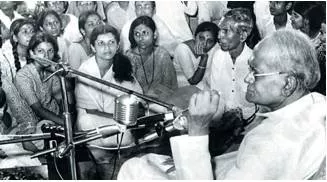
Those with a sharp public memory will no doubt recall that Jayaprakash Narayan was generously showered with catcalls of being fascist in the run-up to the Emergency — the only truly authoritarian experience in post-Independence India. At that time, as his movement gathered momentum, the ‘progressive’ forces in the Congress and CPI hosted umpteen anti-fascist conventions across India to denounce this frail Hitler-in-a-dhoti. Atal Bihari Vajpayee, posthumously lauded as a personification of the liberal Hindu, was also a cherished target. In hindsight, this may appear laughable but nearly all the progressive intellectual stalwarts of India sold their souls to this contrived (Created or arranged in a way that seems artificial and unrealistic) anti-fascism.
With the coming of Modi, anti-fascism has resurfaced with a vengeance. This narrative has been building steadily since some writers staged an award wapasi drama in 2015. It crystallised further with the events in Jawaharlal Nehru University and the sedition charges against student activists who had allegedly endorsed the vivisection of India. The arrest of five ultra-Left intellectuals with pronounced Maoist sympathies on charges of fermenting social conflict has poured more ghee to the fire.
Together with the disquiet over gau rakshaks and the murders of rationalists in Maharashtra and journalist Gauri Lankesh in Bengaluru, these incidents have built a narrative of the Modi government mounting an assault on civil liberties. A section of the progressive intelligentsia and activist media have created an impression — not least among Indian students and academics in campuses overseas — that India is sliding towards authoritarian rule. In a clever twist, Modi’s opponents have also sought to portray the culture war involving intellectuals and activists as assaults on Dalits, tribals and minorities.
The outrage of the Indian student in Canada on seeing a BJP functionary stemmed, presumably, from being over-exposed to such a version of India. Such a picture is self-evidently tendentious. Neither is voluble dissent in short supply, nor has media insolence led to handcuffs. The fake alarmism can be explained by other shifts.
First, this government has made no attempts to co-opt ‘public intellectuals’ into the power structure, as was the practice during Congress rule. Modi has focused single-mindedly on his mission of transformation without bothering about campus and press club angst. In effect, he has ended their role as arbiters (A person who settles a dispute or has ultimate authority in a matter) of thought.
Secondly, the partial dispossession of the ancien regime has led to centrist forces such as the Congress relying increasingly on the ‘progressive’ fringe. Minus the moral posturing, there has been a marked Leftward tilt and NGO-isation of the erstwhile centre ground. Finally, the advent of Modi has coincided with the creation of an Alt Right that, while lacking in pedigreed upbringing and academic respectability,, has spiritedly challenged the hegemony of the progressives, quite independent of state patronage. Ponderous intellectualism has been met with raw passion.
With their exalted status in jeopardy, the erstwhile custodians of discourse have fallen back on the oldest trick in the trade: scream ‘fascism’.











Stay updated with The Hindu Editorial Vocab24 app, your definitive source for breaking news and comprehensive coverage from India and around the globe. Whether it's political developments, business updates, sports highlights, the latest technology trends, or current events, The Hindu brings live, accurate, and reliable news directly to your device.
Don’t fall for sensationalized or fake news shared online. Read and share accurate updates with friends and family through The Hindu Editorial Vocab24 app. Download it today!
News Coverage in The Hindu Editorial Vocab24 App
Breaking News: Receive instant notifications on breaking news stories as they unfold. Stay informed about major events and developments in India and around the world with live blogs, news in shorts videos, and concise articles.
Politics: Get the latest updates on Indian politics, including elections, policy changes, government decisions, and political events that shape the nation.
Business and Economy: Stay ahead in the economic landscape with detailed business news and market analysis. Learn about stock market trends, financial reports, corporate news, and economic developments to make informed investment decisions.
Current Events: Follow stories on social issues, policy changes, global events, and daily current affairs, tailored for UPSC and other competitive exam preparations.
Technology: Keep up with the latest gadgets, innovations, and tech trends. Read expert reviews and analyses in short, concise updates on cutting-edge technology from India and beyond.
Sports: Never miss a moment of your favorite sports. Get live scores, match reports, and expert analysis on cricket, football, tennis, and more.
International News: Stay informed about global events and geopolitical developments, including the Russia-Ukraine war, Israel-Palestine conflict, and other key international stories.
Local News: Stay connected to your community with the latest updates on city events, issues, and local news. Coverage includes hyperlocal updates from cities like Bangalore, Chennai, Delhi, Hyderabad, Mumbai, Kolkata, and more.
Trending Topics: Discover what's trending today with the most talked-about stories and hot topics across India and the world.
Experience journalism that values integrity, accuracy, and reliability. Download The Hindu Editorial Vocab24 app today and stay connected with the world.
Subscribe to our newsletter!







