

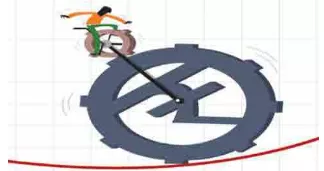
Cracking the gdp mystery
The CSO has been consistent with its methods, allowing little room for suspicion of window dressing. Did demonetisation deal a knock-out punch to the Indian economy? Or was it just a mild tap from which it is already recovering? This debate should have been settled with the latest second advance estimates from the Central Statistics Office (CSO) which peg FY17 GDP growth at 7.1%. But commentators who believe that the economy has suffered a debilitating (दुर्बलतापूर्ण) blow from the note ban are not willing to rest their case here. They have flagged a long list of issues with these GDP numbers, apart from hinting that the numbers are fudged (झूठे या जाली तथ्य पेश करना) . However, this is taking the criticism a little too far. A closer analysis of the CSO’s estimates suggests that, contrary to perception, they do factor in the impact of the note ban. And while India’s GDP estimation method could certainly do with improvements, the CSO has been both transparent and consistent with its methods, allowing little room for suspicions of window-dressing. Why so high? First, the skeptics ask, how did the GDP growth for FY17 turn out to be so high? The 7.1% number is unchanged from the CSO’s initial estimates and is also well above the 6.5%-6.8% growth estimated by most private forecasters. Is the CSO implying that vacuuming up 86% of cash in circulation had no impact on the economy? Well, that is a wrong reading of the numbers. To gauge the actual level of economic activity, Gross Value Added (GVA) is the more pertinent (उचित/उपयुक्त) number than GDP. The GVA measures the value of output created by different segments of the economy. Indirect taxes (minus subsidies) are added to it, to arrive at the GDP. The GVA for FY17, as per CSO data, does show a dent from demonetisation. At 6.7%, it has registered a sharp decline of 110 basis points from 7.8% (revised estimate) for FY16. While GVA growth is pretty close to private forecasts, what lifted the GDP is the strong 12.3% surge in indirect taxes that the CSO estimates for this fiscal. This is a plausible (संभाव्य/विश्वसनीय लगने वाला) number, given that the Centre’s indirect tax collections already surged by 25% in April-December 2016, powered by higher excise duty on fuel and service tax. There is no obfuscation (अस्पष्टता) here, because assessing the GVA and adding back net taxes is the global prescription for GDP estimation by the output method. Too mild? So the CSO does admit that economic activity has been impacted by the note ban. But isn’t it estimating too mild an impact, with the Q3 GVA growth at 6.6%, against 7% last year? Commentators cite some key indicators to ‘prove’ that economic activity shrank in the note ban months. For instance, two-wheeler sales collapsed by 22% year-on-year in December, banks reported anaemic (जोशरहित) loan growth at 5%, cement dispatches fell by 9% and realtors saw a 40% dip in home sales. But given that the economy is made up of literally hundreds of products and sectors, it is well within the realm of possibility that the economy did well even while these indicators slowed. For instance, for the same December month, steel output grew by 15%, power generation surged by 6% and refinery output expanded 6.4%. If bank credit slumped, companies doubled their borrowings from the bond market. Also, CSO estimates do show that some sectors of the economy took it on the chin in the demonetisation quarter. Manufacturing saw its GVA growth slide from 12.8% in Q3 2015 to 8.3% in Q3 2016. Finance, real estate and services saw growth collapse from 10.4% to 3.1%. Construction weakened from 3.2% to 2.7%. But making up for these was the 6% rebound in agriculture (2.2% shrinkage last year), 6.8% increase in electricity, gas and water supply and a bumper 11.9% hike in ‘public administration, defence and other services’ which lifted the GVA. Agricultural output bounced back due to a good monsoon after consecutive drought years. Electricity generation was up on better coal availability. ‘Public administration’ reflects higher government payouts on salaries and pensions after the Seventh Pay Commission. December quarter results from listed companies also provide independent confirmation that the big picture wasn’t much dented by the note ban. A Business Line analysis of over 1,700 listed companies showed that they just reported their best quarterly performance in three years, with sales growing over 9% and profits expanding 20%. Commentary from listed firms suggests that urban discretionary (स्वनिर्णयगत/विवेकाधीन) purchases bounced back quickly as consumers switched to digital payments. Commodity industries, helped by global price rebound, did very well this quarter. In some sectors, business shifted from the unorganised to organised players due to digital payments. Analysts also suspect that, in some cases, companies mopped up demonetised notes from their distribution channels and pumped them with inventory instead. (This would show up as ‘sales’ in the company’s books and as ‘output’ in GDP estimates). As the cash situation normalises, these one-offs should get ironed out, moderating GVA growth for the March quarter. But this doesn’t imply that the Q3 GDP numbers are suspect. Informal left out? A third criticism of the CSO estimate is that it fails to capture the performance of the informal economy, which clearly bore the brunt of the note ban. This criticism is partly valid. Over 40-45% of the Indian economy is informal and hardly any data points relating to it are available at a quarterly frequency. Therefore, what the CSO does to arrive at its quick estimates of the GDP is to take the available data from the organised sector and extrapolate (बहिर्वेशन करना) it to infer informal activity. Thus, the GVA for agriculture is guesstimated based on kharif and rabi crop prospects. The GVA for services is inferred from sales tax collections, deposits and credit, telephone connections and so on. Manufacturing GVA uses the index of industrial production and listed company filings. Owing to such guesswork, it is quite likely that the quarterly GVA estimate, which mainly uses data from the formal sector, painted a rosier (उज्ज्वल) picture of growth than the ground reality. But then, if the CSO — with its access to multiple data sources — has no way to estimate the quarterly performance of the informal sector, neither does anyone else. As long as the CSO consistently follows the same method for measuring the informal sector and publicly discloses it, this is the only estimate we have to gauge economic activity. Both the methodology for estimating informal sector performance and GDP revisions are well-documented and disclosed on the Ministry of Statistics and Programme Implementation website. More accurate estimates of what really transpired (मालूम होना/पता चलना) in the Indian economy post-demonetisation will be available when the CSO publishes its first revised GDP estimates, with more ground-level data, in January 2018. Until then, critics must follow Keynes’s tenet — when facts change, it is best to change your mind.Debilitate (verb)
Make (someone) very weak and infirm. दुर्बल करना/शक्तिहीन करना
Synonyms: Weaken, Enfeeble, Enervate, Devitalize
Example: A quick punch to the throat will debilitate most attackers.
Fudge (verb)
Present or deal with (something) in a vague or inadequate way./ adjust or manipulate (facts or figures) so as to present a desired picture. झूठे या जाली तथ्य पेश करना
Synonyms: Falsify, Fake, Manipulate, Misrepresent, Misreport
Example: Politicians have been known to fudge the issues.
Pertinent (adjective)
Relevant or applicable to a particular matter. उचित/उपयुक्त
Synonyms: Apposite, Relevant, Suitable, Appropriate, Fitting, Apt
Example: If you perform a Google search, you will easily find a list of articles pertinent to the subject you were discussing.
Plausible (adjective)
(of an argument or statement) Seeming reasonable or probable. संभाव्य/विश्वसनीय लगने वाला
Synonyms: Credible, Reasonable, Believable, Probable, Conceivable
Example: Jeremy was fired because he could not give his boss a plausible explanation for his constant tardiness to work.
Obfuscation (noun)
The action of making something obscure, unclear, or unintelligible. अस्पष्टता
Synonyms: Bafflement, Bewilderment, Obscurity, Puzzlement, Vagueness
Example: Because I am a sympathetic teacher, I avoid using language which will obfuscate my students.
Anaemic (adjective)
Lacking in colour, spirit, or vitality. जोशरहित
Synonyms: Feeble, Weak, Insipid, Pallid, Vapid, Frail
Example: Because the runner was anaemic, he couldn’t muster the energy to cross the finish line.
Discretionary (adjective)
Available for use at the discretion of the user./ left to individual choice or judgment. स्वनिर्णयगत/विवेकाधीन
Synonyms: Optional, Voluntary, Elective, Open To Choice
Example: The police have certain discretionary powers when dealing with petty criminals.
Extrapolate (verb)
Extend the application of (a method or conclusion) to an unknown situation by assuming that existing trends will continue or similar methods will be applicable. बहिर्वेशन करना
Synonyms: Deduce, Hypothesize, Theorize
Example: Scientists worry about the greenhouse effect because they have extrapolated the rate of carbon-dioxide buildup and predicted that its effect on the atmosphere will become increasingly severe.
Rosier (adjective)
Promising or suggesting good fortune or happiness. उज्ज्वल
Synonyms: Promising, Optimistic, Auspicious, Hopeful, Bright
Example: A particularly rosy view of the economic situation gives everyone a sound smile.
Transpire (verb)
(of a secret or something unknown) Come to be known; be revealed. मालूम होना/पता चलना
Synonyms: Be Revealed, Come To Light, Emerge, Be Uncovered, Come Out
Example: If you have watched one golf game, then you have seen everything that will transpire in every other game of golf.



Economic Survey promises, impact of new labour codes
Mar 16, 2026
Preparing India for a true innovation-led economy
Mar 15, 2026
Cheaper loans likely as repo rate cut by 25 bps
Dec 08, 2025
Iip growth dips to three month low of 4 in sept
Oct 31, 2025





Stay updated with The Hindu Editorial Vocab24 app, your definitive source for breaking news and comprehensive coverage from India and around the globe. Whether it's political developments, business updates, sports highlights, the latest technology trends, or current events, The Hindu brings live, accurate, and reliable news directly to your device.
Don’t fall for sensationalized or fake news shared online. Read and share accurate updates with friends and family through The Hindu Editorial Vocab24 app. Download it today!
News Coverage in The Hindu Editorial Vocab24 App
Breaking News: Receive instant notifications on breaking news stories as they unfold. Stay informed about major events and developments in India and around the world with live blogs, news in shorts videos, and concise articles.
Politics: Get the latest updates on Indian politics, including elections, policy changes, government decisions, and political events that shape the nation.
Business and Economy: Stay ahead in the economic landscape with detailed business news and market analysis. Learn about stock market trends, financial reports, corporate news, and economic developments to make informed investment decisions.
Current Events: Follow stories on social issues, policy changes, global events, and daily current affairs, tailored for UPSC and other competitive exam preparations.
Technology: Keep up with the latest gadgets, innovations, and tech trends. Read expert reviews and analyses in short, concise updates on cutting-edge technology from India and beyond.
Sports: Never miss a moment of your favorite sports. Get live scores, match reports, and expert analysis on cricket, football, tennis, and more.
International News: Stay informed about global events and geopolitical developments, including the Russia-Ukraine war, Israel-Palestine conflict, and other key international stories.
Local News: Stay connected to your community with the latest updates on city events, issues, and local news. Coverage includes hyperlocal updates from cities like Bangalore, Chennai, Delhi, Hyderabad, Mumbai, Kolkata, and more.
Trending Topics: Discover what's trending today with the most talked-about stories and hot topics across India and the world.
Experience journalism that values integrity, accuracy, and reliability. Download The Hindu Editorial Vocab24 app today and stay connected with the world.
Subscribe to our newsletter!







