

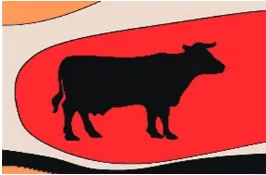
Cow slaughter and the constitution
Over the last few days, the Central government’s new Prevention of Cruelty to Animals (Regulation of Livestock Market) Rules have run into strong headwinds. These rules, which effectively prohibit the sale of cows and buffaloes for slaughter at animal markets, and are therefore perceived as imposing an indirect beef ban, have been the subject of protests in Kerala and Tamil Nadu, and have drawn strong condemnation (असम्मति) from West Bengal Chief Minister Mamata Banerjee. With the Madras High Court on Tuesday staying the rules for four weeks, the battle has swiftly moved to the court as well. And with this, apart from the political turmoil, legal and constitutional fault lines have also been reopened, causing much uncertainty about what the outcome will be. In the Constituent Assembly This dispute has a history, which goes back to the founding of the Republic. During the framing of the Constitution, the subject of cow slaughter was one of the most fraught and contentious topics of debate. Seth Govind Das, a member of the Constituent Assembly, framed it as a “civilisational [problem] from the time of Lord Krishna”, and called for the prohibition of cow slaughter to be made part of the Constitution’s chapter on fundamental rights, on a par with (equal in importance or quality to.) the prohibition of untouchability. In this, he was supported by other members of the Constituent Assembly, such as Shibban Lal Saksena, Thakur Das Bhargava, Ramnarayan Singh, Ram Sahai, Raghu Vira, R.V. Dhulekar and Chaudhari Ranbir Singh. Proponents of a cow slaughter ban advanced a mix of cultural and economic arguments, invoking the “sentiments of thirty crores of population” on the one hand, and the indispensability of cattle in an agrarian economy on the other. There was one small, snag (कठिनाई/बाधा), however: fundamental rights were meant to inhere (अंतर्निहित होना) in human beings, not animals. After much debate, the Constitution’s Drafting Committee agreed upon a compromise: prohibition of cow slaughter would find a place in the Constitution, but not as an enforceable fundamental right. It would be included as a “Directive Principle of State Policy”, which was meant to guide the state in policymaking, but could not be enforced in any court. Furthermore, in its final form, this Directive Principle (Article 48 of the Constitution) carefully excluded the question of religious sentiments. Nor did it require the state to ban cow slaughter outright (पूर्ण रूप से/प्रत्यक्ष रूप से) . Instead, under the heading “Organisation of Agriculture and Animal Husbandry”, Article 48 says the state shall “organise agriculture and animal husbandry on modern and scientific lines and shall, in particular, take steps for preserving and improving the breeds, and prohibiting the slaughter, of cows and calves and other milch and draught cattle.” Members of the Constituent Assembly found these incremental compromises both unprincipled and unsatisfactory. Shibban Lal Saksena objected to such “back door” tactics, and asked why the Drafting Committee was “ashamed of providing for [the prohibition of cow slaughter] frankly and boldly in so many plain words”. Z.H. Lari, one of the Muslim representatives in the Assembly, stated that his community would not stand in the way of the majority’s desire, but nonetheless asked that the majority “express itself clearly and definitely”, so that Muslims could know exactly what the position was on cow slaughter. However, clear and definite expression on the issue of cow slaughter was one thing that the Assembly was unwilling to commit to. Article 48, a provision that was grafted out of a compromise that left nobody satisfied, came into being with the rest of the Constitution, on January 26, 1950. In the Supreme Court The fundamental disingenuousness (अस्पष्ट/कपटपूर्ण) that underlay Article 48 was to be repeated, many times over, in constitutional litigation before the Supreme Court. Right from 1958, the Supreme Court was asked to adjudicate upon the constitutional validity of cattle slaughter bans passed by various States. Petitioners before the court argued that a prohibition of cow slaughter violated their rights to trade and business, and also their right to freedom of religion. The Supreme Court rejected these arguments and upheld the laws, but it did so by focussing its reasoning entirely on — apparent — economic considerations. Detailed analyses of agricultural output and milch yields give these judgments a strained, almost unreal quality. Much like the Drafting Committee, it was as if the court was unwilling to admit — and to uphold (समर्थन करना/अनुमोदन करना) — the possibility of non-economic considerations behind such laws, as though this would shatter the thin facade (मुखौटा) of secularism to which the Constitution remained (ostensibly) committed. A possible answer The disingenuousness that marked the Constituent Assembly debates, that was written into final text of Article 48, and that has been inscribed into 50 years of the Supreme Court’s jurisprudence, has found its latest avatar in the present rules. This time, the Central government has invoked a Supreme Court order on cattle smuggling across the Nepal border, as well as a 1960 law, the Prevention of Cruelty to Animals Act, as its justification. However, the Supreme Court’s order makes no mention of cattle slaughter, and a reading of the Act demonstrates clearly that it does not contemplate prohibiting animal slaughter per se (असल में/स्वतः). Not only does it specifically exempt slaughter of animals for food, it also provides for advice on the design of slaughterhouses, so that “unnecessary pain or suffering, whether physical or mental, is eliminated in the pre-slaughter stages as far as possible.” Now, under our legal and constitutional system, an executive notification cannot even go beyond the specific terms and ambit of the parent law from which it derives its authority. The government’s new rules, however, go even further: by prohibiting the sale of cattle for slaughter at animal markets, they contravene (अवहेलना करना) the Prevention of Cruelty to Animals Act by specifically forbidding what that Act permits. There is a strong argument, therefore, that the rules are invalid. Furthermore, if indeed the purpose of the rules was to prevent cruelty to animals, then why is their scope limited only to cattle — and to camels? It is true that the government is always at liberty, for reasons of administrative convenience or otherwise, to choose and categorise the subjects to whom its actions will apply; but while under-inclusiveness is not generally a ground for a court to invalidate executive action, in the present case, there seems no rational basis for limiting the reach of an anti-cruelty regulation to only some animals. At the very least, in law, this casts serious doubts about the government’s motivation and justification for its rules. One might wonder why the Central government chose to take such a momentous (आवश्यक/प्रभावशाली/महत्वपूर्ण) step armed with such a flimsy (कमज़ोर/सारहीन) defence. The only possible answer seems to be that had it gone with the traditional, economic justification for an (effective) ban on cow slaughter, it would have run up against an insurmountable (अजेय/अलंघ्य) constitutional difficulty: under our constitutional scheme, “agriculture” and “the preservation of stock” fall within the exclusive legislative competence of the States. This is the reason why, historically, different cow slaughter laws have been passed by different States. It is to get around this that the Central government has invoked the Prevention of Cruelty to Animals Act, a subject on which both the Centre and States can make laws. What this has resulted in is a badly drafted set of rules, which is unlikely to withstand judicial scrutiny. It is also, however, an opportunity for citizens — and courts — to think once again whether the prescription of food choices is consistent with a Constitution that promises economic and social liberty to all.Snag (noun)
An unexpected or hidden obstacle or drawback. कठिनाई/बाधा
Synonyms: Obstacle, Difficulty, Complication, Hitch, Pitfall, Impediment
Example: The snags that were ignored at the time of forming constitution are now creating turmoil in communities.
Inhere (verb)
(Of rights, powers, etc.) be vested in a person or group or attached to the ownership of a property. अंतर्निहित होना
Synonyms: Vested In, Be Contained In, Be Expressed In, Be Existed In
Example: Since Mark has an inherent love for music, it is not surprising that he is a successful guitar player.
Outright (adverb)
Wholly and completely. पूर्ण रूप से/प्रत्यक्ष रूप से
Synonyms: Completely, Entirely, Wholly, Fully, Totally, Absolutely, Altogether, In Every Aspect
Example: When the amateur chef poured a cup of salt into the recipe, his customers believed his bread was outright too salty.
On a par with (phrase)
(Equal in importance or quality to.) के समान
Synonyms: Comparable With, Equivalent To, Much The Same As, Equal To, Of The Same Standard As
Example: The new version of the software is on a par with the old one.
Uphold (verb)
Confirm or support (something which has been questioned). समर्थन करना/अनुमोदन करना
Synonyms: Confirm, Endorse, Sustain, Validate, Ratify, Verify, Vindicate, Justify, Approve
Example: Minister took an oath to uphold the Constitution.
Per se (adverb)
By or in itself or themselves; intrinsically. असल में/स्वतः
Synonyms: By Its Very Nature, In Essence, By Definition, Essentially, Really, Indeed
Example: I'm not a doctor, per se, but my uncle is.
Contravene (verb)
Offend against the prohibition or order of (a law, treaty, or code of conduct). / to act against a rule or law. अवहेलना करना
Synonyms: Break, Breach, Fail to comply with, Violate, Infringe
Example: The unauthorized reproduction of the book contravenes copyright laws.
Momentous (adjective)
Of great importance or significance, आवश्यक/प्रभावशाली/महत्वपूर्ण
Synonyms: Significant, Epoch-Making, Critical, Crucial, Vital, Decisive, Pivotal, Weighty
Example: Winning the world cup was Momentous moment for Indian team.
Flimsy (adjective)
Insubstantial and easily damaged. कमज़ोर/सारहीन
Synonyms: Insubstantial, Slight, Light, Fragile, Breakable, Frail, Shaky, Unstable
Example: The judge was displeased with the lawyer, because he kept on interrupting the proceedings with one flimsy argument after another.
Insurmountable (adjective)
Too great to be overcome. अजेय/अलंघ्य
Synonyms: Insuperable, Unconquerable, Invincible, Unassailable
Example: Because of the insurmountable obstacles facing his candidacy, William decided that he would not run for the position.








Stay updated with The Hindu Editorial Vocab24 app, your definitive source for breaking news and comprehensive coverage from India and around the globe. Whether it's political developments, business updates, sports highlights, the latest technology trends, or current events, The Hindu brings live, accurate, and reliable news directly to your device.
Don’t fall for sensationalized or fake news shared online. Read and share accurate updates with friends and family through The Hindu Editorial Vocab24 app. Download it today!
News Coverage in The Hindu Editorial Vocab24 App
Breaking News: Receive instant notifications on breaking news stories as they unfold. Stay informed about major events and developments in India and around the world with live blogs, news in shorts videos, and concise articles.
Politics: Get the latest updates on Indian politics, including elections, policy changes, government decisions, and political events that shape the nation.
Business and Economy: Stay ahead in the economic landscape with detailed business news and market analysis. Learn about stock market trends, financial reports, corporate news, and economic developments to make informed investment decisions.
Current Events: Follow stories on social issues, policy changes, global events, and daily current affairs, tailored for UPSC and other competitive exam preparations.
Technology: Keep up with the latest gadgets, innovations, and tech trends. Read expert reviews and analyses in short, concise updates on cutting-edge technology from India and beyond.
Sports: Never miss a moment of your favorite sports. Get live scores, match reports, and expert analysis on cricket, football, tennis, and more.
International News: Stay informed about global events and geopolitical developments, including the Russia-Ukraine war, Israel-Palestine conflict, and other key international stories.
Local News: Stay connected to your community with the latest updates on city events, issues, and local news. Coverage includes hyperlocal updates from cities like Bangalore, Chennai, Delhi, Hyderabad, Mumbai, Kolkata, and more.
Trending Topics: Discover what's trending today with the most talked-about stories and hot topics across India and the world.
Experience journalism that values integrity, accuracy, and reliability. Download The Hindu Editorial Vocab24 app today and stay connected with the world.
Subscribe to our newsletter!







