

Civilizational chennai connect
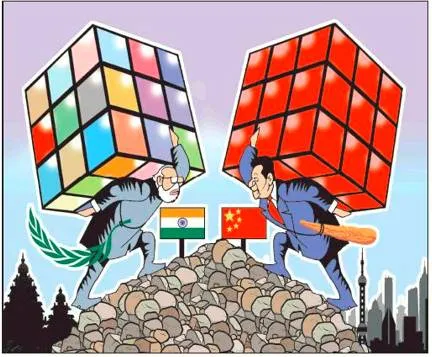
As Modi and Xi meet at a heritage site, can the past point the way to the future?If the first informal summit meeting at Wuhan between Prime Minister Narendra Modi and President Xi Jinping, held in April 2018, was to showcase the industrial hubs in the central Chinese city of Wuhan, the second such meeting at an Unesco heritage site will go down in history to remind China of not only the continuous civilizational resilience of India but also a shift in geo-political and geo-economic activity towards the Indo-Pacific region.
Firstly, Modi was sending a subtle message to Xi at the Mamallapuram temple complex. The Pallavas and Cholas who ruled the area, expanded their empires into Southeast Asia, refined the cultural traditions and enhanced trade. No land in the region was ever claimed by Indian rulers, unlike the 3.5 million sq km of South China Sea now under intense militarisation by China citing “historical claims”.
Secondly, Modi was highlighting the long tradition of literature, culture and trade exchanges between Indian civilisation with those of the east, living in harmony for centuries, unlike China that is not only occupying a portion of Kashmir but dividing India’s civilizational map through its “all weather” ties to Pakistan. As Pakistan gets sucked increasingly into the vortex of China’s “community of common destiny”, the Mamallapuram outing offers some issues to ponder.
It’s only recently that China’s leaders claimed that the country’s rise is not intended to acquire hegemony, that they will not acquire bases abroad nor keep their armed boots abroad. On the other hand, China began its operations at Djibouti base, even as it began refurbishing Hambantota and Gwadar ports. Hambantota was taken away from debt stricken Sri Lanka on a 99 year lease, reminiscent of the Hong Kong lease to Britain at the end of the Opium Wars.
Thirdly, on an “internal matter” of India, only a few days and weeks ago, China had gone to the United Nations Security Council for “back door negotiations” on how India is handling the Kashmir issue. Nothing came of it. Foreign Minister Wang Yi went to the UN General Assembly stating China’s new found mantra on not changing the “status quo” in Kashmir, forgetting that China’s $62 billion in investments and positioning of security guards in Pakistan occupied Kashmir are transforming the ground reality substantially.
During Prime Minister Imran Khan’s visit to China a day before Xi travelled to Chennai, both again reiterated that bonhomie. Surprisingly, as Foreign Secretary Vijay Gokhale stated after the informal summit meeting, Kashmir issue was never raised by the Chinese side in the talks. Instead, both reiterated their opposition to all forms of terrorism.
Fourthly, choosing the southern Indian maritime city on the shores of Bay of Bengal as the venue and the “Chennai connect” is in line with the Act East policy launched in 2015. Modi’s speech at Shangri-La dialogue in June 2018 set the tone for an “inclusive” architecture for the Indo-Pacific region, provided aspirant countries uphold openness, rule of law, freedom of navigation and overflight.
The Modi-Xi meeting decided to further the maritime links between the two countries, without endorsing China’s Maritime Silk Road. As the Indian statement, issued at the end of the meeting, stated, Tamil Nadu and Fujian province are chosen for sister state links, in addition to establishing an academy to study links between Mamallapuram and Fujian.
Quanzhou city in Fujian boasts of such links with a thriving community of sea-farers, temple architecture with granite rock imported lock, stock barrel from south India. The maritime museum at Quanzhou has replicas of ships used by Ming dynasty eunuch Zheng He who led seven expeditions as far as Africa and made Ceylon, among others, a tributary. Instead of an abrupt and aggressive posturing through Chinese submarine visits to the Indian Ocean, the second informal summit meeting provides scope for a gradualist step-by-step exploration of the maritime domains.
Fifthly, while China has been put on notice by Trump administration official Kiron Skinner on a possible “clash of civilisations” India, on the other hand, has been comfortable in projecting its cultural heritage abroad. The cultural shows at Houston, C3 (commerce, connect and culture) as a part of the Act East policy towards Southeast Asia, and renewing cultural linkages with the Indian Ocean states under Project Mausam are gaining ground. These will be further strengthened as a part of the Sagarmala initiative.
Sixthly, relative decline in growth rates in China as a result of the on-going and stifling tariff wars with the United States has led to a gradual re-location of manufacturing units to other regions in the Indo-Pacific taking advantage of labour wage differentials. Southeast Asian countries like Vietnam and Indonesia are the initial beneficiaries of these relocations. But there are also prospects for India in the coming years. The declaration from foreign secretary Gokhale that a high-level committee under finance minister Nirmala Sitharaman and Vice Premier Hu Chunhua to look into trade and investments is in this direction as well. We will have to wait and see what happens as previous promises from China for $20 billion investment in India never materialized.









Stay updated with The Hindu Editorial Vocab24 app, your definitive source for breaking news and comprehensive coverage from India and around the globe. Whether it's political developments, business updates, sports highlights, the latest technology trends, or current events, The Hindu brings live, accurate, and reliable news directly to your device.
Don’t fall for sensationalized or fake news shared online. Read and share accurate updates with friends and family through The Hindu Editorial Vocab24 app. Download it today!
News Coverage in The Hindu Editorial Vocab24 App
Breaking News: Receive instant notifications on breaking news stories as they unfold. Stay informed about major events and developments in India and around the world with live blogs, news in shorts videos, and concise articles.
Politics: Get the latest updates on Indian politics, including elections, policy changes, government decisions, and political events that shape the nation.
Business and Economy: Stay ahead in the economic landscape with detailed business news and market analysis. Learn about stock market trends, financial reports, corporate news, and economic developments to make informed investment decisions.
Current Events: Follow stories on social issues, policy changes, global events, and daily current affairs, tailored for UPSC and other competitive exam preparations.
Technology: Keep up with the latest gadgets, innovations, and tech trends. Read expert reviews and analyses in short, concise updates on cutting-edge technology from India and beyond.
Sports: Never miss a moment of your favorite sports. Get live scores, match reports, and expert analysis on cricket, football, tennis, and more.
International News: Stay informed about global events and geopolitical developments, including the Russia-Ukraine war, Israel-Palestine conflict, and other key international stories.
Local News: Stay connected to your community with the latest updates on city events, issues, and local news. Coverage includes hyperlocal updates from cities like Bangalore, Chennai, Delhi, Hyderabad, Mumbai, Kolkata, and more.
Trending Topics: Discover what's trending today with the most talked-about stories and hot topics across India and the world.
Experience journalism that values integrity, accuracy, and reliability. Download The Hindu Editorial Vocab24 app today and stay connected with the world.
Subscribe to our newsletter!







