

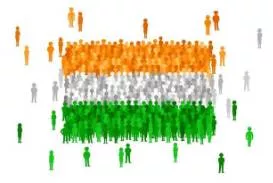
Citizenship and compassion
Can India manage with a certain amount of disorder to sustain a plural vision of democracy?The current situation in Assam seems like a nightmare, a warning about the internal contradictions of democracy. It is a warning that the 19th century ideas of democracy as electoral-ism and the notion of the nation-state as a fetishism (Excessive or irrational devotion to some activity) of borders may be inappropriate as imaginations for the 21st century. It is a caution that governance and politics are full of ironies and paradoxes and that the best of intentions might lead to the worst consequences. Inherent in it is the banalisation of evil that can take place when suffering on a large scale gets reduced to a cost-benefit scenario. Democratic India rarely had experiences of detention (The action of detaining someone or the state of being detained in official custody) camps, except during the India-Pakistan wars, and in 1962 when Indians of Chinese origin were unfairly detained in camps. The last episode, a stain on the Indian conscience, is forgotten or swept aside. Today, the statistic of four million names off the draft National Register of Citizens (NRC) is reduced to an everyday problem of management. This routinisation of violence is deeply worrying.
Surveillance state
There is another piece of cynicism that one needs to be cautious of. The Bharatiya Janata Party (BJP) is adept at projecting a mastery of electoral frames and governance to maximise electoral output. It took the normalcy of a governance project and turned it into a panopticon, classifying citizens through a system of surveillance, creating a sense of sovereignty where the bureaucrat plays god, deciding who is in and who is out. With 40 lakh names off the final draft of the NRC, it has made a play for the majoritarian vote. The party will dwell on the claim that it took the bull by the horns, updating the citizens’ register, a challenge the Congress was not up to.
ALSO READ
The politics of citizens’ registers underlines the problem of migratory politics, refracted through the layered memories of many historical events. It began in the colonial era when the British attempted to import labour for the plantations. Major displacements like Partition and the Bangladesh war added to a huge “illegal” population. “Legality” is determined through certificates. Legitimacy is a stamped paper. But the question one asks is, what happens to the ones who have grown roots, who have brought land in the area? Do they not count with the stroke of a pen? In fact, it forces one to open up the question of who is a citizen? Is citizenship based on land, residence, identity, cultural roots, language, ethnicity? Or is it a formal certificate, a clerical endorsement that makes one a citizen? Informal economies operate according to parallel rules, with residents getting regularised over time and obtaining the entitlements of citizenship after decades of stay. Here, the temporariness of the migrant is something that haunts her. Vulnerable though she is, she also becomes prey to electoral politics of corrupt politicians seeking instant constituencies.
A leader’s summary
The very scale of the exercise, the suggestion that 40 lakh people must do more to prove their claim to citizenship, gives it a technocratic air. The sense of history and memory is lost. As West Bengal Chief Minister Mamata Banerjee suggested, the label ‘infiltrator’ already implicates you in a paranoid (Feeling extremely nervous and worried because you believe that other people do not like you or are trying to harm you) world, where the other is perpetually suspect. Ms. Banerjee attempted to introduce a notion of sanity by observing that while there may be a minuscule number of people who are infiltrators from across the border, among the 40 lakh people who don’t find their names on the NRC are those who crossed over decades back, compelled by historical reasons, and they cannot be considered infiltrators. She made three quick points. First, infiltrators and refugees are different categories, to be coped with differently. Second, time and history are crucial for comprehending such a colossal event. To reduce it to one moment is mindless. Third, by introducing such measures, it is the BJP that is playing the infiltrator, penetrating into citizens’ lives, probing what they eat, what they wear and what they do. The BJP, in treating Assam as an enclosure, is also panopticon-ising our world, increasing the level of surveillance and control over our lives.
The point Ms. Banerjee is making is fundamental. In this tussle between nation-state and an open democracy, the enclosure and the panopticon as mediums of control are at odds with the idea of the commons and the hospitality of the community. Technocratic solutions cannot hide the absence of human and historical understanding. She might be dismissed as a rabble rouser, but it is she who is pointing out that the BJP is playing on the anxieties of people, rousing old hates between Bengal and Assam. To hide behind the abstractions of sovereignty and security and, officialising parochialism is the logic of the BJP game.
The handling and management of large populations create a problem of ethics. Assam raises the question of both triage and exterminism. Once one plays out the census game, makes a few concessions, one almost feels that the remainder are dispensable. The dispensability and disposability of large populations confronts India on a large scale. One cannot handle such situations merely through law. One needs generosity, hospitality and compassion. One needs to understand that once our civics accepts the detention centre and the internment camp as routine, we are creating gulags of the mind, where one can begin with an ordinary act of classification and erase a people. Indian democracy has to face the genocidal prospect inherent both in its technocratic sense of governance and in the anxieties that electoralism creates.
The populist frame
In fact, it is BJP president Amit Shah who gives away the game as his party adopts a tough stand. He claims that the BJP is fighting for the security of the people. The shift from citizenship to a preoccupation with security unfolds a different paradigm of thought. Nation-state and citizenship as encompassing entities offer different ideas of order and control. Security is a panopticon-ising notion, while citizenship is a caring, even protective, one. Security operates on the grids of surveillance, scrutiny and separation. Citizenship is a more hospitable notion of initiating the other into a system. The norms of the paradigm are different. Mr. Shah’s response was a giveaway because it puts the idea of security within a populist framework, where demographic and cultural anxiety becomes the raw material for emerging vote banks. A register which began as a routine, even clinical exercise now acquires a Machiavellian (Using clever but often dishonest methods that deceive people so that you can win power or control) shadow. Suspicion and anxiety magnify as rumour becomes epidemic. One hopes the register does not create an Orwellian situation where some are more equal than others.
This point becomes clearer when we read that the Vishwa Hindu Parishad wants a similar NRC exercise in West Bengal and other States. Rather than seeing wider conspiracy theories, it is the inner contradictions of the exercise that we shall consider.
The Assam model?
Maybe one has to go back and look at our Constitution and reread notions of the border, the very idea of citizenship. We need to go beyond hard definitions and look at the penumbra of these concepts. A citizen may be defined in terms of certain properties. But the question is, how humane or plural is such a definition? Can we manage with a certain amount of disorder to sustain a plural vision of democracy? These are the questions Assam raises but our policy-makers do not discuss. How do we create a more hospitable, affable theory of citizenship where marginal groups survive, where nomads and other fluid groups are allowed to follow their life lines? Can we think of a nation-state with permeable borders and a fluid sense of citizenship which makes life more hopeful for the refugee? These are questions not for the distant future, but challenges this decade will have to overcome. We have to rethink the Assam in us.



Top court quashes FIRs against Gen Z protesters
Sep 04, 2026






Stay updated with The Hindu Editorial Vocab24 app, your definitive source for breaking news and comprehensive coverage from India and around the globe. Whether it's political developments, business updates, sports highlights, the latest technology trends, or current events, The Hindu brings live, accurate, and reliable news directly to your device.
Don’t fall for sensationalized or fake news shared online. Read and share accurate updates with friends and family through The Hindu Editorial Vocab24 app. Download it today!
News Coverage in The Hindu Editorial Vocab24 App
Breaking News: Receive instant notifications on breaking news stories as they unfold. Stay informed about major events and developments in India and around the world with live blogs, news in shorts videos, and concise articles.
Politics: Get the latest updates on Indian politics, including elections, policy changes, government decisions, and political events that shape the nation.
Business and Economy: Stay ahead in the economic landscape with detailed business news and market analysis. Learn about stock market trends, financial reports, corporate news, and economic developments to make informed investment decisions.
Current Events: Follow stories on social issues, policy changes, global events, and daily current affairs, tailored for UPSC and other competitive exam preparations.
Technology: Keep up with the latest gadgets, innovations, and tech trends. Read expert reviews and analyses in short, concise updates on cutting-edge technology from India and beyond.
Sports: Never miss a moment of your favorite sports. Get live scores, match reports, and expert analysis on cricket, football, tennis, and more.
International News: Stay informed about global events and geopolitical developments, including the Russia-Ukraine war, Israel-Palestine conflict, and other key international stories.
Local News: Stay connected to your community with the latest updates on city events, issues, and local news. Coverage includes hyperlocal updates from cities like Bangalore, Chennai, Delhi, Hyderabad, Mumbai, Kolkata, and more.
Trending Topics: Discover what's trending today with the most talked-about stories and hot topics across India and the world.
Experience journalism that values integrity, accuracy, and reliability. Download The Hindu Editorial Vocab24 app today and stay connected with the world.
Subscribe to our newsletter!







