

Children of british soldiers left behind in kenya struggle to find their identity
Biracial children in the area around the British military training site in Kenya date back to the 1960s when the country was under British rule; the children, widely discriminated at home, are part of broader concerns about the mission, notably the persistent allegations of rape of local women.Margaret Wandia became pregnant after a week-long relationship with a British soldier training near her community in Kenya. They met while she worked at a bar in her early 20s. She knew little about him. He left her with a biracial child.
Now that son is 26, and he is part of an effort by a Kenyan lawyer to take a number of such children to Britain. The goal is to confront authorities over hundreds of such cases reported over the years, and to find the fathers and seek their support.
It is a long shot after years of attempts by human rights groups to hold the British military and its personnel accountable for their actions during weeks of training in Kenya — including alleged rapes — and the children they leave behind.
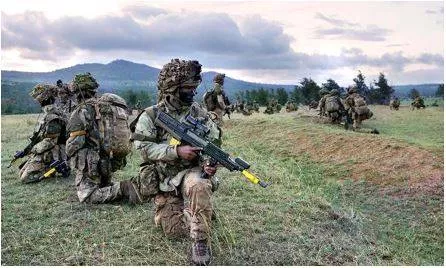
The countries’ $44-million defence cooperation agreement was renewed in 2021. It allows up to 10,000 British forces to train for eight weeks in Kenya every year. Kenya’s biracial children are part of broader concerns about the British mission, notably the persistent allegations of rape of local girls and women.
Like many biracial children in largely conservative Kenya, Ms. Wandia’s son, Louise Gitonga, said he has felt excluded by society and left out of education and employment opportunities for being “too white.” “I have an identity crisis that has driven me to alcoholism,” the unemployed Mr. Gitonga said at his home in the central town of Nanyuki. “Everywhere I pass, people call me a white man. Others call me an albino. These names cause me a great deal of pain and hurt.”
His mother recalled taking him to boarding school and being asked to pay higher fees for her white child. She later married a local farmer, Paul Wachira, who acknowledged the challenges of raising a biracial child.
“At times, I had to hide him from the rest of the family during gatherings to avoid many questions, as he looked very different from his siblings,” Mr. Wachira said.
Kenyan lawyer Kelvin Kubai represents 10 such children of visiting British forces. He asserted that not all of their parents’ relationships were consensual. In collaboration with a British law firm he declined to name, he hopes to take some of the children to Britain next year and go to court.
“You know, such children do not know the circumstances under which they were born,” Mr. Kubai said.
He hopes they will obtain citizenship. According to British law, children born to British citizens are eligible for British citizenship and care of both parents if they are below 18. Seven of the children Kubai represents are under 18. For those older than 18, the trip is a quest for identity and support.
Mr. Kubai is also raising money — $4,600 so far — to conduct DNA testing to help find the children’s fathers.
A British High Commission spokesperson in a statement said it and the British military training mission in Kenya “cooperate fully with local child support authorities where there are claims relating to paternity.” Those authorities did not respond to questions.
But Kenyan mothers and civil society groups have long said British authorities have been little or no help.
Jenerica Namoru, 29, has a 5-year-old after dating a British man with the training mission. The man’s name appears on the birth certificate as the father after he consented and shared his documentation for the process.
Ms. Namoru said the man initially accepted the child and communicated with her but refused to send financial support. She sought help at the British Army Training Unit Kenya (BATUK) offices. She said they would not listen.
“At times, they even blocked me from entering the gate,” she said. She is now being represented by Mr. Kubai.
Biracial children in the area around the British training site date back to the 1960s when Kenya was under British rule. Those born decades ago are also part of current efforts to seek justice and support.
David Mwangi Macharia, 68, bears the nickname “British” due to his light skin colour. He said his mother had a relationship with a British soldier. He works as a night guard and part-time mason after dropping out of primary school due to being ridiculed and discriminated against.
“(Kenyans) always think that I cannot do menial jobs despite the fact that I am not educated,” Mr. Macharia said. He has even found it difficult to get along with his darker-skinned siblings.
Attempts to hold visiting British forces accountable have long gained little traction, Kenyans say.
Marion Mutugi, a commissioner with the Kenya National Commission on Human Rights (KNHCR), said the relationships between British soldiers and local women range from consensual to transactional to forced.
The commission says it has documented over 200 rape cases involving British troops between 1983 and 2003, and it continues to collect data.
Britain’s Defence Ministry dismissed the rape cases as “not genuine,” and an investigation by the Royal Military Police in 2007 did not lead to compensation or justice for the victims, the KNCHR said in a report to Kenya’s parliament protesting a past renewal of the countries’ defence agreement.
“(Authorities) also interfere with investigations by compromising the local community. The human rights defenders on the ground are threatened and intimidated by both the BATUK and the Kenyan forces and Kenyan officials to ensure that justice is not reached,” Mr. Mutugi said.
“Our take at the commission was that they wanted to put a Band-Aid on a wound instead of lacerating, dealing with it and operating on it,” the commissioner added.



Top court quashes FIRs against Gen Z protesters
Sep 04, 2026






Stay updated with The Hindu Editorial Vocab24 app, your definitive source for breaking news and comprehensive coverage from India and around the globe. Whether it's political developments, business updates, sports highlights, the latest technology trends, or current events, The Hindu brings live, accurate, and reliable news directly to your device.
Don’t fall for sensationalized or fake news shared online. Read and share accurate updates with friends and family through The Hindu Editorial Vocab24 app. Download it today!
News Coverage in The Hindu Editorial Vocab24 App
Breaking News: Receive instant notifications on breaking news stories as they unfold. Stay informed about major events and developments in India and around the world with live blogs, news in shorts videos, and concise articles.
Politics: Get the latest updates on Indian politics, including elections, policy changes, government decisions, and political events that shape the nation.
Business and Economy: Stay ahead in the economic landscape with detailed business news and market analysis. Learn about stock market trends, financial reports, corporate news, and economic developments to make informed investment decisions.
Current Events: Follow stories on social issues, policy changes, global events, and daily current affairs, tailored for UPSC and other competitive exam preparations.
Technology: Keep up with the latest gadgets, innovations, and tech trends. Read expert reviews and analyses in short, concise updates on cutting-edge technology from India and beyond.
Sports: Never miss a moment of your favorite sports. Get live scores, match reports, and expert analysis on cricket, football, tennis, and more.
International News: Stay informed about global events and geopolitical developments, including the Russia-Ukraine war, Israel-Palestine conflict, and other key international stories.
Local News: Stay connected to your community with the latest updates on city events, issues, and local news. Coverage includes hyperlocal updates from cities like Bangalore, Chennai, Delhi, Hyderabad, Mumbai, Kolkata, and more.
Trending Topics: Discover what's trending today with the most talked-about stories and hot topics across India and the world.
Experience journalism that values integrity, accuracy, and reliability. Download The Hindu Editorial Vocab24 app today and stay connected with the world.
Subscribe to our newsletter!







