

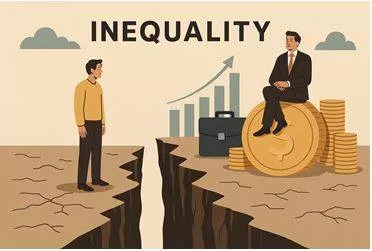
Bridging the divide understanding and addressing inequality in the modern world
IntroductionInequality is one of the most pressing and persistent challenges facing humanity today. It exists in multiple forms—economic, social, gender-based, regional, and racial—and manifests in varying degrees across countries and communities. While inequality has always been part of human history, the contemporary era of globalization, technological advancement, and capital accumulation has both alleviated and exacerbated these divides. Today, despite remarkable progress in reducing extreme poverty and enhancing access to education and healthcare, inequality remains deeply entrenched, threatening social cohesion, democratic stability, and long-term economic development.
________________________________________ Forms of Inequality
1. Economic Inequality
Economic inequality refers to the uneven distribution of income and wealth among individuals or households. While some accumulate extraordinary wealth, a significant portion of the global population continues to struggle with basic necessities. According to Oxfam’s 2024 report, the world’s five richest men have doubled their fortunes since 2020, while nearly five billion people have become poorer.
2. Social Inequality
Social inequality encompasses disparities in access to resources, opportunities, and rights based on social identities such as caste, race, ethnicity, religion, or region. For instance, marginalized communities often face discrimination in accessing education, employment, housing, and justice systems, perpetuating cycles of poverty and exclusion.
3. Gender Inequality
Women and gender minorities frequently experience systemic disadvantages in almost all societies. These range from wage gaps and underrepresentation in leadership roles to unequal access to healthcare, education, and political rights. Despite strides in gender parity, women still perform the majority of unpaid care work and face violence and discrimination at alarming rates.
4. Educational Inequality
Access to quality education remains highly uneven. Rural-urban divides, digital gaps, and socio-economic barriers limit the educational attainment of millions. This, in turn, affects employability and income generation, reinforcing existing inequalities.
5. Health Inequality
Healthcare access is another major domain of inequality. Poorer communities often face higher rates of illness, lower life expectancy, and limited access to medical facilities. The COVID-19 pandemic starkly exposed these inequalities, with underprivileged populations bearing the brunt of the crisis.
________________________________________ Causes of Inequality
1. Historical Legacies
Colonialism, slavery, caste systems, and institutionalized racism have created structural disparities that continue to affect generations. These historical injustices set the foundation for unequal societies.
2. Capital Accumulation and Globalization
Modern capitalism, especially in its neoliberal form, has led to wealth concentration in the hands of a few. Globalization has facilitated capital mobility and market access but has also widened wage gaps and left behind those without skills or capital.
3. Policy Failures and Governance
Weak public service delivery, regressive taxation, lack of land and labor reforms, and corruption have allowed inequality to deepen. Inadequate safety nets and insufficient social spending often fail to protect the most vulnerable.
4. Technological Disruption
While technology has empowered many, it has also displaced traditional jobs, widened digital divides, and contributed to inequality of access and opportunity.
________________________________________ Consequences of Inequality
1. Social Unrest and Instability
High levels of inequality erode trust in institutions and fuel anger, leading to civil unrest, protests, and even violent conflict. It undermines the social contract between citizens and the state.
2. Slowed Economic Growth
Contrary to popular belief, inequality hampers long-term economic growth. A prosperous society needs a healthy, educated, and empowered population. When opportunities are restricted to a few, innovation and productivity suffer.
3. Erosion of Democracy
Extreme inequality allows the wealthy to wield disproportionate influence over political decisions, distorting democratic institutions and marginalizing the voices of the poor and middle class.
4. Intergenerational Poverty
Inequality entrenches poverty across generations. Children born into poor families have limited access to quality education, healthcare, and employment, making upward mobility extremely difficult.
________________________________________ Solutions and Policy Measures
1. Progressive Taxation and Redistribution
Implementing higher taxes on the ultra-rich and using those funds for public health, education, and welfare can help bridge the inequality gap. Universal basic income (UBI) and direct benefit transfers (DBT) are also mechanisms to support the poor.
2. Universal Access to Quality Education and Healthcare
Governments must invest in accessible and equitable education and healthcare systems. Special focus should be given to disadvantaged groups to level the playing field.
3. Empowering Women and Minorities
Gender-sensitive budgeting, equal pay laws, representation quotas, and social campaigns are essential to addressing gender inequality. Similarly, affirmative action policies can help marginalized communities gain fair access to opportunities.
4. Employment Generation and Skill Development
Investing in infrastructure, green jobs, and the care economy can create employment while addressing other social needs. Vocational training and digital literacy programs are key to preparing workers for the evolving job market.
5. Strengthening Democratic Institutions
Ensuring transparency, judicial independence, and citizen participation in governance is vital for inclusive development. Governments must be held accountable for addressing inequality through people-centric policymaking.
6. International Cooperation
Global issues like tax avoidance by multinational corporations, climate injustice, and illicit financial flows exacerbate inequality. Coordinated international efforts are needed to enforce fair trade, regulate financial markets, and support development in poorer countries.
________________________________________ The Role of Civil Society and Media
Civil society organizations, NGOs, and the media play a crucial role in highlighting injustices, advocating policy changes, and supporting grassroots movements. Empowered citizens can demand accountability and push for reforms. Social media and independent journalism have become powerful tools for mobilization and awareness.
________________________________________ Conclusion
Inequality is not inevitable—it is a result of choices made by societies, governments, and institutions. Addressing it requires a multi-pronged, inclusive, and sustained effort. Reducing inequality is not just a matter of justice or morality; it is essential for peace, sustainability, and shared prosperity. As the world grapples with climate change, economic transitions, and social upheavals, creating a more equal world is both the challenge and the imperative of our times. Only through collective resolve and deliberate action can we bridge the divide and build a future that leaves no one behind.







Stay updated with The Hindu Editorial Vocab24 app, your definitive source for breaking news and comprehensive coverage from India and around the globe. Whether it's political developments, business updates, sports highlights, the latest technology trends, or current events, The Hindu brings live, accurate, and reliable news directly to your device.
Don’t fall for sensationalized or fake news shared online. Read and share accurate updates with friends and family through The Hindu Editorial Vocab24 app. Download it today!
News Coverage in The Hindu Editorial Vocab24 App
Breaking News: Receive instant notifications on breaking news stories as they unfold. Stay informed about major events and developments in India and around the world with live blogs, news in shorts videos, and concise articles.
Politics: Get the latest updates on Indian politics, including elections, policy changes, government decisions, and political events that shape the nation.
Business and Economy: Stay ahead in the economic landscape with detailed business news and market analysis. Learn about stock market trends, financial reports, corporate news, and economic developments to make informed investment decisions.
Current Events: Follow stories on social issues, policy changes, global events, and daily current affairs, tailored for UPSC and other competitive exam preparations.
Technology: Keep up with the latest gadgets, innovations, and tech trends. Read expert reviews and analyses in short, concise updates on cutting-edge technology from India and beyond.
Sports: Never miss a moment of your favorite sports. Get live scores, match reports, and expert analysis on cricket, football, tennis, and more.
International News: Stay informed about global events and geopolitical developments, including the Russia-Ukraine war, Israel-Palestine conflict, and other key international stories.
Local News: Stay connected to your community with the latest updates on city events, issues, and local news. Coverage includes hyperlocal updates from cities like Bangalore, Chennai, Delhi, Hyderabad, Mumbai, Kolkata, and more.
Trending Topics: Discover what's trending today with the most talked-about stories and hot topics across India and the world.
Experience journalism that values integrity, accuracy, and reliability. Download The Hindu Editorial Vocab24 app today and stay connected with the world.
Subscribe to our newsletter!







