

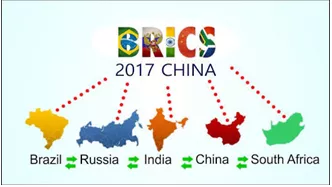
Brics 2017 summit china
The biggest roadblock in the path of holding the 9th BRICS Summit on 3-5 September in Xiamen, China, was removed when India and China who were engaged in an eyeball-to-eyeball confrontation on the Doklam plateau, decided on 28 August to move their forces. In the rather unusual second statement issued by the Ministry of External Affairs on that day, it was categorically stated that “expeditious disengagement of border personnel of India and China at the face-off site at Doklam was ongoing” and “has been almost completed under verification.” The second statement was necessitated because China had started sowing doubts about the disengagement of its own troops from the plateau even before the proverbial ink had dried on the agreement between the two countries. It kept confusion alive by not accepting that it has given up on the idea of road construction which had emerged as the casus belli of the stalemate on the plateau on 16 June 2017.India maintained throughout the duration of the impasse that the only solution was a simultaneous withdrawal to pre-standoff positions from both sides. China was apparently confounded and taken aback by India’s response to its road construction. It demanded unconditional withdrawal of “trespassing” Indian troops from the plateau, which it claimed as its own territory. It is a matter of satisfaction that China has appreciated and adopted the path of dialogue and rationality to agree to a simultaneous pullback. The final outcome was a victory of maturity, sagacity and diplomacy.
China has been trying to paint the outcome as a victory for itself, but India knows and the world believes that China blinked first and that India behaved magnanimously to provide China a face-saver.
Chinese foreign minister Wang Yi said on 30 August while briefing the media on the BRICS Summit that India should learn a lesson from the recent episode and make sure that such incidents do not recur in future. In fact the bigger lesson that China needs to internalise now, more than ever, is that India is no-push-over and needs to be treated as an equal with much greater respect and sensitivity. China’s economy might be significantly larger than India’s, but that is no reason for India to cower under the fusillade of vicious invectives and offensive abuses unleashed on it by Chinese ministries and media. India has many strengths and advantages over China like its diversity, democracy, demography, high rate of economic growth, etc., which are more than adequate to make up for the difference between the national comprehensive strengths of the two countries at this stage of their development. Wang also said that the two countries need to handle and control their problems “in the spirit of mutual respect.” Unfortunately “respect” was one element that was totally missing from all the calumnies and insults that were hurled at India from China over the past 73 days.
One of the most significant reasons for China to climb down on the Doklam issue is the BRICS Summit in early September which it will be hosting.
India had made it clear that Prime Minister Narendra Modi will find it impossible to travel to China for the Summit if expletives, indignities and threats kept emanating from China. China is conscientious of its image and wants to organise a picture-perfect summit where President Xi Jinping can be projected as a benevolent, presiding deity. It would have realised that the only way for Indian Prime Minister to attend the summit was to end the impasse. It has, however, tried to obfuscate on terms of ending the stalemate by projecting that it has emerged victorious. The truth is quite different!
BRICS
Initially, the four country BRIC grouping (South Africa was added as the fifth member at the Sanya Summit in China in 2011) was conceptualised as a largely economic entity. However, on account of the vast territorial expanse as well as big populations and economic heft of these countries, other issues related to political, social and cultural matters have also been added to discussions. This is particularly true of India’s Chairmanship last year when several innovative ideas like a BRICS Trade Fair, meeting of the National Security Advisors (NSAs) of the five countries, etc., were introduced for the first time. India also invited members of BIMSTEC (Bay of Bengal Initiative for Multi-Sectoral Technical and Economic Cooperation comprising of Bangladesh, India, Myanmar, Sri Lanka, Thailand, Nepal, and Bhutan) for the Outreach Summit with BRICS members on 16 Oct 2016.
The five BRICS countries represent over 3.6 billion people, or about 42% of the world population; all five members are in the top 25 of the world by population and four are in the top 10. The five nations have a combined nominal GDP of USD 16.6 trillion, equivalent to approximately 24% of the global GDP, combined GDP (PPP) of around USD 37 trillion and an estimated USD 4.5 trillion in combined foreign reserves. Overall the BRICS are forecast to expand by 5.3% in 2017.
One of the major issues which was discussed at the last summit was fight against terrorism. As a result of the energy and political capital invested by Prime Minister Modi in isolating Pakistan as the epicentre of terror, the Goa Declaration contained strong language on the subject. The statements at the plenary by Russia and China were, however, less than satisfying. Terrorism can be expected to receive considerable attention at the forthcoming summit because of the large number of terrorist attacks around the world that have taken place in recent months.
One of the two major concrete achievements of BRICS is the establishment of the New Development Bank or BRICS Bank with an initial subscribed capital of USD 50 billion (with equal contribution of USD 10 billion by the five member countries) to promote and support public and private projects in BRICS and other developing countries. It has already started lending since 2016. The second is the Contingency Reserve Arrangement with USD 100 billion as the total capital. China has contributed USD 41 billion to the kitty with Brazil, India and Russia chipping in USD 18 billion each and South Africa committing USD 5 billion. The bank is headquartered in China and is led by an eminent Indian banker, K.V. Kamath.
Outreach summit
China has invited Thailand, Mexico, Tajikistan, Egypt and Guinea as non-BRICS countries in a “BRICS Plus” for interaction with BRICS members. Such outreach has been arranged by most countries which have hosted BRICS summits in the past. China’s proposal this time was a little different. It wanted to formalise the “BRICS Plus” approach so that these countries would be invited to all future BRICS summits. This would have been an unofficial expansion and entry through the back door to the organisation. This has been opposed by other members because they do not wish the grouping to be diluted by addition of other countries, and also by those, which might be particularly friendly with China.
Choice of countries by China for the Outreach Meet is interesting. It is amusing that Pakistan, China’s “iron brother” has not been invited.
China would have desisted from doing so because it must have felt that it would be an unwelcome and unpopular choice. Choice of Tajikistan throws up a few questions. China’s closest ally and partner in Central Asia, particularly in energy (oil, gas, uranium) cooperation and infrastructure development under Belt and Road Initiative is undoubtedly Kazakhstan. It has, however decided to invite Tajikistan because this is the most susceptible and vulnerable country to terrorist attacks from Taliban forces from across the border in Afghanistan. China is concerned about terrorists infiltrating its Xinjiang region from Afghanistan and Central Asia. China has of late been actively reaching out to Tajikistan to strengthen military cooperation and expand security cooperation. This has made Russia also anxious and wary.
What to expect?
Dynamism and effectiveness of any organisation depend on the strength and vitality of relations between different member states. There are major differences between the two major players, India and China. Doklam crisis mentioned above is a symptom, not the cause of stress in their bilateral ties.
India’s relations with Russia are expanding. The 18th Annual Summit between PM Modi and President Putin in St. Petersburg on 1-2 June 2017 has given a huge fillip to bilateral ties. Both countries are trying to negotiate the hump which appeared last year with Russia engaging in military exercises with Pakistan soon after the Uri attack and India’s surgical strikes, as also supplying it with sophisticated military armament. Russia’s support for Pakistan at the Heart of Asia Conference and its initiative to hold discussion on peace process in Afghanistan without inviting India and Afghanistan last year resulted in fissures and misunderstanding in their relationship. Both countries are making efforts to overcome these hiccups. New Delhi and Moscow, despite some differences, generally recognise and respect each other’s economic and geopolitical relevance.
Moving beyond Asia, South Africa and Brazil are going through serious economic difficulties. South Africa is estimated to grow at 1% in 2017 and 1.5% in 2018. Brazil was expected to stage a recovery given President Michel Temer’s pro-reform instinct. He had initiated a massive USD 14 billion privatisation programme. The country’s credibility suffered a severe jolt, however, after Temer became embroiled in a corruption scandal in June 2017. Currently, he faces historic low approval ratings and could end up being removed, like his predecessor, by impeachment.
BRICS Forum also provides an opportunity to member countries to have discussions to resolve their bilateral irritants. Meeting between Modi and Xi could be a useful opportunity to reiterate the “Astana Consensus” of not allowing disagreements to convert into disputes and finding workable mechanisms to resolve border incursions and discords.
India will have to be wary of Chinese initiatives on the Belt Road Initiative at the Summit. India stayed away from the meeting in May in Beijing because it has sovereignty issues with the proposal as China-Pakistan Economic Corridor passes through Pakistan Occupied Kashmir which belongs to India and is illegally occupied by Pakistan. China might try to get it approved, accepted and sanctified by the BRICS grouping.
BRICS has a huge potential to transform into a strong, effective and viable institution encompassing areas straddling political, security, economic and people to people contacts. For this to be achieved, China, which is the largest economy in the grouping and has pretensions to the big power status needs to be more sensitive and considerate to the interests and concerns of other member countries and not ride roughshod over their views. BRICS will not be able to realise its full potential till attention is not paid to resolve differences between member states, particularly India, China and Russia.
Is wto relevant to india
Dec 28, 2017
Boosting export production
Dec 18, 2017
Trump’s asia visit leaves china stronger
Nov 19, 2017
Is india getting the kind of fdi it needs
Nov 13, 2017




Stay updated with The Hindu Editorial Vocab24 app, your definitive source for breaking news and comprehensive coverage from India and around the globe. Whether it's political developments, business updates, sports highlights, the latest technology trends, or current events, The Hindu brings live, accurate, and reliable news directly to your device.
Don’t fall for sensationalized or fake news shared online. Read and share accurate updates with friends and family through The Hindu Editorial Vocab24 app. Download it today!
News Coverage in The Hindu Editorial Vocab24 App
Breaking News: Receive instant notifications on breaking news stories as they unfold. Stay informed about major events and developments in India and around the world with live blogs, news in shorts videos, and concise articles.
Politics: Get the latest updates on Indian politics, including elections, policy changes, government decisions, and political events that shape the nation.
Business and Economy: Stay ahead in the economic landscape with detailed business news and market analysis. Learn about stock market trends, financial reports, corporate news, and economic developments to make informed investment decisions.
Current Events: Follow stories on social issues, policy changes, global events, and daily current affairs, tailored for UPSC and other competitive exam preparations.
Technology: Keep up with the latest gadgets, innovations, and tech trends. Read expert reviews and analyses in short, concise updates on cutting-edge technology from India and beyond.
Sports: Never miss a moment of your favorite sports. Get live scores, match reports, and expert analysis on cricket, football, tennis, and more.
International News: Stay informed about global events and geopolitical developments, including the Russia-Ukraine war, Israel-Palestine conflict, and other key international stories.
Local News: Stay connected to your community with the latest updates on city events, issues, and local news. Coverage includes hyperlocal updates from cities like Bangalore, Chennai, Delhi, Hyderabad, Mumbai, Kolkata, and more.
Trending Topics: Discover what's trending today with the most talked-about stories and hot topics across India and the world.
Experience journalism that values integrity, accuracy, and reliability. Download The Hindu Editorial Vocab24 app today and stay connected with the world.
Subscribe to our newsletter!







