

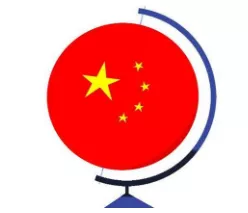
Beware the rhyme of history
It is “Peace for our time”, declared British Prime Minister Neville Chamberlain on September 30, 1938, as he returned from the Munich Conference having tamely agreed to the German annexation (कब्जे में करना) of Czechoslovakian territories. This was to be the penultimate (आखिरी से पहले का) act of appeasement before Germany triggered World War II by invading Poland on September 1, 1939. Well before it sparked this global conflagration (literally – an extensive fire which destroys a great deal of land or property.) , Germany had provided enough evidence of its hegemonic (आधिपत्य) intent and utter disdain (अवज्ञा/अवहेलना) for the 1919 Treaty of Versailles, crafted for the purpose of preventing German re-militarisation. In contravention (उल्लंघन/विरोध में) of its provisions, Adolf Hitler introduced conscription (सैन्य भर्ती) , sent his military to gain combat experience in the Spanish civil war and then, in 1936, re-occupied Rhineland. Emboldened by the passivity of Britain and the European powers, this was followed, in 1938, by the forcible union (Anschluss) of Austria with the Third Reich because of its German-speaking majority. Craven appeasement and hopeless optimism had set the stage for the Gotterdammerung that was to follow, exactly a year after Munich. History, according to Mark Twain, “does not repeat itself but it rhymes”. On the 100th anniversary of World War I, Canadian historian Margaret MacMillan had pointed out uncanny (strange or mysterious) similarities between the contemporary geopolitical landscape and the Europe of 1914. She argued in an essay that the same structural forces that led to the Great War a century ago could be in action in 2014. Mercifully, the centennial (शतवर्षीय) of WW I came and went peacefully, but MacMillan endorses Mark Twain with her advice: “If we can see past our blinders and take note of the telling parallels between then and now… history does give us valuable lessons.” Till recently, most of us were convinced that the power of economics and globalisation would not permit another great war. President George Bush was articulating all our fond hopes when he said that, “the spread of democracy and free trade across the world would form the surest guarantee of world peace.” Yet, the extraordinary growth of trade and investment between China and the US has not served to dampen suspicion and tensions. On the contrary, says China expert Michael Pillsbury, there has been a belated realisation in the US that eight Presidential administrations following Nixon’s have actively assisted the ascent of a militaristic China in the mistaken belief that they were helping a weak and victimised country become a liberal, democratic nation. There is angst (चिंता) in America over the notion that by handing over sensitive information, technology, military know-how and expert advice, the US has actually helped the achievement of the “Chinese dream”. Termed “tianxia” in Mandarin, the “Chinese dream” envisages the establishment of a hegemonic Chinese Empire as the centre of world authority to which other nations must show deference (सम्मान/आदर). This may explain the Chinese foreign minister’s patronising remark at the 2010 ASEAN conference to his Singaporean counterpart: “China is a big country and other countries are small, and that’s just a fact.” A brief look at post-1949 events reveals the inherent bellicosity (युद्धप्रियता) of the Chinese state. Soon after the end of the Civil War in 1949, the People’s Liberation Army (PLA) drove into the East Turkistan Republic and incorporated it into the Xinjiang Uyghur Autonomous Region. Ever since then, the Peoples Republic of China (PRC) has been engaged in serial strife: The occupation of Tibet and the entry of the PRC into the Korean War in 1950; suppression of the Tibetan uprising in 1959; the Sino-Indian War of 1962; involvement in the Vietnam War from 1965 to 1969; a seven-month long conflict with the USSR in 1969; a major conflict with Vietnam in 1979. Skirmishes in the South China Sea (SCS) and tensions across the Taiwan Strait have occurred with regularity all the while. Given its growing economic and military strength, revisionist outlook and past record, China can be expected to push its influence in the region, grab territory and re-write the rules of international conduct to suit its own interests. A recent manifestation of China’s belligerence (aggressive or warlike behaviour.) is the campaign of “cartographic expansion” that it has mounted through the “9-dash line” in the SCS and repudiation (rejection of a proposal or idea.) of the 1914 McMahon line on the India-China border. Other examples of Chinese intransigence (हठ/अडिग होना) are the illegal creation and militarisation of artificial islands in the SCS and its contemptuous dismissal of UN arbitration on these sovereignty issues. The choices for India in the face of Chinese hegemony are stark. The constraints of India’s political system render it unlikely that it can bridge the economic and military gap vis-à-vis China within a reasonable time. Distracted as they are by intense political activity, and their preoccupation with interminable (endless or apparently endless) election campaigns, our political elite seem incapable of applying themselves to strategic thinking or planning. Even though the Sino-Indian equation is tilted in China’s favour, as a democracy, a nuclear weapon state and a significant economic and military power, it is incumbent upon India to stand firm as a bulwark (a defence) against regional hegemony. As it seeks its “manifest destiny”, India badly needs breathing space for growth and consolidation within a democratic framework. But Beijing, hard-nosed as ever, is dropping unsubtle hints that it could be “peace for our times” if China gets to keep Aksai Chin and India surrenders Tawang. Ironically, this is the time that India’s defence budget has hit a historic low of 1.6 per cent of GDP and its arsenal is full of voids. Neither appeasement, nor empty bluster — as PM Nehru found to his cost in 1962 — will work with China. The pundits on Raisina Hill are, once again, chanting the mantra of “jang nahin hogi” (there will be no war). Should this prophecy prove correct, it will be great news for the country. But chances of it coming true will rise exponentially if India keeps its powder dry by crafting a grand strategy, by initiating urgent reform of our archaic (पुराना/अप्रचलित) defence structures and by reviving our comatose (निष्क्रिय) military-industrial complex.Penultimate (adjective)
Occurring immediately before the last one. आखिरी से पहले का
Synonyms: Second Last, Penult, Right Before The Final
Example: Our team lost the penultimate series so we will not be competing in the final game.
Contravention (noun)
An action which offends against a law, treaty, or other ruling. उल्लंघन/विरोध में
Synonyms: Breach, Infraction, Infringement, Transgression, Trespass, Violation
Example: Because your actions contravene school policy, you're being suspended for ten days.
Uncanny (adjective)
Strange or mysterious असामान्य/रहस्यमय/विचित्र
Synonyms: Eerie, Arcane, Strange, Abnormal, Exceptional, Abnormal
Example: Jeff is an uncanny man who likes to eat raw meat.
Angst (noun)
A feeling of deep anxiety or dread, typically an unfocused one about the human condition or the state of the world in general. चिंता
Synonyms: Anxiety, Worry, Apprehension, Unease
Example: A day before the fight, the inexperienced boxer was plagued with angst about losing his first match.
Deference (noun)
Polite submission and respect. सम्मान/आदर
Synonyms: Respect, Respectfulness, Regard, Esteem
Example: If you treat others with deference, then people will respect you back.
Repudiation (noun)
Rejection of a proposal or idea. अस्वीकरण /इंकार
Synonyms: Rejection, Renunciation, Denial, Disavowal, Refusal
Example: If you want to stay sober, you need to repudiate all addictive substances.
Intransigence (noun)
Refusal to change one's views or to agree about something. हठ/अडिग होना
Synonyms: Obstinacy, Pertinacity, Stubbornness, Inflexibility
Example: When it comes to the safety of my children, I must always take an intransigent position to protect them.
Interminable (adjective)
Endless or apparently endless. अन्तहीन
Synonyms: Endless, Non-Stop, Everlasting, Ceaseless, Incessant
Example: Since his career was dependent upon his recovery, the injured football player struggled through the interminable physical therapy.
Archaic (adjective)
Very old or old-fashioned. पुराना/अप्रचलित
Synonyms: Obsolete, Out of Date, Anachronistic, Old-Fashioned, Outmoded, Bygone
Example: Because my archaic computer is no longer useful to me, I am giving it away for free.
Comatose (adjective)
Extremely lethargic or sleepy. निष्क्रिय
Synonyms: Inert, Torpid, Inactive, Lethargic, Sluggish
Example: The comatose economy is expected to recover after new policies implementation.






Stay updated with The Hindu Editorial Vocab24 app, your definitive source for breaking news and comprehensive coverage from India and around the globe. Whether it's political developments, business updates, sports highlights, the latest technology trends, or current events, The Hindu brings live, accurate, and reliable news directly to your device.
Don’t fall for sensationalized or fake news shared online. Read and share accurate updates with friends and family through The Hindu Editorial Vocab24 app. Download it today!
News Coverage in The Hindu Editorial Vocab24 App
Breaking News: Receive instant notifications on breaking news stories as they unfold. Stay informed about major events and developments in India and around the world with live blogs, news in shorts videos, and concise articles.
Politics: Get the latest updates on Indian politics, including elections, policy changes, government decisions, and political events that shape the nation.
Business and Economy: Stay ahead in the economic landscape with detailed business news and market analysis. Learn about stock market trends, financial reports, corporate news, and economic developments to make informed investment decisions.
Current Events: Follow stories on social issues, policy changes, global events, and daily current affairs, tailored for UPSC and other competitive exam preparations.
Technology: Keep up with the latest gadgets, innovations, and tech trends. Read expert reviews and analyses in short, concise updates on cutting-edge technology from India and beyond.
Sports: Never miss a moment of your favorite sports. Get live scores, match reports, and expert analysis on cricket, football, tennis, and more.
International News: Stay informed about global events and geopolitical developments, including the Russia-Ukraine war, Israel-Palestine conflict, and other key international stories.
Local News: Stay connected to your community with the latest updates on city events, issues, and local news. Coverage includes hyperlocal updates from cities like Bangalore, Chennai, Delhi, Hyderabad, Mumbai, Kolkata, and more.
Trending Topics: Discover what's trending today with the most talked-about stories and hot topics across India and the world.
Experience journalism that values integrity, accuracy, and reliability. Download The Hindu Editorial Vocab24 app today and stay connected with the world.
Subscribe to our newsletter!







