

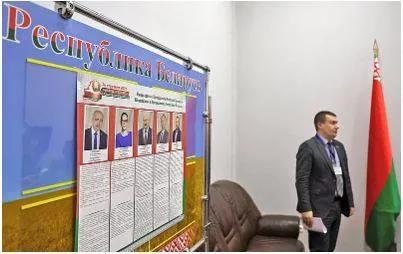
Belarus election is poised to extend 30 year rule of ‘europe’s last dictator’
With many of his political opponents either jailed or exiled abroad, the 70-year-old authoritarian leader Alexander Lukashenko is back on the ballot; unlike the 2020 election, he now faces only token challengers; he was first elected in 1994; early voting began on Tuesday and concludes tomorrow.The last time Belarus staged a presidential election in 2020, authoritarian leader Alexander Lukashenko was declared the winner with 80% of the vote. That triggered cries of fraud, months of protests and a harsh crackdown with thousands of arrests.
Not wanting to risk such unrest again by those opposing his three decades of iron-fisted rule, Mr. Lukashenko advanced the timing of the 2025 election — from the warmth of August to frigid January, when demonstrators are less likely to fill the streets.
With many of his political opponents either jailed or exiled abroad, the 70-year-old Lukashenko is back on the ballot, and when the election concludes on Sunday, he is all but certain to add a seventh term as the only leader most people in post-Soviet Belarus have ever known.
Ties with Russia
Belarus was part of the Soviet Union until its collapse in 1991. The Slavic nation of nine million people is sandwiched between Russia and Ukraine, Latvia, Lithuania and Poland, the latter three all NATO members. It was overrun by Nazi Germany in World War II.
It’s been closely allied with Moscow and Russian President Vladimir Putin — himself in power for a quarter century.
Mr. Lukashenko, a former state farm director, was first elected in 1994, riding public anger over a catastrophic plunge in living standards after chaotic and painful free-market reforms. He promised to combat corruption.
Throughout his rule, he’s relied on subsidies and political support from Russia, allowing it to use Belarusian territory to invade Ukraine in 2022 and later agreeing to host some of Russia’s tactical nuclear weapons.
Mr. Lukashenko was dubbed “Europe’s last dictator” early in his tenure, and he has lived up to that nickname, harshly silencing dissent and extending his rule through elections that the West has called neither free nor fair.
An open admirer of the Soviet Union, he has restored Soviet-style controls on the economy, discouraged use of the Belarusian language in favour of Russian, and pushed for abandoning the country’s red-and-white national flag in favour of one similar to what it used as a Soviet republic.
Belarus’s top security agency kept its fearsome Soviet-era name of the KGB, and it’s the only country in Europe to keep the death penalty, with executions carried out with a gunshot to the back of the head.
2020 election
As he bargained with the Kremlin over the years for more subsidies, Mr. Lukashenko periodically tried to appease the West by easing repressions. Such flirtations ended after he unleashed a violent suppression of dissent after the 2020 election.
That election to his sixth term was widely seen at home and abroad as rigged, and it sparked months of massive protests, the largest ever seen in Belarus.
Authorities responded with a sweeping crackdown in which over 65,000 people were arrested, thousands were beaten by police and hundreds of independent media outlets and nongovernmental organisations were closed and outlawed, drawing Western sanctions.
Leading Opposition figures have either been imprisoned or fled the country. Human rights activists say Belarus holds about 1,300 political prisoners, including Nobel Peace Prize laureate Ales Bialiatski, the founder of the country’s top rights group, Viasna.
Although Mr. Lukashenko’s current term doesn’t expire until summer, the election was moved up in what officials said would allow him “to exercise his powers at the initial stage of strategic planning.”
Belarusian political analyst Valery Karbalevich gave a different reason, saying “There won’t be mass protests in freezing January,” he said.
In other manoeuvering, Mr. Lukashenko has pardoned 250 people described as political prisoners by rights activists.
The pardons, however, come amid heightened repressions aimed at uprooting any remaining signs of dissent.
Hundreds have been arrested in raids that targeted relatives and friends of political prisoners. Other arrests include participants in online chats organised by residents of apartment buildings in various cities.
Unlike the 2020 election, Mr. Lukashenko faces only token challengers, with other Opposition candidates rejected for the ballot by the Central Election Commission. The election began with early voting Tuesday and concludes Sunday.
“The politicians who once dared to challenge Lukashenko are now literally rotting in prison in torture conditions, there has been no contact with them for over a year, and some of them are in very poor health,” said Viasna representative Pavel Sapelka.
Opposition leader-in-exile Sviatlana Tsikhanouskaya, who challenged Mr. Lukashenko in the 2020 election and was forced to flee the country afterward, says the latest vote is a farce and urged Belarusians to vote against every candidate. Her husband, activist Siarhei Tsikhanouski, tried to run four years ago but was jailed and remains imprisoned.
Meanwhile, in December 2024, Lukashenko and Putin signed a treaty that gave security guarantees to Belarus that included the possible use of Russian nuclear weapons.



Top court quashes FIRs against Gen Z protesters
Sep 04, 2026






Stay updated with The Hindu Editorial Vocab24 app, your definitive source for breaking news and comprehensive coverage from India and around the globe. Whether it's political developments, business updates, sports highlights, the latest technology trends, or current events, The Hindu brings live, accurate, and reliable news directly to your device.
Don’t fall for sensationalized or fake news shared online. Read and share accurate updates with friends and family through The Hindu Editorial Vocab24 app. Download it today!
News Coverage in The Hindu Editorial Vocab24 App
Breaking News: Receive instant notifications on breaking news stories as they unfold. Stay informed about major events and developments in India and around the world with live blogs, news in shorts videos, and concise articles.
Politics: Get the latest updates on Indian politics, including elections, policy changes, government decisions, and political events that shape the nation.
Business and Economy: Stay ahead in the economic landscape with detailed business news and market analysis. Learn about stock market trends, financial reports, corporate news, and economic developments to make informed investment decisions.
Current Events: Follow stories on social issues, policy changes, global events, and daily current affairs, tailored for UPSC and other competitive exam preparations.
Technology: Keep up with the latest gadgets, innovations, and tech trends. Read expert reviews and analyses in short, concise updates on cutting-edge technology from India and beyond.
Sports: Never miss a moment of your favorite sports. Get live scores, match reports, and expert analysis on cricket, football, tennis, and more.
International News: Stay informed about global events and geopolitical developments, including the Russia-Ukraine war, Israel-Palestine conflict, and other key international stories.
Local News: Stay connected to your community with the latest updates on city events, issues, and local news. Coverage includes hyperlocal updates from cities like Bangalore, Chennai, Delhi, Hyderabad, Mumbai, Kolkata, and more.
Trending Topics: Discover what's trending today with the most talked-about stories and hot topics across India and the world.
Experience journalism that values integrity, accuracy, and reliability. Download The Hindu Editorial Vocab24 app today and stay connected with the world.
Subscribe to our newsletter!







