

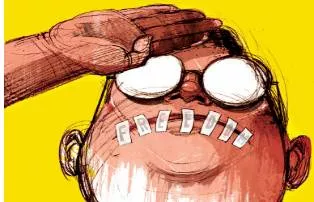
Are we more free now
In some crucial respects, the pre-independence generation may have enjoyed more freedom.As India celebrates the 71st anniversary of Independence, a blasphemous (Showing lack of respect to God or to a religion) question is worth asking: are the people of India freer today than they were on August 14, 1947? Blasphemous, because for nationalists, liberals, leftists, intellectuals, etc it is an article of faith that we are free now.
Let’s begin with the most powerful and consequential people of India: top politicians and business tycoons. Consider the terms used in political discourse whenever there is a hung Lok Sabha or state assembly—flock, herd, poaching, shepherd, horse trading, etc. All these pertain to the domestication of animals. And these are used, rightly, because the elected representatives are ‘herded’ by the party bosses so that the rivals don’t ‘poach’ their ‘flock.’ Good ‘shepherding’ is lauded in top echelons of politics.
And if they don’t behave themselves, there are ‘whips’ to discipline them. It needs to be mentioned here that the institution of parliamentary whips, though borrowed from Great Britain, has been rendered practically illiberal and anti-democratic in our country.
In the first half of the last century, when our political leaders were fighting the greatest empire on earth, they enjoyed far greater freedom of thought and action than they do now. There were conservatives and leftists, moderates and radicals, Gandhians and revolutionaries. They expressed their views freely and acted upon them. There was Subhas Chandra Bose disputing with Mahatma Gandhi; he even had the gumption (The ability to make intelligent decisions especially in everyday matters) to (successfully) challenge Gandhi’s candidate for the Congress president’s post.
Is it possible for a Congress leader to challenge the supremacy of Sonia and Rahul Gandhi today? Or, for that matter, for a Bharatiya Janata Party leader to question the decisions, let alone the leadership, of Prime Minister Narendra Modi and BJP president Amit Shah? Our political leaders won freedom for the nation – and lost their own to party managers over the years.
In a similar fashion, business tycoons have been tamed. Once upon a time there was an industrialist called Jamnalal Bajaj (1889-1942): he lived a free life in unfree India. A close associate of Mahatma Gandhi, he “renounced the titles of Honorary Magistrate and Rai Bahadur … (and) refused to obey the instructions of the British authorities.” He participated in, among others, the non-cooperation movement in 1921, the boycott of Simon Commission in 1929, the salt satyagraha in 1930, and the anti-war campaign in 1941.
Several prominent industrialists like GD Birla followed him and, as the Prime Minister recently pointed out, supported Gandhi. The relations between these businessmen and the Congress were no secret, and yet the former thrived. Is it possible today for a major business house to openly support an opposition political party or movement?
It does happen in the US, though. Billionaire currency trader George Soros recently called US President Donald Trump a “narcissist” who “is willing to destroy the world.” Soros is not the only businessperson who takes political positions.
It’s not that Indian tycoons are selfish, narrow-minded people just bothered about their business and profits; but they, like the elected leaders, have been tamed. If such is the plight of the richest and the most powerful people, one can easily imagine that of the man in the street. For him, the sphere of liberty shrinks every day.
Liberty has two main components: freedom of expression and belief, and freedom of action. The former includes, or should include, the right to author books and articles, make movies, write songs, etc, but also the right to offend and blaspheme, the right to hold offensive religious views and to propagate these. This is subject only to constraints if free speech imminently results in harm to somebody. Likewise, freedom of action – which includes economic activities, sex, and indulgence in vice – should also be constrained only if it hurts somebody.
When the British ruled India, one could practically write or draw anything, and make any movie, so long as it didn’t bother the imperial (Relating to an empire or something large and impressive in size, grandeur.) rulers. In a Devika Rani-starrer, for instance, there was a long, intense French kiss. Now politicians and their freebooters not only ban or suppress anything they are uncomfortable with, the censor chief can also decide the duration of a kiss. Besides, anything can be proscribed on grounds that it ‘hurts the sentiments’ of somebody. The government also wanted to set up a mechanism to regulate social media; thankfully, the Supreme Court torpedoed it.
As for freedom of action, the less said the better. In the name of helping the poor, wealth creators – be they farmers, business magnates, or entrepreneurs – were tied up in red tape, shackled by a zillion controls and regulations, and often subject to extortion by politicians and bureaucrats. Hardly a week passes when the powers that be don’t come up with some ruse to make wealth creators’ lives miserable; a latest example is a proposed regulator for e-commerce. Another, by the Maharashtra government, is to control the functioning of multiplexes.
Therefore, one has to be sanguine (Positive and hoping for good things) to believe that the people of India are freer today than they were on August 14, 1947.









Stay updated with The Hindu Editorial Vocab24 app, your definitive source for breaking news and comprehensive coverage from India and around the globe. Whether it's political developments, business updates, sports highlights, the latest technology trends, or current events, The Hindu brings live, accurate, and reliable news directly to your device.
Don’t fall for sensationalized or fake news shared online. Read and share accurate updates with friends and family through The Hindu Editorial Vocab24 app. Download it today!
News Coverage in The Hindu Editorial Vocab24 App
Breaking News: Receive instant notifications on breaking news stories as they unfold. Stay informed about major events and developments in India and around the world with live blogs, news in shorts videos, and concise articles.
Politics: Get the latest updates on Indian politics, including elections, policy changes, government decisions, and political events that shape the nation.
Business and Economy: Stay ahead in the economic landscape with detailed business news and market analysis. Learn about stock market trends, financial reports, corporate news, and economic developments to make informed investment decisions.
Current Events: Follow stories on social issues, policy changes, global events, and daily current affairs, tailored for UPSC and other competitive exam preparations.
Technology: Keep up with the latest gadgets, innovations, and tech trends. Read expert reviews and analyses in short, concise updates on cutting-edge technology from India and beyond.
Sports: Never miss a moment of your favorite sports. Get live scores, match reports, and expert analysis on cricket, football, tennis, and more.
International News: Stay informed about global events and geopolitical developments, including the Russia-Ukraine war, Israel-Palestine conflict, and other key international stories.
Local News: Stay connected to your community with the latest updates on city events, issues, and local news. Coverage includes hyperlocal updates from cities like Bangalore, Chennai, Delhi, Hyderabad, Mumbai, Kolkata, and more.
Trending Topics: Discover what's trending today with the most talked-about stories and hot topics across India and the world.
Experience journalism that values integrity, accuracy, and reliability. Download The Hindu Editorial Vocab24 app today and stay connected with the world.
Subscribe to our newsletter!







