

Are rituals still important
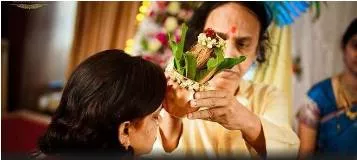
For many contemporary Indians, religious ritual is simply a part of daily life. On the other hand, many won’t want to be caught performing a ritual; they feel uneasy. An impression that rituals are entirely redundant (not or no longer needed or useful; superfluous), optional extras at best, is a pervasive (existing in or spreading through every part of something) feature of modernist consciousness that treats them as vestiges (A trace or remnant of something that is disappearing or no longer exists) of a premodern, archaic past, to be left behind as we become more educated and rational. This is partly because of the association of rituals with religion, but also because of the belief that they can’t survive the test of reason — they are meaningless, empty of content, needlessly repetitive and time-consuming. They sprout superstition, involve nonsensical mumbo jumbo. Moreover, they seem to reinforce a collectivist mentality that gives little room for individual freedom and innovation. This critique of ritual is not without precedents. Indeed, it has a long history.In ancient India, even dissenting (deviating from commonly accepted beliefs or practices) Brahmins questioned rituals when they became elaborate and expensive; the loss of simplicity and economy derailed them from their original purpose. Later, Upanishadic thinkers indicted them for their inanity (A nonsensical remark or action or a foolish act or idea); they were vacuous (having or showing a lack of thought or intelligence; mindless) unless they related to knowledge hidden from common sense, i.e. the deeper relationship between Brahman and Atman. An even more radical critique of Vedic ritual was launched by Jains and Buddhists who questioned the materialist motivations behind them. What use are rituals performed in order to procure (to bring about, especially by unscrupulous and indirect means) this or that worldly good? Two of India’s greatest sons – Gautam Buddha and Ashoka – shifted the moral axis away from rituals to kindness and compassion towards all living beings. Proponents of bhakti challenged the ethical centrality of rituals and even social reformers such as Dayanand rejected the excessive ritualism in Hinduism. The significance of rituals
Two things follow from this. First, if a rational critique of ritual was already present in the ancient world, then we can no longer divide our social universe as being ritual-oriented in the past and reason-oriented in the present. Second, this long history of critique shows that rituals survive criticism. No matter how hard we try, they can’t be jettisoned. Why, then, despite rational criticism, do rituals continue to play an important role in human life?
Consider this: We are not satisfied with receiving our university degree certificates by post or by simply an SMS. We voluntarily take part in a highly theatrical ceremony with differently codified dress for those who bestow university degrees and those who receive them. We reiterate our resolve to keep our country independent by unfurling the national flag every August 15, celebrate our Constitution through the Republic Day parade. We have memorials to not forget our loved ones when they are no longer with us. We continue to have rituals of healing, rituals to mark rites of passage such as attaining puberty or getting married, death rituals, rituals to mark the entry into the country’s Test team, as when a cap is handed over by a senior cricketer to one making the debut. We even have simple rituals of ordinary social interaction such as rituals of greeting.
It is because we are not mere machines or biological organisms but expressive creatures, and because we do not express ourselves only in oral and written speech but directly in bodily performances, that we continue to abide by existing rituals — the Hindu wedding ritual of going around the fire has been prevalent virtually uninterrupted for over 3,000 years — or invent or adopt new ones.
All these formal acts and utterances are reiterated and performed publicly, theatrically, so that all relevant people can participate in them. Many rituals break away from the routine of daily life to emphasise that certain events are special. But most of all, it is because rituals are the most economical way of reducing the fragility of social life (nothing in social life is permanent!), of establishing and consolidating social facts that we continue to have them. Neither words nor rational argumentation can do this job as efficiently as rituals can.
Furthermore, even skills learned with meticulous (showing great attention to detail; very careful and precise) attention to rules soon assume the form of ritual-resembling habits. By virtue of reduplicative practices — consider how tennis strokes are perfected by constant repetition — they become unavailable to consciousness, and precisely for that reason become far more efficient. It is their very thoughtlessness that helps achieve this. Ironically, we ignore the importance of rituals only when we shut our eyes to our daily life. We can throw out one ritual for good reason, but soon enough, for a different and equally good reason, another one occupies the space left vacant by its departure.
Two filters
So rituals and ceremonies, involving skills and modes of action learnt painstakingly by our ancestors and transmitted inter-generationally to become part of collective memory and cultural repertoire (the entire stock of works existing in a particular artistic field), are necessary. The question then is not whether or not to have rituals but what kind of rituals to have. I suggest all rituals must meet two criteria: ethical and aesthetic. The aesthetic requires us to align our rituals as close as possible to other forms of memetic activities — dance, music, drama. I won’t say much else here except by pointing to the vast difference between V.V.S. Laxman’s wristy stroke play and the stodginess of Geoffrey Boycott or the ugly heaves of a tailender. The ethical is even more important. It first compelled us to abandon human and animal sacrifice and continues to demand that we jettison (someone or something that is no longer wanted) any ritual that legitimises domination. So, reason must question wedding rituals that reinforce hierarchies between men and women but will never succeed if it questions the very idea of ritual.




Top court quashes FIRs against Gen Z protesters
Sep 04, 2026






Stay updated with The Hindu Editorial Vocab24 app, your definitive source for breaking news and comprehensive coverage from India and around the globe. Whether it's political developments, business updates, sports highlights, the latest technology trends, or current events, The Hindu brings live, accurate, and reliable news directly to your device.
Don’t fall for sensationalized or fake news shared online. Read and share accurate updates with friends and family through The Hindu Editorial Vocab24 app. Download it today!
News Coverage in The Hindu Editorial Vocab24 App
Breaking News: Receive instant notifications on breaking news stories as they unfold. Stay informed about major events and developments in India and around the world with live blogs, news in shorts videos, and concise articles.
Politics: Get the latest updates on Indian politics, including elections, policy changes, government decisions, and political events that shape the nation.
Business and Economy: Stay ahead in the economic landscape with detailed business news and market analysis. Learn about stock market trends, financial reports, corporate news, and economic developments to make informed investment decisions.
Current Events: Follow stories on social issues, policy changes, global events, and daily current affairs, tailored for UPSC and other competitive exam preparations.
Technology: Keep up with the latest gadgets, innovations, and tech trends. Read expert reviews and analyses in short, concise updates on cutting-edge technology from India and beyond.
Sports: Never miss a moment of your favorite sports. Get live scores, match reports, and expert analysis on cricket, football, tennis, and more.
International News: Stay informed about global events and geopolitical developments, including the Russia-Ukraine war, Israel-Palestine conflict, and other key international stories.
Local News: Stay connected to your community with the latest updates on city events, issues, and local news. Coverage includes hyperlocal updates from cities like Bangalore, Chennai, Delhi, Hyderabad, Mumbai, Kolkata, and more.
Trending Topics: Discover what's trending today with the most talked-about stories and hot topics across India and the world.
Experience journalism that values integrity, accuracy, and reliability. Download The Hindu Editorial Vocab24 app today and stay connected with the world.
Subscribe to our newsletter!







