

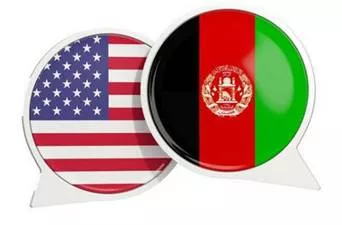
Afghanistan at a crossroads
Any agreement between the Taliban and the U.S. at the expense of the Afghan government and people is doomed to fail.Afghanistan is seeing growing national, regional and global attempts to seek a peaceful settlement to the conflict. The U.S. is desperate to extricate itself from the war, heightened by an unpredictable President and an ambitious negotiator, Zalmay Khalilzad. This desperation is matched by growing fears in Afghanistan that the Taliban will seek to overthrow the government, as it did in 1994, and that the government, the political class and the democratic constituency will be betrayed by a hasty deal between a desperate U.S. and an overconfident Pakistan. Desperation, fear and hubris may produce a peace agreement, but such an agreement may not bring inclusive and sustainable peace.
Key questions
Addressing the main drivers of the conflict are the principal tenets of any sustainable peace settlement. The causes of the Afghan conflict are religious, ethnic and external in nature. The conflict has been fought over the identity, legitimacy and sovereignty of the Afghan state and society: Should it be a Pashtun-dominated entity or a pluralistic state? Is an Islamist/theocratic emirate a true identity of the nation or a constitutional republic? Should it be a puppet state of Pakistan or a sovereign and independent state? Should it be a representative or plutocratic state?
There have been numerous peacemaking efforts and agreements since the beginning of the conflict in 1979. The leftist Najibullah Ahmadzai, the Mujahideen-led government of Burhanuddin Rabbani, and the Western-installed governments of Hamid Karzai and Ashraf Ghani all pursued political settlements based on the principles of power-sharing and democratic governance but failed.
Since its formation in 1994, the Taliban has remained consistent in its ambition of total victory and establishing “a pure Islamic government”. The Taliban is not primarily a nationalistic insurgency fighting a foreign occupation, but an ideological movement determined to re-establish a political order that is in alignment with Pakistan’s geo-strategic ambitions. The presence of international troops is an obstacle to the Taliban’s goal.
The key questions are (a) whether the Taliban’s goal of establishing a “pure Islamic government” is compatible with the principles of pluralism, power-sharing and election-based politics; (b) whether Pakistan will accept a sovereign, independent Afghanistan; (c) whether the potential peace settlement is to be built upon the fragile achievements in the fields of state-building, democratisation, pluralism and connectivity; and (d) whether there will be an effective guarantee and mechanism for ensuring the sustainability of any peace agreement.
The role of the U.S.
In March 1979, the U.S. began covertly supporting the Mujahideen via and with Pakistan through ‘Operation Cyclone’; it has remained a party to the conflict ever since. However, the U.S.’s Afghan policy has been driven by instinct rather than deliberation. Its current peace efforts are mainly driven by Washington’s selfish instincts and ever-changing moods rather than the realities on the ground, particularly the role of the Afghan government and people. U.S. President Donald Trump follows his predecessors in changing the goalposts from conditions-based engagement to cater to the U.S.’s domestic impulses and/or emerging geopolitical attractions.
Neither the current military environment nor the political structure is conducive for a sustained peace process. Unlike the Afghan and the coalition forces, the Taliban is not militarily and politically exhausted and/or desperate. The leadership of the Taliban and their Pakistani enablers have more stamina, resources and reasons to be hopeful of total victory. Their confidence has been reinforced by the Trump administration’s ‘all bark no bite’ approach in dealing with Pakistan.
The Afghan presidential election, in which 17 candidates from different political backgrounds have registered to compete, is scheduled to take place in July. The speedy talk between the U.S. and the Taliban has created a parallel process in competition with the planned presidential election. Many in Kabul rightly fear that the U.S. may sacrifice Afghanistan’s nascent democracy and sovereignty to attain its objectives.
Any agreement between the Taliban and the U.S. at the expense of the two principal stakeholders — the Afghan government and the people — is doomed to fail. The Afghanistan of 2019 is fundamentally different from the Afghanistan of the 1990s. Despite many shortcomings, the state of Afghanistan enjoys significant capacity and legitimacy and is endowed with a formidable and growing national security force. On the other hand, both Pakistan and the Taliban remain despised and distrusted by an overwhelming majority. In 2018, the Asia Foundation’s annual Afghanistan survey and the nationwide survey conducted by the Afghan Institute for Strategic Studies found that over 90% of the population do not support the Taliban’s cause.
In the words of the Taliban, Afghanistan is “the school of jihad” for jihadists around the world. Therefore, any arrangement with the Taliban would have direct implications for other violent Islamist groups. Separating the Taliban from wider global Islamist movements is the product of Western political duplicity and intellectual naivety.
A trilateral agreement involving Pakistan, the U.S., and the Taliban’s Quetta Shura will not be acceptable to other stakeholders in Afghanistan and the region. Inclusivity, realism, sustainability and Afghan ownership should drive the efforts for the peace settlement. For this to succeed, India should join other like-minded and concerned stakeholders to ensure that Afghanistan moves forward rather than be forced to return to the dark age of the 1990s.
The people of Afghanistan want a peaceful, pluralistic and prosperous country. The Taliban can have a role and a place in building and living in such a polity, similar to other Afghan citizens or political groups. A peaceful and prosperous Afghanistan, a peaceful and developed region, and the defeat of the ideology of violent Islamist groups are all interlinked.
But the people of Afghanistan should not be forced to choose between an imposed peace or independence and a constitutional order. An imposed peace will achieve brief victory for one party, but cause long-term suffering and will eventually break down.



Top court quashes FIRs against Gen Z protesters
Sep 04, 2026






Stay updated with The Hindu Editorial Vocab24 app, your definitive source for breaking news and comprehensive coverage from India and around the globe. Whether it's political developments, business updates, sports highlights, the latest technology trends, or current events, The Hindu brings live, accurate, and reliable news directly to your device.
Don’t fall for sensationalized or fake news shared online. Read and share accurate updates with friends and family through The Hindu Editorial Vocab24 app. Download it today!
News Coverage in The Hindu Editorial Vocab24 App
Breaking News: Receive instant notifications on breaking news stories as they unfold. Stay informed about major events and developments in India and around the world with live blogs, news in shorts videos, and concise articles.
Politics: Get the latest updates on Indian politics, including elections, policy changes, government decisions, and political events that shape the nation.
Business and Economy: Stay ahead in the economic landscape with detailed business news and market analysis. Learn about stock market trends, financial reports, corporate news, and economic developments to make informed investment decisions.
Current Events: Follow stories on social issues, policy changes, global events, and daily current affairs, tailored for UPSC and other competitive exam preparations.
Technology: Keep up with the latest gadgets, innovations, and tech trends. Read expert reviews and analyses in short, concise updates on cutting-edge technology from India and beyond.
Sports: Never miss a moment of your favorite sports. Get live scores, match reports, and expert analysis on cricket, football, tennis, and more.
International News: Stay informed about global events and geopolitical developments, including the Russia-Ukraine war, Israel-Palestine conflict, and other key international stories.
Local News: Stay connected to your community with the latest updates on city events, issues, and local news. Coverage includes hyperlocal updates from cities like Bangalore, Chennai, Delhi, Hyderabad, Mumbai, Kolkata, and more.
Trending Topics: Discover what's trending today with the most talked-about stories and hot topics across India and the world.
Experience journalism that values integrity, accuracy, and reliability. Download The Hindu Editorial Vocab24 app today and stay connected with the world.
Subscribe to our newsletter!







