

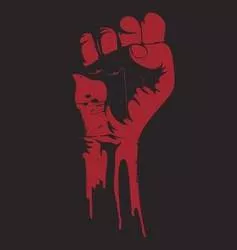
A spate of lynchings
As violence and mistrust take over, citizens are no longer encouraged to connect with others and nurture solidarity.Democracy establishes a conversation between citizens and the power elites they have elected into office. Citizens initiate and sustain various conversations with each other through associational life in the space of civil society. Associations bring people together in different projects, enable them to speak back to power, and protect them against arbitrary exercise of state power. For these and related reasons, associations are considered indispensable for democratic life.
Modern angst
There is more — associational life tempers the anomie of modernity. The individual certainly has more freedom in modern society compared to pre-modern ones. But she is also rootless. She is certainly very lonely. The quintessential modern being is a bit like Howard Roark, who in Ayn Rand’s The Fountainhead sits atop a metaphorical mountain condemned to view life from a distance. This novel, normally read by young people in their teens, presents a terrifying picture of isolation, of failure to relate to other people. The story recounts the malaise of modernity.
Notably, associations encourage us to connect with others who aren’t like us. They teach us to appreciate codes of sociability, moderate aggressive instincts, rid our minds of mindless prejudices and see other people as worthy of regard and respect. Arguably, a conversation with persons who might well be strangers in traditional environments contributes a great deal to the ironing out of senseless tensions that permeate divided societies. The moment we embark on a conversation with others, we signify that we see them as equals. During the course of the conversation, acquisitive individualism might be tamed somewhat. Bellicose impulses might be disciplined somewhat. Associational life trains us to be sociable and civil. If the state is marked by the logic of power, and the market dominated by that of profit, the logic of civil society is that of solidarity and civility. That is why the domain of civil society moderates the malaise of modernity.
Civil society in peril
In India, however, it is precisely civil society that has been in the eye of a storm ever since the present government came to power at the Centre in 2014. Investigative agencies have suspended funding of civil society organisations (CSOs), rights activists are labelled anti-national if they dare to challenge the government’s dismal record of human rights, perfectly legitimate protests are frowned upon, and members of CSOs are hounded and subjected to vile accusations and abuse on the social media. The miracle is that we still see protests by Dalits, by farmers and by university students. Yet we also witness the decline of civil society as a forum for setting up of multiple conversations. The elegant and exhilarating art of public conversation has degenerated into rants and abuse, hate speech and crude allegations, lampooning of leaders of oppositional political parties, and perverse stereotyping of vulnerable minorities, Dalits and women.
One crucial development has accelerated the weakening — hopefully temporary — of civil society. With their own party in power, front organisations of the religious right are determined to monopolise the space of civil society, and its guardian — an independent media. They would deny this space to others. Civility is no longer the signifier of civil society dominated by these organisations, incivility is. We see today an inerasable boundary based on religion, opinions and food habits, inflexibly drawn between the ‘insider’ and the ‘outsider’. No longer are Indians encouraged to connect with others and nurture solidarity in the space of civil society. Violence, fear and suspicion cast a dark cloud over a civil society that is expected to tame aggression and cultivate civility.
Everyday communalism
The sorry saga of immense violence against the Muslim community was initiated with the killing of Mohammad Akhlaq in Dadri district of Uttar Pradesh in 2015 on the suspicion that he had butchered a calf that had gone missing. While he was beaten to death, his son Danish and reportedly his grandmother were assaulted. Till today none of the accused has been punished.
The killing was followed by brutal murders of other Muslims, and by the attack on Dalits in Una in 2016 on the flimsy excuse that they were transporting cows. But the honourable ministers of the government barely condemned these random, and not so random, acts of violence. We are forced to conclude that lynchings and murders by vigilante groups have become commonplace, because the police as well as the holders of awesome political power shy away from punishing rank criminals who harm fellow citizens.
The unleashing of coercion in these cases has resulted in the spread of generalised violence. Increasingly, violence is the currency of social transaction. In the first half of 2018, Indians who look unfamiliar to the locals, whatever ‘local’ might mean, have been savagely beaten to death on flimsy pretexts. Lynching has been catalysed by unsubstantiated videos on WhatsApp that report kidnapping of small children by outsiders. On June 8, two young men, Nilotpal Das, an audio engineer, and Abhijeet Nath, a digital artist, stopped in Karbi Anglong district of Assam to ask for directions. They were rapidly identified as outsiders and kidnappers. A mob of 200-250 people lynched them to death. Crowds stood around while they were mercilessly beaten, photographed an act that should revolt any human being, and put the video on social media.
Other people across the country have been killed or attacked in the same way, with deaths being linked to online rumours. Here are just a few recent instances. On May 24, a man from Rajasthan was brutally beaten to death in Bengaluru. In the third week of May, four people were attacked in other districts of Karnataka and in Telangana because they were suspected to be child lifters. At Hosur in Tamil Nadu, the crowd videotaped unspeakable brutality inflicted on the body of a migrant worker from U.P.. Such is the perversity that marks our times.
Sound of silence
Civil society is considered indispensable for democracy because associations shield individual citizens from the state. When people begin to harm their fellow citizens in abnormal ways, who will protect the defenceless? Our civil society as the site of solidarity, and civility has been hammered into silence. Consequently, incivility has replaced civility and violence replaces non-violence. India might have reached the point of no return, for the quagmire of violence relentlessly sucks people into its murky depths. When vigilante groups belonging to the religious right write the alphabet of brute force in blood and gore, the script is ineffaceable and leaves indelible imprints on the body politic. Lynching leaves stigmata much like the murder of Duncan left blood on Lady Macbeth’s hands: “What, will these hands ne’er be clean?”
I am not suggesting that the strengthening of civil society will make violence go away. Violence is part of the human condition. The political trick is to make the beast stay on the margins by the cultivation of civility and solidarity. The alternative is frightening. Who knows who will be the next victim of vigilantism?



Top court quashes FIRs against Gen Z protesters
Sep 04, 2026





Stay updated with The Hindu Editorial Vocab24 app, your definitive source for breaking news and comprehensive coverage from India and around the globe. Whether it's political developments, business updates, sports highlights, the latest technology trends, or current events, The Hindu brings live, accurate, and reliable news directly to your device.
Don’t fall for sensationalized or fake news shared online. Read and share accurate updates with friends and family through The Hindu Editorial Vocab24 app. Download it today!
News Coverage in The Hindu Editorial Vocab24 App
Breaking News: Receive instant notifications on breaking news stories as they unfold. Stay informed about major events and developments in India and around the world with live blogs, news in shorts videos, and concise articles.
Politics: Get the latest updates on Indian politics, including elections, policy changes, government decisions, and political events that shape the nation.
Business and Economy: Stay ahead in the economic landscape with detailed business news and market analysis. Learn about stock market trends, financial reports, corporate news, and economic developments to make informed investment decisions.
Current Events: Follow stories on social issues, policy changes, global events, and daily current affairs, tailored for UPSC and other competitive exam preparations.
Technology: Keep up with the latest gadgets, innovations, and tech trends. Read expert reviews and analyses in short, concise updates on cutting-edge technology from India and beyond.
Sports: Never miss a moment of your favorite sports. Get live scores, match reports, and expert analysis on cricket, football, tennis, and more.
International News: Stay informed about global events and geopolitical developments, including the Russia-Ukraine war, Israel-Palestine conflict, and other key international stories.
Local News: Stay connected to your community with the latest updates on city events, issues, and local news. Coverage includes hyperlocal updates from cities like Bangalore, Chennai, Delhi, Hyderabad, Mumbai, Kolkata, and more.
Trending Topics: Discover what's trending today with the most talked-about stories and hot topics across India and the world.
Experience journalism that values integrity, accuracy, and reliability. Download The Hindu Editorial Vocab24 app today and stay connected with the world.
Subscribe to our newsletter!







