

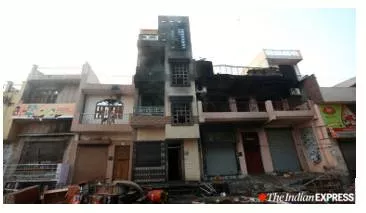
A calamity foretold
Normally, common sense is sufficient to foretell an impending calamity, it does not require a sixth sense. The violence that shattered the peace in Northeast Delhi on February 24 and the following days, and claimed more than 40 lives, was entirely predictable. The only ones who seemed unprepared were the Delhi Police (DP). According to The Hindu dated February 25, “The violence erupted in the presence of nearly 100 policemen, who seemingly did not respond to the situation.”It is not important who provided the first provocation or who first threw a stone or who first brandished a gun. What is important is that the fight that was between the government and anti-Citizenship (Amendment) Act protesters has spilled over to the streets and turned into pitched battles between anti-CAA protesters and pro-CAA demonstrators.
Much had happened in different parts of the country since December 11, 2019: sit-ins at Shaheen Bagh, Delhi, and in other cities and towns; marches and rallies; election time rhetoric; and petitions in courts. On February 23, a BJP leader warned the DP, “A three-day ultimatum to Delhi Police — get the streets of Jafrabad and Chand Bagh cleared. After this don’t explain anything to us. We will not listen to you. Just three days.”
Is there a plan?
New evidence emerged about the violence that had left hundreds of students beaten and broken at Jawaharlal Nehru University, Jamia Millia Islamia (40 per cent of its students are non-Muslims) and Aligarh Muslim University. Fingers were pointed at the brutality of the DP and Uttar Pradesh Police (23 people were killed in firing in UP alone). Hundreds of people, mostly students, had been arrested. As days passed, courts started questioning the truth of FIRs and police reports. Two judges of the Supreme Court spoke in public in defence of dissent and warned against labelling dissenters as anti-nationals.
Yet the government pretended — and acted — as if nothing was wrong. The only statements that came from the government were strident defences of the CAA and the proposed National Population Register (NPR). They sounded more like threats than defences.
There is growing suspicion that the BJP is working to a plan. Many suspect that the BJP wants people with different opinions to harden their positions, wants them to take to the streets, and wants the polarisation to be complete. This view may be harsh and not correct, but the government’s intransigence and refusal to engage with the protesters (not Muslims alone) deepen the suspicion.
CAA-NPR spreading fear
The government says that the NPR is a benign exercise and the CAA is in national interest, and the two are unconnected. It is beyond comprehension how some people can swallow this puerile argument. The NPR is not benign at all, several mischievous questions have been added in the form. As for the CAA, it is patently discriminatory and has been challenged in the Supreme Court. Besides, the CAA and NPR are conjoined. The NPR will be done first to identify the ‘usual residents’ and those not identified as usual residents will be marked ‘doubtful’. Theoretically, the ‘doubtful’ will belong to all religions. At this stage, the CAA will come in. All ‘doubtful’ persons who are Hindu, Christian, Sikh, Jain, Buddhist or Parsi will be allowed to put in a simple application for citizenship and they will be granted citizenship. The remaining ‘doubtful’ will be Muslims who would have no recourse under the CAA.
The fear is that millions of Muslims will be stranded at the end of the NPR exercise. Is there any wonder that millions of Muslims are so alarmed that thousands of Muslim women and children, who usually stay behind doors, are out in the streets and parks braving rain and cold and police lathis? What gives them hope and courage is the total support extended by thousands of non-Muslims and several political parties.
Uncaring and undemocratic
The BJP is emboldened to pursue its partisan agenda owing to the massive majority it enjoys in the Lok Sabha and the fact that Lok Sabha elections are four years away. The BJP reluctantly fielded six Muslim candidates in 2019 (three in West Bengal, two in J&K, one in Lakshadweep and none in other states), and does not hide the fact that it will not actively seek the votes of Muslim voters. Since forming the government for a second time, the Prime Minister has taken a series of steps that have heightened the fears of the Muslims. The near-universal perception among the Muslims is that their interests will not be safeguarded by the Central government. What is important is the perception. Perceptions influence actions and reactions.
A democratic and caring government would have reached out to the people and engaged them in discussions. Nothing of that kind has happened in over two months.
An inevitable fallout will be on the economy. India’s reputation worldwide has taken a severe beating in the last few months — witness the statements of the European Union, the US Congress’s committees and UN bodies. Many countries have conveyed their concerns to India privately. Legislators, investors and opinion-makers in the developed world read TIME, The Economist, The New York Times, and The Wall Street Journal, and they have been scathing in their criticism.
India can behave like an undeclared theocracy. Or it can behave like a secular democracy. Whichever course it takes, there will be far-reaching and enormous consequences for the Indian people and especially the Indian economy.












Stay updated with The Hindu Editorial Vocab24 app, your definitive source for breaking news and comprehensive coverage from India and around the globe. Whether it's political developments, business updates, sports highlights, the latest technology trends, or current events, The Hindu brings live, accurate, and reliable news directly to your device.
Don’t fall for sensationalized or fake news shared online. Read and share accurate updates with friends and family through The Hindu Editorial Vocab24 app. Download it today!
News Coverage in The Hindu Editorial Vocab24 App
Breaking News: Receive instant notifications on breaking news stories as they unfold. Stay informed about major events and developments in India and around the world with live blogs, news in shorts videos, and concise articles.
Politics: Get the latest updates on Indian politics, including elections, policy changes, government decisions, and political events that shape the nation.
Business and Economy: Stay ahead in the economic landscape with detailed business news and market analysis. Learn about stock market trends, financial reports, corporate news, and economic developments to make informed investment decisions.
Current Events: Follow stories on social issues, policy changes, global events, and daily current affairs, tailored for UPSC and other competitive exam preparations.
Technology: Keep up with the latest gadgets, innovations, and tech trends. Read expert reviews and analyses in short, concise updates on cutting-edge technology from India and beyond.
Sports: Never miss a moment of your favorite sports. Get live scores, match reports, and expert analysis on cricket, football, tennis, and more.
International News: Stay informed about global events and geopolitical developments, including the Russia-Ukraine war, Israel-Palestine conflict, and other key international stories.
Local News: Stay connected to your community with the latest updates on city events, issues, and local news. Coverage includes hyperlocal updates from cities like Bangalore, Chennai, Delhi, Hyderabad, Mumbai, Kolkata, and more.
Trending Topics: Discover what's trending today with the most talked-about stories and hot topics across India and the world.
Experience journalism that values integrity, accuracy, and reliability. Download The Hindu Editorial Vocab24 app today and stay connected with the world.
Subscribe to our newsletter!







