

A brief history of time
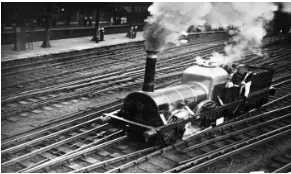
In an era where humans are overloaded with information 24x7, if a reasonably informed member of the species were to encapsulate our history in a thousand words to a pen pal (Friend) in another world, it might consist of about a dozen major epochs (a particular period of time in history) as follows: Our understanding is that Time began with the Big Bang and the origin of the Universe about 13.77 +/-0.059 billion years ago. Time was measured in nano seconds. We don’t know why and how this happened and whether this was a one-off event. From the beginning of time, the universe began expanding, forming stars, galaxies, solar systems and planets, including our own. Oceans and continents were formed, triggering continental drift and plate tectonics. Life on Earth is estimated to have originated over four billion years ago in the oceans. Again, nobody has a clue as to why and how this happened, whether this was endogenous (having an internal cause or origin.) or seeded from extraterrestrial (of or from outside the earth or its atmosphere.) sources. Living matter was measured at the molecular and subcellular level till about 1.5 billion years ago. The Golden Age of Evolution saw the multiplication and global expansion of animal, plant and insect species from the original unicellular organism through reproductive processes, sexual differentiation and speciation, with amphibious (relating to, living in, or suited for both land and water.) creatures making the first crossing over to land. The Reptilian (Limbic Brain) Revolution, marked by the emergence of complex motor movements, occurred around 300 million years ago. The Golden Age of Reptiles lasted till the end of dinosaurs around 64 million years ago. The Mammalian (Emoting Brain) Revolution occurred some 200 million years ago, culminating (पराकाष्ठा पर पहुंचना) in the emergence of frugivorous, brachiating ((of certain apes) move by using the arms to swing from branch to branch.) ape-like creatures around five million years ago. The Homo Sapiens (Bipedal and Neocortex) Hunting Revolution culminated in the emergence of modern humans around 200,000 years ago. With humans came logical and self-conscious thought, the capacity for good and evil, and complex interpersonal communication that put them at the top of the food chain as peripatetic (घुमन्तु/भ्रमणशील) hunter-gatherers, albeit at very low densities. This was aided by the controlled use of fire, fabricated tools and the domestication of the wolf into the modern dog. The climate on our planet has seen sharp fluctuations. The end of the last Ice Age around 10,000 BC marked the global expansion of humans and the Neolithic Revolution. With agriculture and domestication of farm animals came permanent settlements, a surge in human population through demographic cycles of high birth rates punctuated (occur at intervals throughout (an area or period).) by catastrophic events, and the emergence of complex cooperative forms of social organization, and trade and exchange through barter. Proto-historic civilizations began with villages, populous riverine urban settlements, grand public monuments, complex hierarchical societies facilitated by the origin of the state, kingdoms, early empires, and religion; use of bronze and copper in tools, weapons, artefacts and art; pottery, textiles, and handicrafts; invention of astronomy, money, the wheel and irrigation. Transport was limited by animal traction on land, and by wind and human traction on water. Recorded history began with the invention of writing and the emergence of the classical civilizations of Greece, Persia, Egypt, China and India. With the Iron Revolution came early empires and civilizations which, with the notable exception of the Chinese and Indian that lasted into modern times, yielded to transcontinental empires, namely Pax Romana, Arab, Turk, Mongol and European, facilitated by the invention of the horse stirrup, gunpowder, major advances in road, bridge, stone architecture and use of wind energy, including ocean-faring vessels, leading to the discovery of the New World. Till very recently, however, most people never left their place of birth, except for traders, religious preachers (धर्मोपदेशक) , scholars, rulers and roving (travel constantly without a fixed destination) armies and navies. Material life, even of the ruling classes, remained at very basic levels. The current epoch began with the Enlightenment and Industrial Revolution in Western Europe around 17th century AD, incorporating scientific advances in the Middle East, China and India. This culminated in a virtuous (नेक/अच्छा) cycle of accelerating growth and innovation based on inanimate (non-potential) energy; a new system of cooperative mass production and mobility of people, goods, services and knowledge based on a new concept of industrial time that replaced natural cycles; and major architectural advances through the use of structural metals (iron and aluminium alloys) and nano technology. The second age of transcontinental empires culminating with Pax Britannica paralleled the decline of old world agricultural civilizations in the Middle East, India and China through growing divergence in technology and per capita incomes before converging again through the global spread of the virtuous cycle unleashed by the Enlightenment and Industrial Revolution. Peering ahead into the current epoch, the rapid global spread of the Industrial Revolution that is leading to anthropogenic climate change through an explosion in growth, exploitation of natural resources, and population, would likely be reversed by increasing use of Artificial Intelligence and demographic transition to below replacement birth rates. With the nation state in terminal decline, beginning with regional unions, such as the European, and effective governance shifting to local institutions, a loose global federation could emerge, tending to greater global integration accelerated by extraterrestrial contact. The Star Trek evolution of the human species could occur in the distant future on the lines of the eponymous (named after a particular person or group.) science fiction serial, marked by Artificial Intelligence, end of death as we know it and migration of humans to other planets/solar systems where they further evolve through technological advances, including the end of agriculture as man breaks free of the constraints imposed by the Neolithic Revolution. Alternatively, a catastrophic event, man-made (such as global warming or nuclear war) or natural (such as a comet/meteor that wiped out dinosaurs), could destroy the human species, even all life on earth, before their evolution into extraterrestrial civilizations. The sun will eventually run out of fuel, extinguishing life on earth as it expands into a Red Giant after about five billion years, and evolving into new-generation stars before it is consumed into a black hole. This would end time and space as we know it, but hopefully not for extraterrestrial emigres (someone who leaves one’s place to settle in another) .Pal (noun)
A close friend. साथी/संगी
Synonyms: Amigo, Companion, Comrade, Mate, Bosom Pal
Example: Sometimes, the best pal for an elderly man is an obedient and calm dog.
Endogenous (adjective)
Having an internal cause or origin. अंतर्जात/अन्तः विकसित
Synonyms: Internally Developed, Of Inside, Of Interior
Example: Happiness is absolutely endogenous in nature for a man.
Peripatetic (adjective)
Travelling from place to place, in particular working or based in various places for relatively short periods. घुमन्तु/भ्रमणशील
Synonyms: Nomadic, Itinerant, Travelling, Wandering, Roving
Example: Aristotle, whose teaching style involved walking around while he shared his ideas about life, was the first of many peripatetic philosophers.
Punctuate (verb)
Occur at intervals throughout (an area or period). जोर देना
Synonyms: Intersperse, Accentuate, Point Up.
Example: He punctuated his entire lecture with some random strange example.
Virtuous (adjective)
Having or showing high moral standards. नेक/अच्छा
Synonyms: Righteous, Morally Correct, Ethical, Upright, Upstanding
Example: The minister was not the virtuous man he pretended to be and was soon discharged from his position because of immoral behavior.
Inanimate (adjective)
Showing no sign of life; lifeless. /Figuratively-non-potential. सुस्त/निष्प्राण
Synonyms: Lifeless, Insentient, Insensate, Without Life, Inert
Example: When Joan gets upset, she often talks to inanimate objects that are incapable of responding to her.
Culminate (verb)
To come to a significant point such as the end of an event. पराकाष्ठा पर पहुंचना
Synonyms: Climax, Conclude, End Up, Terminate with, Wind Up
Example: At the end of the night, the concert will culminate in a huge fireworks display.
Extraterrestrial (adjective)
(of or from outside the earth or its atmosphere. परग्रही/ असांसारिक
Synonyms: Martian, From Outer Space, Belonging to Outside World, Alien
Example: Aliens are considered to be extraterrestrial beings.
Preacher (noun)
A person who preaches (उपदेश देना) धर्मोपदेशक
Synonyms: Clergy, Cleric, Parson, Priest, Chaplain, Curate
Example: A mother always preaches the value of a good education to her children.
Rove (verb)
Travel constantly without a fixed destination. घुमंतू होना
Synonyms: Wander, Roam, Meander, Stravaig, Prowl
Example: A person with roving mind can never concentrate on specifics.
Classical amartya sen and a baroque world
Mar 31, 2017





Stay updated with The Hindu Editorial Vocab24 app, your definitive source for breaking news and comprehensive coverage from India and around the globe. Whether it's political developments, business updates, sports highlights, the latest technology trends, or current events, The Hindu brings live, accurate, and reliable news directly to your device.
Don’t fall for sensationalized or fake news shared online. Read and share accurate updates with friends and family through The Hindu Editorial Vocab24 app. Download it today!
News Coverage in The Hindu Editorial Vocab24 App
Breaking News: Receive instant notifications on breaking news stories as they unfold. Stay informed about major events and developments in India and around the world with live blogs, news in shorts videos, and concise articles.
Politics: Get the latest updates on Indian politics, including elections, policy changes, government decisions, and political events that shape the nation.
Business and Economy: Stay ahead in the economic landscape with detailed business news and market analysis. Learn about stock market trends, financial reports, corporate news, and economic developments to make informed investment decisions.
Current Events: Follow stories on social issues, policy changes, global events, and daily current affairs, tailored for UPSC and other competitive exam preparations.
Technology: Keep up with the latest gadgets, innovations, and tech trends. Read expert reviews and analyses in short, concise updates on cutting-edge technology from India and beyond.
Sports: Never miss a moment of your favorite sports. Get live scores, match reports, and expert analysis on cricket, football, tennis, and more.
International News: Stay informed about global events and geopolitical developments, including the Russia-Ukraine war, Israel-Palestine conflict, and other key international stories.
Local News: Stay connected to your community with the latest updates on city events, issues, and local news. Coverage includes hyperlocal updates from cities like Bangalore, Chennai, Delhi, Hyderabad, Mumbai, Kolkata, and more.
Trending Topics: Discover what's trending today with the most talked-about stories and hot topics across India and the world.
Experience journalism that values integrity, accuracy, and reliability. Download The Hindu Editorial Vocab24 app today and stay connected with the world.
Subscribe to our newsletter!







